Grading the 2026 Olympic Winter Games
After experiencing both Milan and Cortina in person, here’s SportsTravel’s scorecard of what worked — and what didn't
Posted On: February 24, 2026 By :SportsTravel Publisher Jason Gewirtz was on the ground in Milan and Cortina, Italy. Here are his scores from the Games based on his experience at the event.
Opening Ceremony: A-
I wanted to give this one a full A+ and there is a case to be made that it deserves one. The dramatic moments were dramatic. The staging, storytelling and production were some of the best I’ve ever seen. And the fact that other athletes in Cortina and two other mountain locations could “march” into their own venues given the remote nature of the events was a stroke of genius, and one we’ll likely see replicated at future fragmented Games.
But that fractured nature of the athlete locations and the fact the Olympic cauldron was outside the stadium took some energy out of the venue and made the conclusion feel flat. On television, however, none of that matters. Overall, it was a terrific way to start the Games and Andrea Bocelli hitting his high notes as the Olympic flame entered the stadium was a high note for the event.

Security: B-
There is nothing more important at a sporting event, especially one with the global character of the Olympic Games, than security. As is often the case, security procedures on site can be inconsistent. Where one venue will allow you in with one item, another may not. And inconsistency was certainly on display in Milan and Cortina.
A Deeper Dive
Listen to our SportsTravel Podcast for a deeper dive on what worked and what didn’t in Milan as Jason Gewirtz joins George Washington Professor Lisa Delpy Neirotti for a discussion on the Games.

I attended an event the night before the Opening Ceremony in the square outside Milan’s famous Duomo cathedral. As media, I was allowed into a viewing area right in front of the church, and was able to enter the square itself merely by showing my media credential. But no one checked my backpack, which I brought in with me as well, which was unsettling. At venues, some workers would ask me to open my bag and inspect the pockets. Others let me walk through with the most cursory look. The wand procedures were also inconsistent and often lackluster.
As I left the sliding center, I saw a table of confiscated items from spectators, including drinks and noise making devices. I had been let in with drinks, and while I appreciate consideration given to working press, it’s hard to tell why one subset of spectator was subject to one rule and another was not.
But, overall, the event saw no major security lapses, so organizers certainly deserve credit for making sure security was not a story line at the event.
Transportation: A-
I have to give the Milan Cortina organizers credit: Transportation by and large worked, but mainly because Milan’s public transportation system is established and efficient. There was official Olympic transportation for those who were accredited in one way or the other, including media, but in Milan I never had to take that transportation. (In fact, we were encouraged just to take the public train to the Opening Ceremony.)
That ceremony had a huge bottleneck at the nearest train station following the event, causing me to get back to my hotel at 2:30 a.m., which was unfortunate. But when you needed a train, there was a train. And even in Cortina, an Olympic shuttle that was supposed to arrive every 45 minutes from my very remote hotel an hour away in the mountains was there every time it was supposed to be.
Signage: B-
When the Olympics are in town, you can usually tell. But with venues so spread out in Milan, Cortina and other mountain areas, there didn’t appear to be a cohesive signage program in place that made you feel like you were at the Games. The Games’ slogan appeared to be “It’s Milano, It’s Your Vibe,” which was on billboard ads across the city and even on city sidewalks in some areas, with the Milan Cortina Games logo. And there were lots of ads on buildings, walls, trains and elsewhere from Olympic sponsors. But even the venues didn’t have the same amount of branding as in past Games.
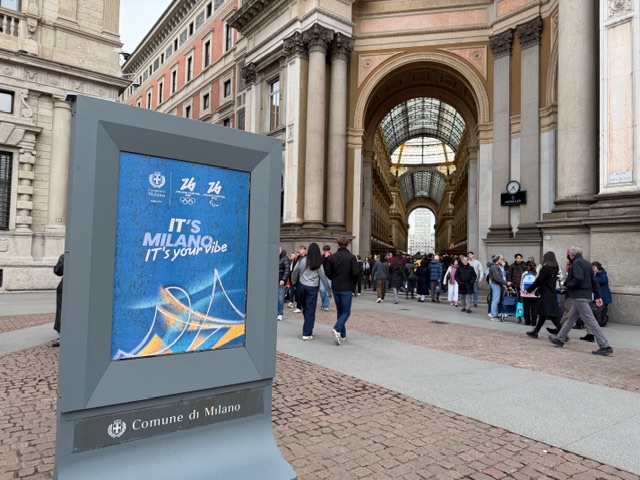
And at the venues themselves, signs directing you to different areas were fine but in some cases not specific enough to help you find your way around.
Food and Beverage (In Venue): F
For reasons unclear, the Olympic Games never seem to get creative when it comes to in-venue food and beverage. Maybe the IOC is just trying to please the masses or come up with some safe common denominators for an international audience. In Milan, the food options were the same at every venue — and they were not great. There was a “cheeseburger” that was a prepared sandwich of some kind, and a “calzone” that was some flat bread with tomato sauce inside that you could have bought at your local grocery store back home.
For a destination as food-conscious as Italy, it all seemed to miss the mark. North American fans at least are used to variety at the stadium, and plenty of spectators pay plenty of money to attend the Games and deserve an even modestly more premium service. But there was none of that in Milan or Cortina — and lines were long to get what little was there.
SportsTravel: Grading the 2024 Summer Olympics in Paris
Food and Beverage (Off Venue): A++
This event was in Italy. I don’t believe there is such a thing as a bad restaurant in Italy. The quality of options outside the venue was, of course, fantastic.
Venues: A-
In Milan, the city did the best with what it had. It was unfortunate that the three main sites for events were in different corners of the city, which required considerable commuting and contributed to the lack of a cohesive Olympic feel. Two venues on the west edge of the city center were in a convention center and although they were bare-bones from a spectator amenity perspective, the field of play was generally praised and the long track speedskating venue was good enough for athletes to break Olympic records. One miss was that the events were in the center’s farthest halls, requiring a walk of over a mile at the convention complex while other fashion expos were taking place in the closer halls. Maybe that was done for visitor flow or for security reasons — or to give those fashion brands a pop — but with so much advanced notice of the event, it was strange to use the farthest possible halls.
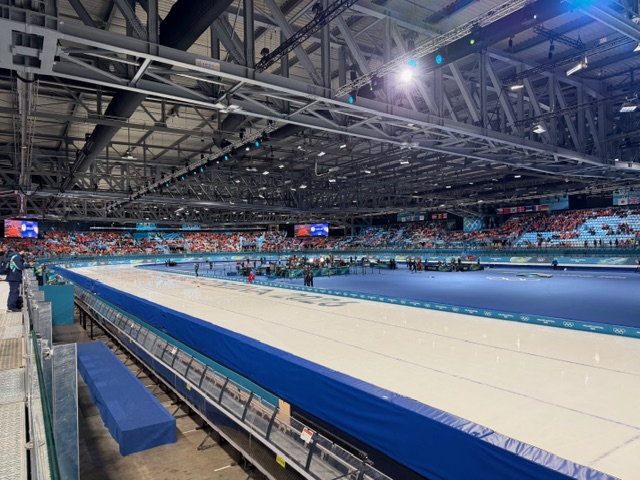
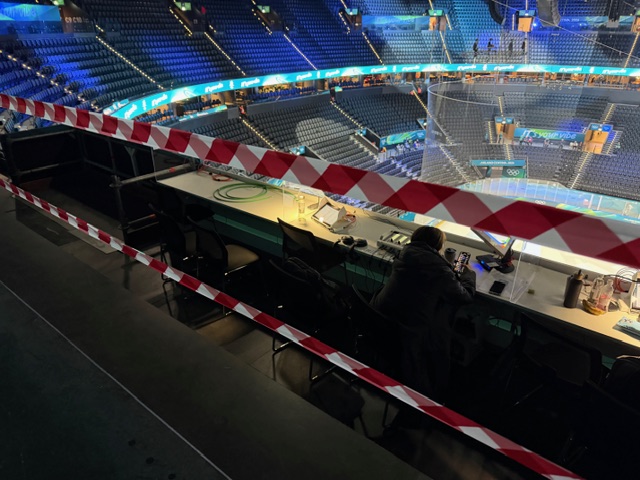
The figure skating venue was small by skating standards and the new hockey arena, which came in under the wire, had a vibe that it had come in under the wire. In the press area, there was a red and white ribbon that was all that prevented you from falling to the next lower level, a sign that not everything had been completed. Plus there was some exposed HVAC equipment. But the arena has the potential to be great and it was a good place to watch a hockey game. And it has cemented its legacy by hosting the men’s hockey final, an epic 2-1 overtime win for Team USA against Canada that will go down in Olympic lore.
In Cortina, the venues all worked quite well. The women’s alpine venue was stunning, and getting there as a spectator was efficiently done by either gondola or shuttle. The curling stadium had been the site of figure skating and the Opening Ceremony in 1956 and was modernized as a seemingly perfect curling venue, complete with some of the original wood siding. And the sliding track, which was renovated, offered money-shot views of Cortina.
While venues were spread out, that was by design; part of the laudable goal to be more sustainable and use existing venues wherever possible. It’s a model we’ll see at future Games, including Los Angeles in 2028, which will host certain events (canoe slalom and softball) in Oklahoma City where venues are already in place, and France in 2030, which will take a similar city/mountain approach as Milan and Cortina.
Volunteers: A
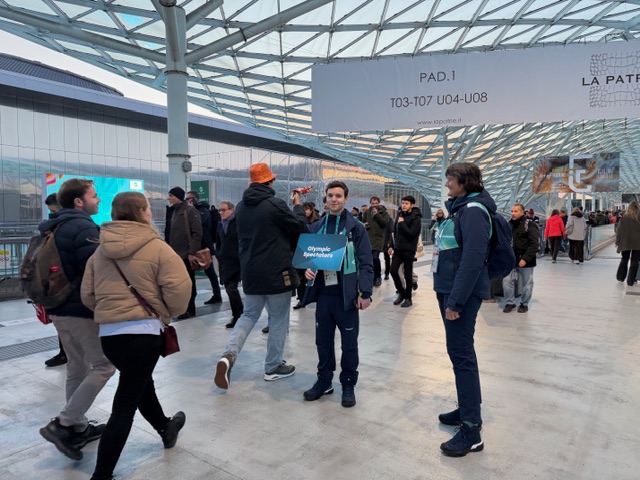
This one should always get an A, and Milan and Cortina was no exception. Volunteers were plentiful, for the most part spoke excellent English and truly wanted to help. They were everything you would want a volunteer program to represent.
Overall Olympic Organization: A
From behind the scenes, the Milan Cortina 2026 organizers managed to do what they said they would: They delivered venues (although at least one that came down to the wire), they communicated well with constituents, and they found a way to make the Games their own. For those who were accredited, communication was on point, and it was quick, which is not always the case. I had several pre-Games queries of my own for organizers, mostly around accommodations and transportation, and there was always someone on the other end to write back and to help answer my questions. On site, the same was the case.
Overall Olympic Atmosphere: B–
The future of the Olympic Games both Summer and Winter will be an event that is fragmented. Fewer individual cities are likely to take on all the venues needed to do what the Olympic Games require. The challenge ahead for those regions or countries will be to find a cohesive feel that you might get in one city where you can have an Olympic Park with multiple venues. It wasn’t necessarily the fault of the Milan and Cortina organizers as they had more than 250 miles of separation to deal with, but when you were in those areas, you didn’t necessarily get the feel that the Olympics were in town. This was less the case in small Cortina with three events on location, two within walking distance. While it makes sense for regions to combine efforts in the future from an environmental and economic perspective, the IOC’s challenge will be to make it feel like those regions are somehow connected.
Posted in: 2026 Olympic Winter Games, Latest News, Main Feature, Olympic Sports, Sports Organizations