Greg Sankey on College Football Playoff Expansion, End of SEC Championship Game
The SEC Commissioner sat for a candid, one-on-one conversation at the TEAMS Conference & Expo
Posted On: November 9, 2026 By :On Monday, ESPN and the College Football Playoff announced a five-year deal valued at nearly $1.7 billion that will expand the CFP to 24 teams starting in 2027, a move that also means eliminating conference championship games.
At the TEAMS Conference & Expo in Birmingham, Alabama, on October 29, Southeastern Conference Commissioner Greg Sankey joined SportsTravel Managing Editor Ted Keith for a 30-minute discussion about the state of college athletics. During that conversation, Keith asked Sankey about expanding the CFP and the possible impact on the highly-popular — and highly-lucrative — SEC Championship Game, which was the first of its kind when it debuted in Birmingham at the end of the 1992 season. What follows is Sankey’s responses, which have been lightly edited for clarity.
RELATED: U.S. NGBs outline plans for the future at TEAMS
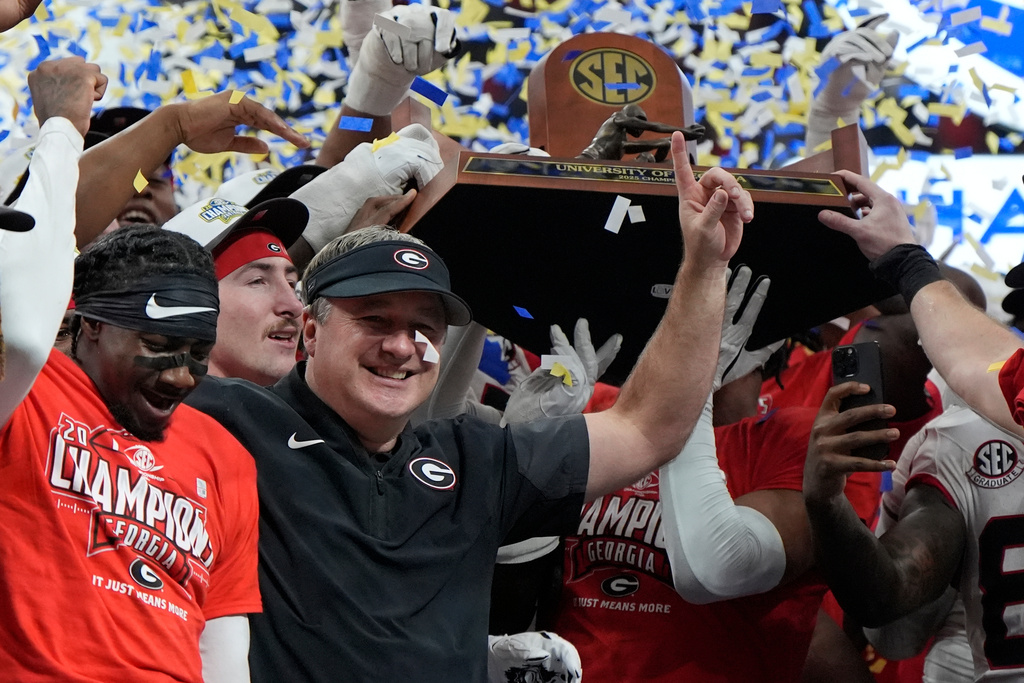
Keith: As a lot of people in the crowd know, the Birmingham people certainly know, the SEC championship game began here in Birmingham. It was played at Legion Field, and as it often did throughout the next 30-plus years, it featured the eventual national champion. The Alabama Crimson Tide won the first SEC championship. It looks like with the expansion of the College Football Playoff, this could be the last year of the SEC championship football game. Is that definitive at this point? And if so, what is lost if a game like that, that had become so popular and so meaningful, goes away?
Sankey: A couple things are not yet definitive. One is you’ve seen reports around the College Football Playoff is going to expand. There’s been some commentary about expansion, but that’s not final. And until the T’s are crossed, the I’s are dotted, and the forms are signed, that expansion’s not official. I think it’s close, but it’s not official.
And then there are implications if that is achieved, and one of those is a final decision about our conference championship games. And to make the playoff work, one of the questions we asked when we were in Tampa this summer at our media days — and I’m the one who asked — is we needed some clarity on how’s the calendar work and a couple things that have happened since that are important. What do you do with conference championship games? What are the economics? What’s the impact on young people? What do you do with Army-Navy? And then there’s a set of ancillary questions. So those will be orderly.
I think the championship game for the conference has been iconic, so that is an important, difficult decision. But we’ve watched the game of football change over years, over time. We’ve watched the expectations around the postseason change. You’re watching attendance at bowl games change from where it may have been 20 years ago. I think the media interest is still pretty high. And you saw an adaptation of a postseason that went from four to 12 at I think the right time. And it appears we can accomplish this growth in a healthy way and provide more postseason opportunities for our campus communities to host games, for young people to participate in national championship caliber competition, uh, and for the public to be a part of that experience.
Keith: So since it’s not definitive, I did want to mention this: A few months ago, you had said that the SEC felt that the move to a 16-team playoff was the next right step. And here we are potentially on the doorstep of going to 24. What changed? And is your membership on board with that change? And if not, how do you get them on board?
Sankey: Well, some of those changes I remarked about. One is the space of the regular season. So there was a national decision to start the regular season a week earlier, thereby providing two open weeks within the 12-game schedule. So that’s one. For us, we, we moved into a season where nine of our 12 games will be SEC games. And I just went through the statistical information on one of my video conferences around the rigor of our schedule being unique among all other conferences, the success we’ve had in big-time non-conference games, the way our schedule strength plays out. And so that’s an illuminating experience for our members. Third, decisions around conference championship games are still to be made. Fourth, the economics. These are the things I talked about in the summertime that we’ve been diligent and daily in working through. Learning the economics and making decisions based on not hypothetical projections, but actual opportunities. The adjustment potentially of Army-Navy and agreeing to that, the selection timing and process.
When I spoke at that Media Days event, I listed those issues to be addressed. The 24-team idea had existed for a little over a year, and those questions had not been directly addressed. So part of the learning process directly to your question is those answers. One of the keys, though, is the impact of an expanded playoff on the college football regular season, which if you experience a game in Tuscaloosa or if you go to Mercedes-Benz Stadium this week for a neutral site game between Georgia and Florida, we’ve got games in Columbia, Missouri, and all over. Each of those experiences is pretty special. They’re intense, they’re based on rivalries, they’re based on hope for the postseason.
And we’ve done a pretty deep dive into the impact on an expanded playoff and the regular season, which then causes you to make a judgment about will an expanded postseason augment and support the regular season — which is where we’ve come out — or will it diminish? And I think it arguably will support, but admittedly, that’s a judgment that one has to make when you’re in this decision-making process.
Keith: And that is the model that they use, right, at the lower level of Division I college football. They have a 24-team playoff and have for a long time.
Sankey: Sure. And I was part of that level, I-AA football as it was known when I was the commissioner of the Southland Conference — it’s the FCS now — when it was 16 and you’ve watched it grow. What 24 does at this level, because we’re tied to bowls, so it’s different than that other level, the Championship Subdivision level. Bowl games step into this process at the quarterfinals when we’re down to, make sure my math is right, eight teams. We had 12 [teams in the CFP]. That allowed four first-round campus sites, which were really successful events. In 24, the top 16 teams all host at their campus, so there’s a reward for the top eight seeds, which doesn’t exist right now for the top four. And you engage campus communities in a way in mid-December that’s new and a unique opportunity. For those of you in this sports environment, that’s an economic opportunity. It’s a campus visit opportunity, and it’s a competitive experience for the participants.
Posted in: College Football, Latest News, Main Feature, TEAMS Conference