Navigating the Changing Landscape of College Sports
A panel at the TEAMS Conference explored the college-to-Olympics pipeline, NIL opportunities and more
Posted On: November 4, 2025 By :Between the House settlement and evolving funding models, collegiate athletics are realizing a drastic change. As a result, the pathways that traditionally developed future Olympians and Paralympians are also shifting. At the TEAMS Conference & Expo, held October 13–16 in Columbus, Ohio, a panel of experts delved into this new narrative and how organizations can adapt. The session was part of the U.S. Olympic and Paralympic Committee’s SportsLink program.
The NCAA and Team USA Partnership
According to Adam Wood, director of performance pathway for the U.S. Olympic and Paralympic Committee, 75 percent of U.S. Olympians for the 2024 Paris Games leveraged college systems as part of their developmental journey. On the Paralympic side, that number was a record 54 percent.
“The work that we do is focused on advocating, promoting sustainability and building audience around the college system in promotion of Team USA, but also the role that it plays in grassroots participation in youth sports in our country,” said Wood.
Artistic swimming Olympian and Ohio State University student Keana Hunter is the perfect example of this partnership. She got involved with the sport at the age of 8; when she was 16 years old, she moved to California to train full time on the national team to pursue her Olympic dream. To achieve her goal of getting to the Games, Hunter decided to postpone college and take two gap years.
“A big reason why that was possible was because of OSU and their support, especially from the coaching staff,” she added.
She is now a sophomore at Ohio State, studying psychology on the pre-med track.
Rich Bender, USA Wrestling’s executive director, credits his organization’s success to the infrastructure available to student athletes. The U.S. won three wrestling medals at the Olympic Games in Rio in 2016, nine medals at the Tokyo Games in 2020 and seven in Paris in 2024.
“Our country would have no chance of the success that we’ve experienced without that partnership and those opportunities,” said Bender.
The Evolving Financial Model
Over the last decade, the NCAA has lost a number of major court cases — most recently leading to the House settlement — which has defined the economic model of college athletics. NCAA schools can now share an average revenue ($20.5 million this year) from ticket sales, sponsorships and television to pay student athletes. At Ohio State, four sports were chosen to receive those funds: football, men’s and women’s basketball, and women’s volleyball.
“We had to balance our budget; we had to trim expenses; we had to increase revenue,” said Ross Bjork, the university’s senior vice president and athletics director. “We had to really come up with a more efficient model to staff a lot of this enterprise; we had to invest in ROI positions.”
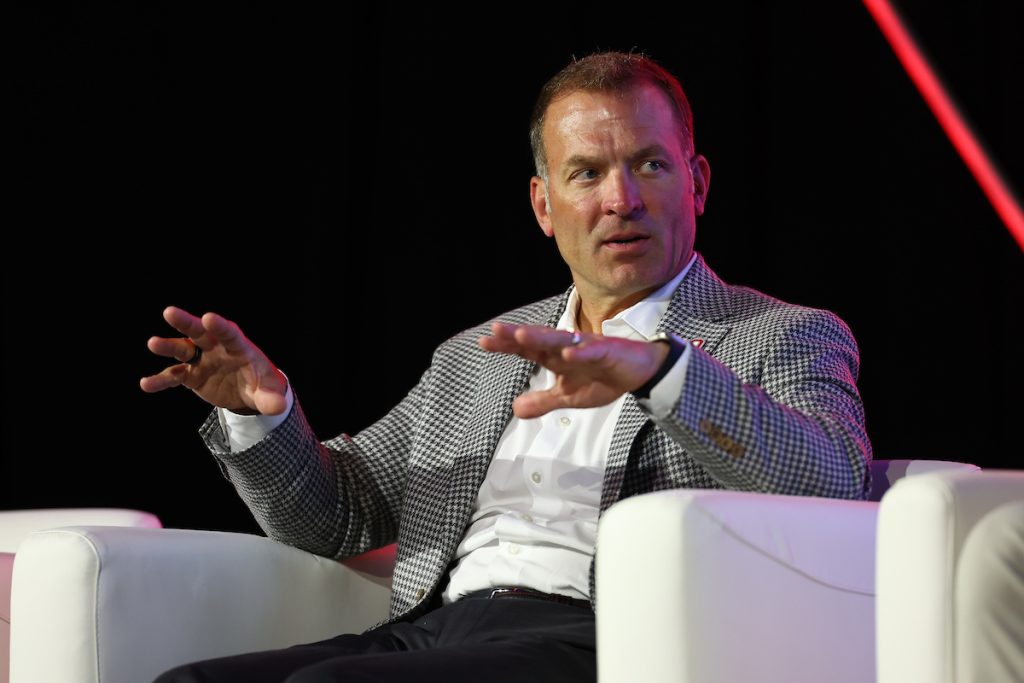
According to Bjork, Ohio State has the largest operating budget in the country when it comes to athletics. But the budget also fuels 36 sports.
“We’re very blessed that we have a lot of support, but how we spend our money has never been more critical and never been more scrutinized,” he noted.
Bjork predicts that about every two years the organization will have to look at where revenue is coming from and how to manage expenses.
“There’s no more five-year financial projections,” he said. “I’ve got a one-year projection; I’ve got a little bit of a guess on a second year, but I can’t predict three years from now. It’s going to be a constant evolution.”
Women’s Sports in the NCAA
This year, women’s wrestling became the 91st NCAA championship sport. However, the women’s discipline has been an Olympic event since the 2004 Games in Athens, Greece.
“Obviously the collegiate designation was something that’s been very important to that development and was a result of the credibility that the Olympic designation provided,” Bender said.

Previously a co-ed championship, women’s fencing is now the 92nd NCAA-sanctioned sport. Other women’s sports that are going through the process to gain NCAA varsity status are triathlon, rugby and equestrian.
“Women’s wrestling is a shining example of a sport that’s graduated from that program and gotten on the docket for a championship status,” said the USOPC’s Wood. “So definitely advocate for engagement in those sport communities.”
The Big Ten has recently added more than 850 scholarships and a majority of those are for women’s sports. At Ohio State, 54 out of 91 new athletic scholarships are for female student athletes.
“Universities are now figuring out that this is a marketing vehicle for the campus, so let’s invest,” Bjork said.
The Impact of NIL
Naturally, NIL has been one of the biggest disruptors to the funding model. Student athletes like Hunter are already taking advantage of the financial opportunities that the new rules present.
“Being able to earn revenue off of something we’ve already put a lot of time and money into is a great thing,” she said.
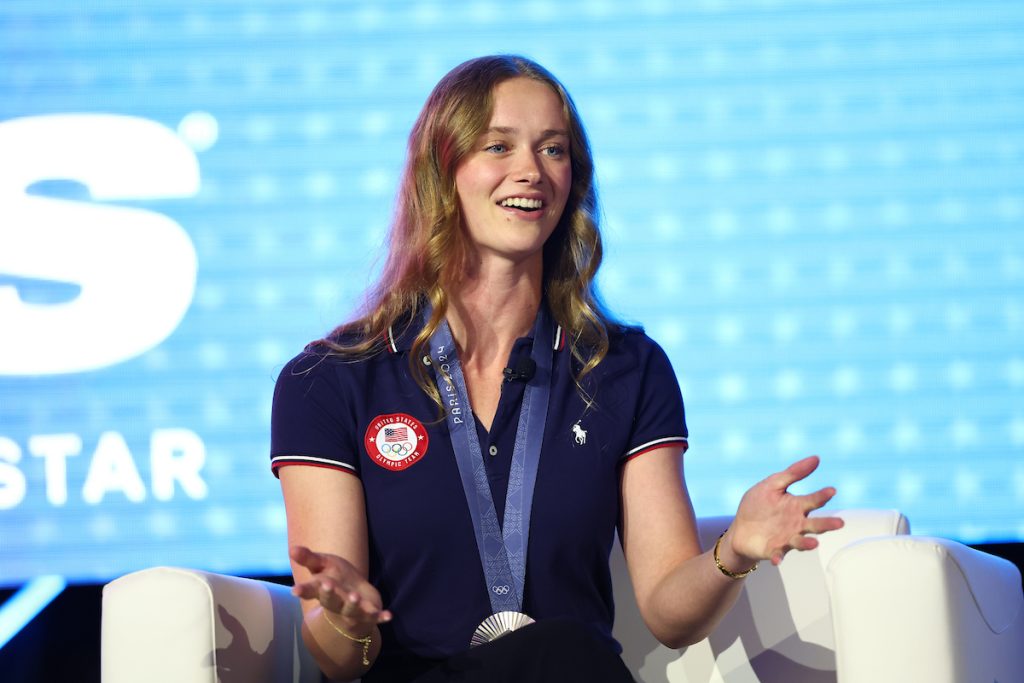
Being involved in college sports is also a massive time commitment that restricts athletes from getting part-time jobs like other students.
“With how busy we are as students, as athletes and doing other kinds of jobs that we’re trying to do on the side to add to our resume, we don’t have a ton of time,” Hunter noted. “NIL offers that opportunity where we can be on our own schedule, our own flexibility, and maximize what we want to do and what we want we want to prioritize while also doing all these other things in our life.”
The new system also is affecting NGBs with younger athletes.
“It wasn’t long ago that most of our team were post-grads — that’s not the case now,” said USA Wrestling’s Bender. “So being creative around the rules and how we can harvest resources for athletes in our sport is something that we’re keen on.”
Forward-Looking Aspirations
The session culminated with each panelist listing what they wish to happen in the future of college and Olympic sports.
“I hope to see a continued growth in NIL opportunities for student athletes, as well as Team USA’s support of college athletes coming in and out of that realm,” Hunter said. “I had a week between the ending of the Paris Olympics and going to Ohio State. It’s a very chaotic process.”
Bender emphasized the importance of a partnership with the NCAA to succeed at the Olympic level.
“I think we have an opportunity in front of us to raise the relevance of Olympic sports, to increase our connectivity with the college sports program, because it’s critical,” he said. “My goal is that we’re going to smash the medal count in both [L.A. 2028 and Salt Lake City 2034], but have more college opportunities for Olympic athletes than ever before.”
As for Bjork, he would like to see “stability in the systems” and “clarity of the financial model.” He named three constants in collegiate athletics: students will get an education, universities will develop their players and teams will compete.
“That piece is not going away,” he added. “So clarity around that purpose is what we’re pursuing.”
Posted in: Collegiate Sports, Hosts & Suppliers, Latest News, Main Feature