Scenes from the World Cup: Four Days in Dallas
Everything is bigger in Texas — including the spectacle of the world's biggest soccer event
Posted On: June 23, 2026 By :DALLAS — Of all the many blessings sports can provide, this one is not to be overlooked: it creates a passport full of memories, where places and experiences blend together.
Houston, then, is where I witnessed superstar athletes reduced to gawking fans in the presence of Muhammad Ali. Atlanta is where I watched the blur of Michael Johnson‘s gold shoes as he ran into Olympic history. And St. Louis is where I saw grown men cry when the Boston Red Sox finally won the World Series.
I have been to dozens of cities across America and covered nearly every major sport in the world.
But until last week I had never been to Dallas or covered a major international soccer match — and I can now say I’ve never seen anything quite like the World Cup.
The World Cup is having an Orange Army of 10,000 fans from the Netherlands parade through the streets of Dallas hours before that nation’s first match against Japan — and then having a similar number of Croatian fans do the same three days later.
The World Cup is watching fans of different countries that don’t speak the same language high-five each other in the concourse of cavernous Dallas Stadium in a wordless acknowledgement of the joy of being part of this event, in this place, after so many years of waiting.
And the World Cup is listening to roughly 50,000 England fans stand arm in arm and sing along to “Wonderwall,” by Oasis, their voices powered by the contentment of a convincing win and the optimism that surely, it is coming home.
By the time I came home after four days in Dallas, I had stamped a new experience in my passport of memories, and it is one I won’t soon forget.

The City
Other than layovers, I had never been to Dallas, which means I had never been outside the concourse at Dallas-Fort Worth International Airport. So imagine my surprise, then, when following signs to the baggage claim meant simply stepping through the doors of the concourse outside my gate . . . and directly into the baggage claim I was looking for. Big D was getting straight A’s so far.
Getting around the metroplex — an area consisting of 11 counties and more than 8 million people — required considerably more effort. I had rented a car, as I knew I would need to get from my hotel in downtown Dallas to the Fan Fest in the south part of town, to Arlington for the games and to Frisco for a visit with one of the many cities drafting off the World Cup’s presence in the area. I drained nearly an entire tank of gas and my patience navigating the winding highways with a phalanx of massive pickup trucks blocking my path.
My hotel, the Aloft by Marriott, was formerly a railroad freight terminal, a fitting past for a building with a constant stream of guests that sometimes gave it the feel of a train station. Renovations at the Kay Bailey Hutchinson Convention Center (site of the International Broadcast Center for the World Cup) had suppressed bookings at that and other hotels in town, as sports and cheerleading competitions that typically took place around this time were being moved elsewhere. The World Cup was supposed to pick up the slack but as the event drew near that didn’t seem to be happening. Then, once the games started, the flood arrived. In one week, Aloft went from 62% capacity to 93%, due almost entirely to the influx of foreign visitors from the Netherlands, Japan, Croatia and England.
The result was that the World Cup had taken over the city, which had spent years preparing for this opportunity to showcase Dallas to visitors while adding what Monica Paul, executive director of the Dallas Sports Commission, called “a little Texas hospitality thrown in.”
At Globe Life Field on Monday night, fans seemed almost as interested in watching the World Cup on the screen at the Arlington Backyard adjacent to the ballpark as they did to go inside and watch the middling Texas Rangers play the equally uninspiring Minnesota Twins. At what might be the city’s most famous tourist destination, the interest from visitors wanting to see the place where President John F. Kennedy was shot caused the Sixth Floor Museum to change its schedule and stay open seven days a week for the duration of the World Cup, rather than remaining closed on Monday and Tuesday.
Some places still remained free from tourists. A friend who had lived in the city recommended I try the “best tacos I’ve ever had,” at a nameless window attached to a gas station a couple miles from downtown. There was no one there when I pulled up. He was right.
The Venues
AT&T Stadium (known as Dallas Stadium for the World Cup) will host nine matches at the FIFA World Cup, the most of any venue. It has hosted Super Bowls, Final Fours and once put more than 100,000 fans into the venue for the NBA All-Star Game, and of course it is home to the country’s most popular team in the country’s most popular sport. Still, it apparently needed the World Cup to introduce itself on the global stage. More than a few members of the Orange Legioen told me they’d never heard of the Dallas Cowboys even though they had paid hundreds of dollars and traveled thousands of miles to enter the $1.3 billion shrine to America’s Team.
While I was grateful for a seat in the press box — and disappointed at the lack of food there; no brisket? — the windows muted much of the sound and the life of the event, so I spent as much time as possible watching both matches from the stands. I’m glad I did. No one in the press box was drop-kicking beer cans as if they were soccer balls or hugging their neighbors after a goal (though the undisciplined Croatian press might have; they shamelessly violated the “no cheering in the press box” mantra that American journalists have long held sacred).
If there is one defining feature to AT&T Stadium it is the two gigantic video board that hangs over the field. Measuring 160 feet long by 72 feet high they are not only impossible to miss, they are hard to ignore. Fans around me said they had to fight the instinct to watch the screen and not the match itself, a sure sign that digitally influenced brain rot is truly a shared global experience.
FIFA’s takeover of the venue included the obvious, like covering up sponsorship logos that don’t align with its own corporate partners (hence AT&T Stadium becoming Dallas Stadium in the first place). But other touches seemed to needlessly impact the fan experience, such as overhauling the menu at the concession stands and not permitting TVs at those same stands to show the game. Workers at the stadium lamented the fact that they could watch the Cowboys games from their posts even without a view of the field. During the World Cup, they could only hear the roar of the crowd, not the action that produced it.
And while there were reports of fans finding their way inside without a ticket, security guards said the bigger issue was putting the de-escalation training they’d been given into use to tame the rowdy fans at the Croatia-England match on June 14. Mostly the fans were content to chant, sing (“England Til I Die,” was particularly popular on Wednesday) and wave their respective flags; or, in the case of one woman, paint it on her pregnant belly.
The Fan Festival, held in the shadow of 96-year-old Cotton Bowl Stadium on the grounds of the Texas State Fair, was mostly deserted when I visited on Monday afternoon. They had had more than 30,000 fans on June 11 when Mexico beat South Africa in the first match of the tournament, but on this day there was only a smattering of visitors. Some were watching the Saudi Arabia-Uruguay match, and a few could be found inside the official FIFA store, one of the only respites from the punishing afternoon sun.
Then I walked a little further and found where most of them had gone: a line that stretched to more than a hundred people, all waiting for the chance to make a free bracelet at the Bank of America activation. The bank is doing the same at fan fests across the country, and the bracelets have become as much a viral sensation as any goal from Lionel Messi or Kylian Mbappe. There are 140 charms fans can choose from, including numbers, countries and Dallas-themed designs.
Asked why they had become so popular, one volunteer manning the line said, “I don’t know. But this is the longest line we have here all day.”
The Games
I had the good fortune to attend a match in the 1994 World Cup at the Meadowlands in East Rutherford, New Jersey — Ireland against Norway. I had the misfortune of attending the only one of those 52 matches that ended 0-0.
Thirty-two years later, I hoped to see at least one World Cup goal and to experience the electricity that can course through a crowd when that happens.
After a scoreless first half between Japan and the Netherlands, I thought I was headed for the same result. Then, in the second half, a veritable orgy of offense: three goals in 15 minutes, and then the equalizer by Japan’s Daichi Kamada in the 89th minute to equalize and gain a 2-2 draw.
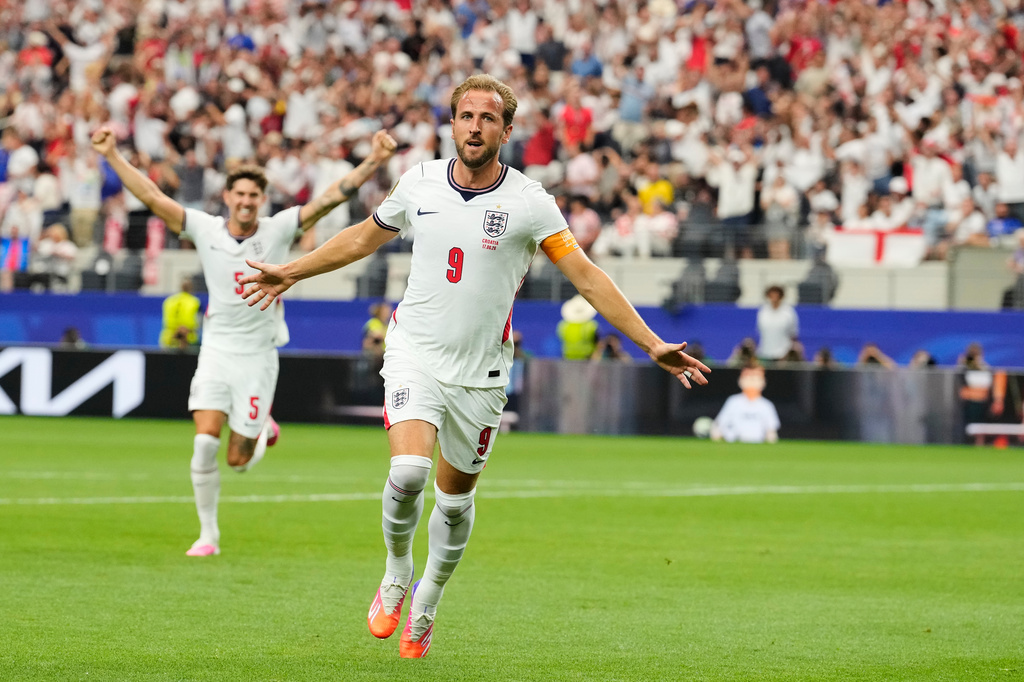
That was the same score at halftime of the England-Croatia match three days later, meaning I had seen eight goals in the equivalent of one game. Harry Kane‘s penalty kick (coming on a second chance after his initial attempt was stopped only to have the Croatian keeper ruled to have come off his line; “HK PK and the GK with a BK” I texted some friends) opened the scoring in the 12th minute. Jude Bellingham regained the lead for England two minutes into the second half and Marcus Rashford finished it off in the 85th for a 4-2 England victory.
When the final whistle sounded, the England fans showed no desire to leave. Among them was Sam Dennis, who works for a construction recruitment firm and who had come to the game from his home in Houston, where he moved 18 months ago from his native UK. His father, Stephen, had come over to join him for a visit that was about much more than soccer. Sam and his wife had just had their first baby, so Stephen was able to meet his grandson and see his country take part in the World Cup. For $700 a ticket they had bought an experience they could only have dreamed of.
I asked Sam whether it was as good as he had imagined.
“It was better than that,” he said.
I agree.
Posted in: 2026 FIFA World Cup, Latest News, Main Feature, Soccer