World Cup Latest Chance for Atlanta to Stake Claim as Championship City, USA
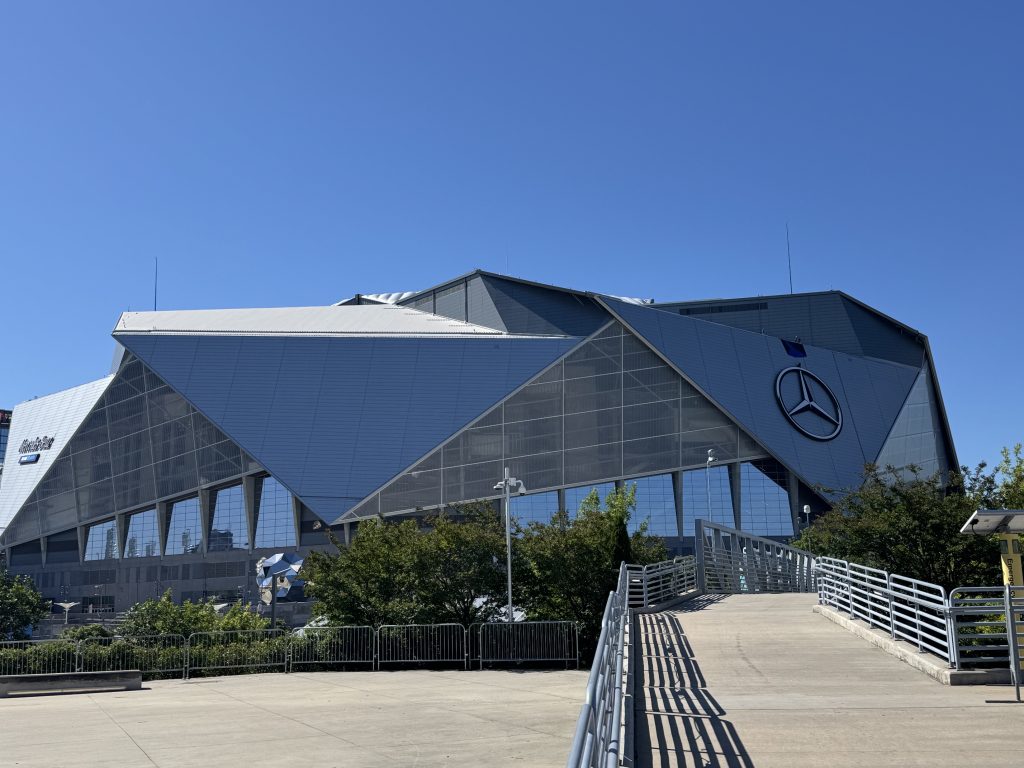
Mercdes-Benz Stadium hosted eight matches, including a semifinal, and is already looking ahead to another Super Bowl in 2028
Posted On: July 13, 2026 By :Four years ago this summer, a clock was installed in the lobby of the Atlanta Sports Council’s headquarters at 191 Peachtree Tower, a 50-story skyscraper in the heart of the city. It was not meant to tell what time it was, but rather to countdown to a time certain: the start of the FIFA World Cup in Atlanta, and the city’s latest claim to being America’s preeminent Championship City.
After that clock was installed, it slowly and reliably ticked down for more than 1,400 days, marking time until Atlanta would kick off its first turn as a World Cup host. When it expired on June 15, there was no celebration. All it really meant was that the countdown was over — and the real work was on.
For that was the day Atlanta hosted the first of its eight World Cup matches, a number second only to Dallas’s nine. That unremarkable 0-0 draw between Spain and Cape Verde was followed three days later by another match (Czechia 1, South Africa 1), and then another three days after that (Spain 4, Saudi Arabia 0), and another three days after that (Morocco 4, Haiti 2) and another three days after that (Congo DR 3, Uzbekistan 1).
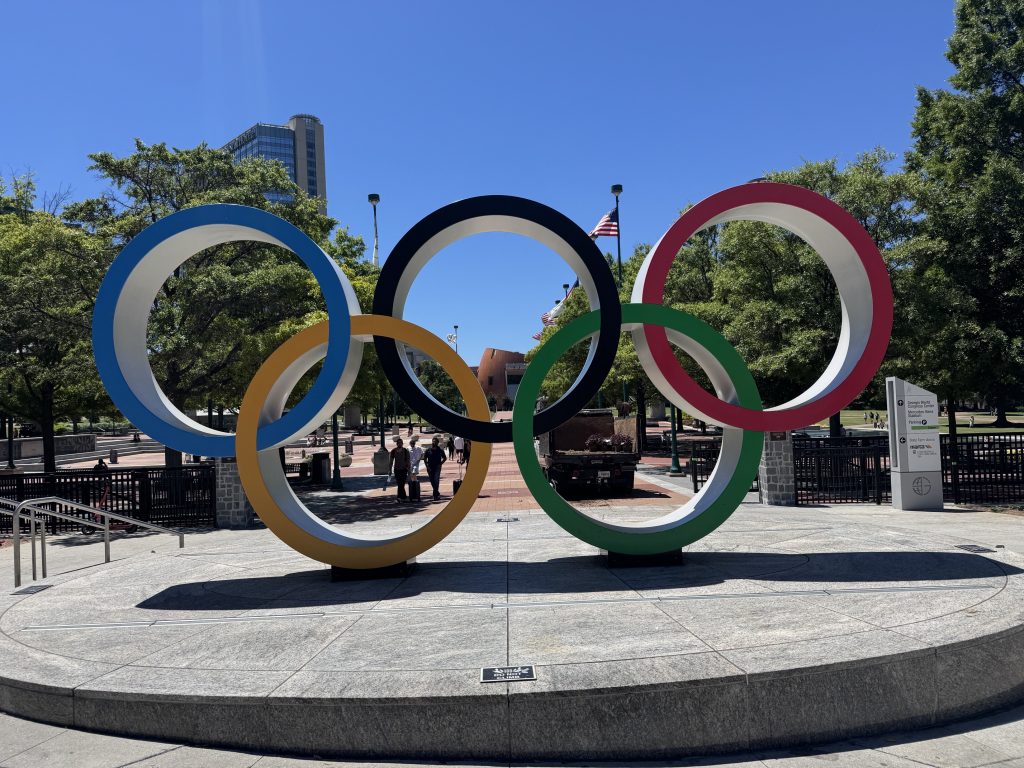
That metronomic cadence was perfect for a city that has become a reliably consistent part of the sports calendar in a way few U.S. cities ever have. Now that it has checked the FIFA World Cup off its sports bucket list, Atlanta has joined Los Angeles as the only city in the country to have hosted the Olympic Summer Games, multiple Super Bowls, the College Football Playoff championship game, multiple men’s and women’s NCAA Final Fours and the MLB, MLS and NBA All-Star Games, among hundreds of other events.
“We want everything,” said William Pate, president and CEO of the Atlanta Convention & Visitors Bureau. “We think we’re delivering on what events are looking for, and I think that’s earned us the right to be at the table for all the major events.”
The city isn’t done yet, either. In 2028 it will welcome the Super Bowl back for the fourth time, the men’s Final Four will be back in 2031 and, should it wind up in the United States as expected, the FIFA Women’s World Cup could have matches in the city that same year.
This week it will cap its World Cup run by hosting a semifinal between England and Argentina, concluding a stretch that featured five group stage matches, plus one each in the Round of 32 (England 2, DR Congo 1) and the Round of 16 (Argentina 3, Egypt 2). And it all came on the heels of the opening in May of the new home of U.S. Soccer’s national training center, giving Atlanta every right to claim it is the true soccer hotbed of the United States.
“All roads lead to Atlanta,” said Andrew Saltzman, president of business enterprise and chief commercial officer of the Atlanta Hawks, who has been in the city for 29 years. “This city is truly a phoenix.”
Goal Oriented
In fact, that sentiment is reflected in the city’s official logo, which depicts a phoenix rising from above a flame. “The best thing that ever happened to Atlanta was Sherman and a match, because it allowed the city to reinvent itself,” said John Grant, executive director of the Cricket Celebration Bowl and the MEAC/SWAC Challenge Kickoff and a business leader in Atlanta for four decades.
When Grant arrived in Atlanta in 1987, the city was starting to emerge as a player on the national stage, thanks in part to the growth and ambition of business leaders like CNN founder Ted Turner. “You hear all the people who’ve worked around him, that talk about ‘finding your inner Ted,'” said Saltzman. “I think your inner Ted is all about thinking out of the box and being bold and having vision.”
Atlanta’s vision as a sports heavyweight was first realized in the 1990s, when it hosted the Super Bowl (1994) and the Summer Olympics (1996) just two years apart. However, it was not part of hosting the World Cup when that event first came to the United States in 1994. But the area’s growth as a soccer hotbed continued to build over the next three decades. The opening of Mercedes-Benz Stadium in 2017 turbocharged that growth. Designed in part with the goal of one day hosting the World Cup if it should ever return to the United States, the venue became the home of Atlanta United, which debuted in 2017 and immediately smashed U.S. attendance records for soccer. Now, despite also being home to the Atlanta Falcons and football’s SEC Championship Game as well as numerous concerts, more than 40% of all attendance at that venue comes from soccer matches.
Just one year later, FIFA awarded the 2026 men’s World Cup to North America’s united bid, and in 2022 Atlanta was officially named a host city.
Investment in Travel
There was little doubt the World Cup would be coming to Atlanta, in large part because it has never been easier to bring the world to Atlanta. Hartsfield-Jackson Airport is the busiest in the country, and Delta Airlines has direct flights to every host city in North America, giving fans from across the globe the option of making Atlanta their personal base camp while they explored other destinations during the tournament.
The city also has 13,000 hotel rooms within walking distance of the Georgia World Congress Center, located just steps from the stadium. The newest is the Signia by Hilton, which opened in January 2024 and boasts just under 1,000 guest rooms as well as a slew of amenities, such as the largest hotel ballroom in the state.
Elsewhere in town, the former CNN Center reopened the month before the World Cup began. Now called The CTR, it served as the headquarters for the roughly 3,300 volunteers who would work the event. Many of them helped out at the Fan Festival, which will have been open for 18 days during the tournament by the time it ends and is located in Centennial Olympic Park.
The biggest development in the area is yet to come, however. The Centennial Yards project, a $5 billion, mixed-use plan, is set to be completed in 2030 and will bring over 4 million square feet of office space and a 5,000-seat music venue to what had formerly been a railyards.
“The center of the whole city is being shifted,” said Grant. “The 1996 Olympic Games is the genesis of today. They introduced the world to Atlanta. And because of that the World Cup is here now. Thirty years from now it won’t be the city it is today.”
Atlanta United
That is the goal of the planners who have brought the World Cup to Atlanta. Dan Corso, president of the Atlanta Sports Council, says the World Cup is “a bit of a reintroduction,” for Atlanta, even noting the city’s growth since it hosted the Super Bowl in 2019. The economics reflect that. Corso said that Super Bowl (despite being a dud on the field in which the New England Patriots won their sixth and final title of the Tom Brady era, 13-3 over the Los Angeles Rams) brought in no more than $400 million. Before it kicked off, the World Cup was projected to have an economic impact of $500 million.
Atlanta will certainly get a chance to test that number again, starting with another Super Bowl in just 18 months. “There’s no greater compliment,” Corso says of having major events come back to town. “Everybody can get it one time, and and they’ll do well, but when the event wants to come back more than once, two, three, four times, you know, you’ve got a good reputation.”
Building its reputation was essential for the city. “Atlanta’s my home, and this is our home, and so when you’re coming to Atlanta, you’re not just coming to a city, you’re coming to our home, and we want you to be treated the way you would be treated if you came to our home,” said Pate. “That’s Southern hospitality, and it is real, and we take that very personally.”
The event has not only gone off without any major security problems — a major victory for a city that is still scarred by the bombing that took place at Centennial Park during the 1996 Olympics — it hasn’t had any notable complaints about transportation issues, some of which was alleviated by its rapid rail system, MARTA, keeping fares at its standard rate. The games alone have drawn more than 550,000 people, and Pate estimated that 10–20% of hotel bookings were coming from foreign visitors, meaning the city has had ample opportunity to show itself off to not just soccer fans but potential future business parters as well that could further elevate Atlanta’s global status.
“We all understand that this is a platform to show what our city and our state are about,” said Corso. “If they feel a connection here, and they feel they have a wonderful experience, who’s to say they will come back and they’ll open up an office, right? Or grow a company here in the state or in the city?”
Finishing Kick
On a beautiful day in mid-May, just as the city was starting to come down with a case of World Cup fever, an important global visitor arrived in town. It came without a ticket and didn’t need a hotel room, but its arrival spoke volumes about the way Atlanta has evolved.
It was the World Cup trophy, and it was on display inside (naturally) a Coca-Cola activation just outside Mercedes-Benz Stadium. Lines of people streamed past for hours just to get a glimpse at the reward for winning the most popular single sporting event in the world. It was already an unmistakeable sign that the vibe is different in Atlanta in 2026 than it was in 1996.
Pate has lived in Atlanta all his life, and while working in marketing for BellSouth “went to everything” during those Summer Olympics. The message then, he says, was “stay away from downtown because there’re gonna be all these people and it will be crowded. And so a lot of people took that to heart and they missed being a part of the Olympic experience. And so we told businesses and residents: Come downtown and be a part of the World Cup experience, even if you don’t have a ticket. We have tons of things to do.”
Even a longtime Atlantan like Pate knows there are not a ton of things left for Atlanta to do on the sports stage.
“This was kind of the only thing left,” he says.
So surely when it’s over he will allow himself a nice, long chance to enjoy this monumental moment and bask in how far his city has come. He was asked how long it would be before he started turning his attention to what is ahead for his city.
“The next day.”
Start the clock.
Posted in: 2026 FIFA World Cup, Feature Story, Latest News, Soccer