2036 Olympic Summer Games: Pros and Cons for the Contenders
Breaking down each of the seven nations bidding to host the Games after the registration deadline passed
Posted On: November 9, 2026 By :As the countdown continues in the United States toward hosting its first Summer Olympics in 32 years in 2028, attention around the world is focusing on which nation will welcome the next Summer Games yet to be awarded. Seven nations from four continents — Germany, Hungary, India, Qatar, Republic of Korea (South Korea), South Africa and Türkiye — are the official bidders in the running to host the 2036 Olympic Summer Games.
Parties had until October 31, 2026, to register their interest with the International Olympic Committee, and initial presentations are due to be made early this month.
Of the seven countries in the running, only two — Germany (in 1936 and 1972) and the Republic of Korea (in 1988) have previously hosted an Olympic Summer Games. Meanwhile, South Africa is bidding to become the first African country to host an Olympic Games of any kind. (Indonesia, and Chile, had previously been rumored as expressing interest, but bids from neither country materialized.)
The host city of the 2036 Olympic Summer Games will be elected by IOC members at the IOC Session in mid-2029, with an exact date still to be confirmed. Below, SportsTravel assesses the seven countries in contention and the pros and cons of their respective bids.
Germany (Munich)
Munich won Germany’s internal selection in September to be considered for hosting either the 2036, 2040 or 2044 Olympic and Paralympic Games, fending off competition from the Rhine/Ruhr region. Its previous hosting experience in 1972 played out amid a major international tragedy, when Palestinian terrorists murdered 11 Israeli athletes.
Pros:
- Hosting Experience: Munich hosted the Olympic Games in 1972, while Garmisch-Partenkirchen and Berlin staged the Winter and Summer Games in 1936.
- Infrastructure and Sustainability: Existing infrastructure could be used again (e.g. the Olympiastadion, Olympic Swimming Pool, etc), and the short distances between venues feed into the city’s long-term sustainability strategy.
- Unity: It would allow the city to improve its Olympic legacy and unite a country facing social, economic and geopolitical challenges.
Cons:
- Repeat Location: Munich’s prior hosting experience could count against the bid — especially as the IOC wants to expand the Olympic Games to new territories.
- Finances: Voters and anti-bid groups (such as NOlympia) would reject multi-billion-euro expenditure in favor of prioritizing public infrastructure, and Hamburg withdrew from the bidding race for those reasons.
Hungary (Budapest)
Budapest has been identified as Hungary’s preferred host city location for the 2036 Olympic Summer Games if it decides to proceed with a formal bid.
Pros:
- Location: Hungary is in central Europe and its capital city is almost exactly as far from Paris to the west (940 miles) as Athens is to the southeast (922 miles). It also boasts strong transport links and a mid-sized international airport (Budapest Ferenc Liszt International Airport).
- Sustainable Legacy: Hungarian Olympic Committee (MOB) President Zsolt Gyulay wants the 2036 Olympic Games to be the first edition without permanent stadium construction.
Cons:
- Lack of Hosting Experience: Hungary has not hosted an event on the scale of the Olympic Games before, although Budapest was entrusted with delivering the inaugural 2026 World Athletics Ultimate Championships.
- Commitment: The MOB has only confirmed that it will pursue a bid for hosting rights, but it is still subject to an extensive public consultation.
India (Ahmedabad)
India has never hosted an Olympic Games before. Its plan for the 2036 Olympic Summer Games would see them centered in Ahmedabad, Gujarat, about 470 miles from the capital, New Dehli.
Pros:
- Dress Rehearsal: Ahmedabad is already set to host the 2030 Commonwealth Games (the centenary edition of the multisport event), making it a potential dress rehearsal for the 2036 Olympic Games.
- International Hosting Experience: Ahmedabad will have already hosted events such as the ICC Men’s Cricket World Cup 2023, a World Archery Para Series and the World Police and Fire Games 2029, though hosting an Olympic Games would be a source of huge national pride.
- Ambitious Infrastructural Plans: Venues planned include an Olympic-standard multi-sport complex in Ahmedabad, a 132,000-seat capacity Narendra Modi Stadium, and a 2,191-apartment Olympic village, costing between $4.1 billion and $7.5 billion.
Cons:
- Governance: Critics and the IOC have raised concerns regarding governance issues within the Indian Olympic Association, historical legacy planning for post-Games venues (e.g. weak investment allocations in sports policies, public health infrastructure, etc), doping cases (Indian athletes committed 260 doping-related rule violations in 2024), and significant projected financial costs (the Delhi 2010 Commonwealth Games cost 16 times more than budgeted — $4.1 billion compared to $270 million projections).
- Athlete Conditions: International players at the 2026 India Open (badminton) complained about unhygienic conditions and severe pollution — echoing similar challenges from the 2010 Commonwealth Games held in Dehli.
- Neighborly Relations: India’s relations with Pakistan and Bangladesh have become more strained in 2026, with Bangladesh withdrawing from this year’s Men’s T20 Cricket World Cup and Pakistan threatening a boycott of its match against India.

Qatar (Doha)
Like India, Qatar has never hosted an Olympics. Doha has been proposed as the central location and surrounding areas like Lusail and Al Rayyan also under consideration.
Pros:
- FIFA World Cup: Qatar hosted the 2022 FIFA World Cup — dispelling doubts that the smallest country ever to host the tournament could deliver such a global event at scale.
- Safety and Security: Many fans praised the 2022 FIFA World Cup as the safest yet due to the limitations on alcohol sales; others, however, criticized Qatar’s strict anti-LGBTQ laws.
Cons:
- Accommodation: Although the country ramped up its accommodation supply (e.g. cruise ships, hotels, villas, glamping tents) before the 2022 FIFA World Cup, it still struggled to meet the sizeable demand.
- Climate: The 2022 FIFA World Cup was moved from the summer months to the winter months to account for extreme summer temperatures — could the Olympic Summer Games move to the winter for the first time? It has been pushed back before, such as the 1964 Games in Mexico City that took place in October, and the 2000 Games in Sydney that were largely held in September.
- Tainted Legacy: The manner in which Qatar won the bid for the World Cup included allegations of corruption, while the treatment of migrant workers continues to taint the tournament’s legacy.
Republic of Korea (Jeonbuk/Seoul)
Seoul and the North Jeolla Province are pursuing a co-hosting plan for the 2036 Olympic Summer Games.
Pros:
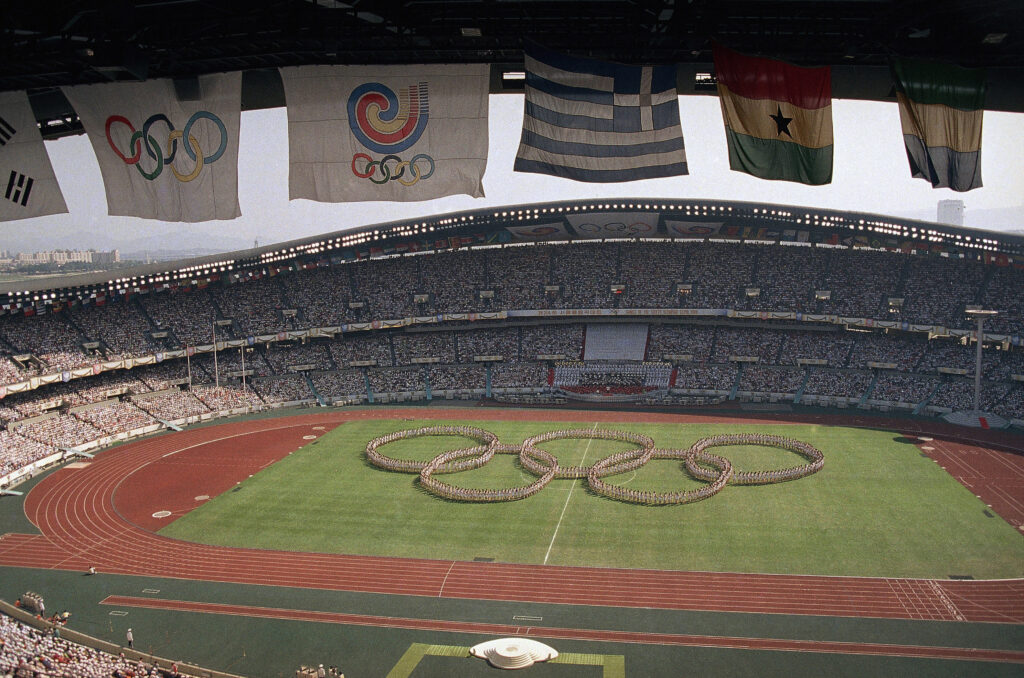
- Previous Hosting Experience: The country has previously hosted two Olympic Games: the 1988 Summer Games in Seoul and the 2018 Winter Games in Pyeongchang.
- Tourism Framework: The Republic of Korea is a booming international tourism destination and Seoul would already have sufficient infrastructure (e.g. airports, stadiums, hotels) to deliver such a large-scale event for the world.
Cons:
- Repeat Destination: It would not be a new location for the Olympic Games, and the IOC is increasingly prioritizing new territories to grow the Olympic Movement.
- Time Zones: The 2032 Olympic Summer Games will take place in Brisbane, Australia (one hour ahead of Seoul), so the IOC might be reluctant to award consecutive Games to nations whose time zones are restrictive to TV audiences in Europe, Africa and the Americas.
- Regional Differences: Jeolla Province was the country’s preferred host candidate, but concerns over infrastructure, accommodations, transportation and venues meant that a co-hosting plan was proposed instead.
South Africa (Durban)
The east-coast city of Durban is South Africa’s preferred candidate to host the first Olympic Games in Africa, either in 2036 or 2040. It was named ahead of Cape Town and Johannesburg.
Pros:
- Hosting Milestone: It would mark the first-ever Olympic Games on the African continent and come seven years after the continent hosts its first World Athletics Championships in 2029 (in Kenya). It would also come 10 years after Senegal hosted the 2026 Youth Olympic Games in Dakar.
- Hosting Experience: South Africa can rely on existing venues built for the 2010 FIFA World Cup, including Durban’s 56,000-seat Moses Mabhida Stadium, to reduce new construction costs.
Cons:
- Safety and Security: Durban was ranked the sixth-most dangerous city in the world to live in, according to Numbeo’s Mid-Year Crime Index for 2026, with a score of 80.5 out of 100 outlining people’s perceptions of crime and security.
- Commonwealth Games: The city was previously stripped of hosting the 2022 Commonwealth Games because the South African government failed to provide financial guarantees and missed key contractual deadlines.
Türkiye (Istanbul)
Representing Türkiye, Istanbul has submitted its sixth official bid to host the Olympic Summer Games (following unsuccessful attempts in 2000, 2004, 2008, 2012 and 2020).
Pros:
- Venues: Türkiye already has a ready-to-go Olympic Stadium (Atatürk Olympic Stadium) and at least eight venues with a capacity of more than 40,000 seats.
- Milestone Host: The country has never hosted an Olympic Games before, though it will co-host UEFA Euro 2032 with Italy and has held the EuroLeague Final Four in basketball.
- Geography: As Istanbul spans both Europe and Asia, it could prove to be a unifying factor for the Olympic Movement between the two continents.
Cons:
- Rejections: Türkiye has so often been the bridesmaid but never the bride — it submitted unsuccessful bids for five previous Olympic Summer Games, the 2006 FIFA World Cup and UEFA Euro 2024.
- Investment: Hosting such an event would require long-term public funding, but the fluctuating Turkish lira, shifting domestic political priorities and urgent public transportation upgrades could restrict investment.
- Political and Security Concerns: The wider instability in the Middle East from the conflicts in Gaza and Iran could fuel further security concerns in the country.
Bid Process and Timeline
Earlier this year, the IOC Executive Board approved the principles of the host city selection process for the 2036 Games, as part of the Olympic Movement’s “Fit for the Future” reforms. It is designed to establish a fixed, clearer timetable and add a formal shortlisting phase.
The 2036 Olympic Games projects will be assessed on technical factors such as the venue masterplan and athlete experience, funding strategy, political and public support, Games delivery capabilities and legacy strategy to create long-term benefits for host communities.
Furthermore, bids will be evaluated on strategic elements, including their vision for the Games and their alignment with both local development plans and the goals of the Olympic Movement.
The updates to the selection process reflect a new approach to dialogue that was introduced in 2019. The process is overseen by the Future Host Commission, which explores, monitors and encourages interest in future bids for all Olympic Games events.

The seven National Olympic Committees (NOCs) will deliver virtual presentations to the Future Host Commission before IOC Feasibility Assessments take place by March 2027.
At that point, the IOC will shortlist interested bidders to enter a formal “Strategic Dialogue” phase. Here, it will offer enhanced technical support and provide an initial response to a new Future Host Questionnaire, which sets out key legal and financial guarantees.
These guarantees must now be provided earlier in the host selection process for transparency purposes, and the completed questionnaire must include venue master plans and infrastructure/transport provisions to progress to the next stage.
The Future Host Commission will then carry out site visits to the proposed host regions and produce a report for the Executive Board.
In December 2028, the Executive Board will open a “Targeted Dialogue” phase with preferred candidate cities. The cities will provide a final response to the questionnaire and a full set of guarantees, before the final selection is announced.
Posted in: Feature Story, Hosts & Suppliers, Latest News, Main Feature, Olympic Sports, Paralympic Sports, Sites & Venues, Sports Organizations