

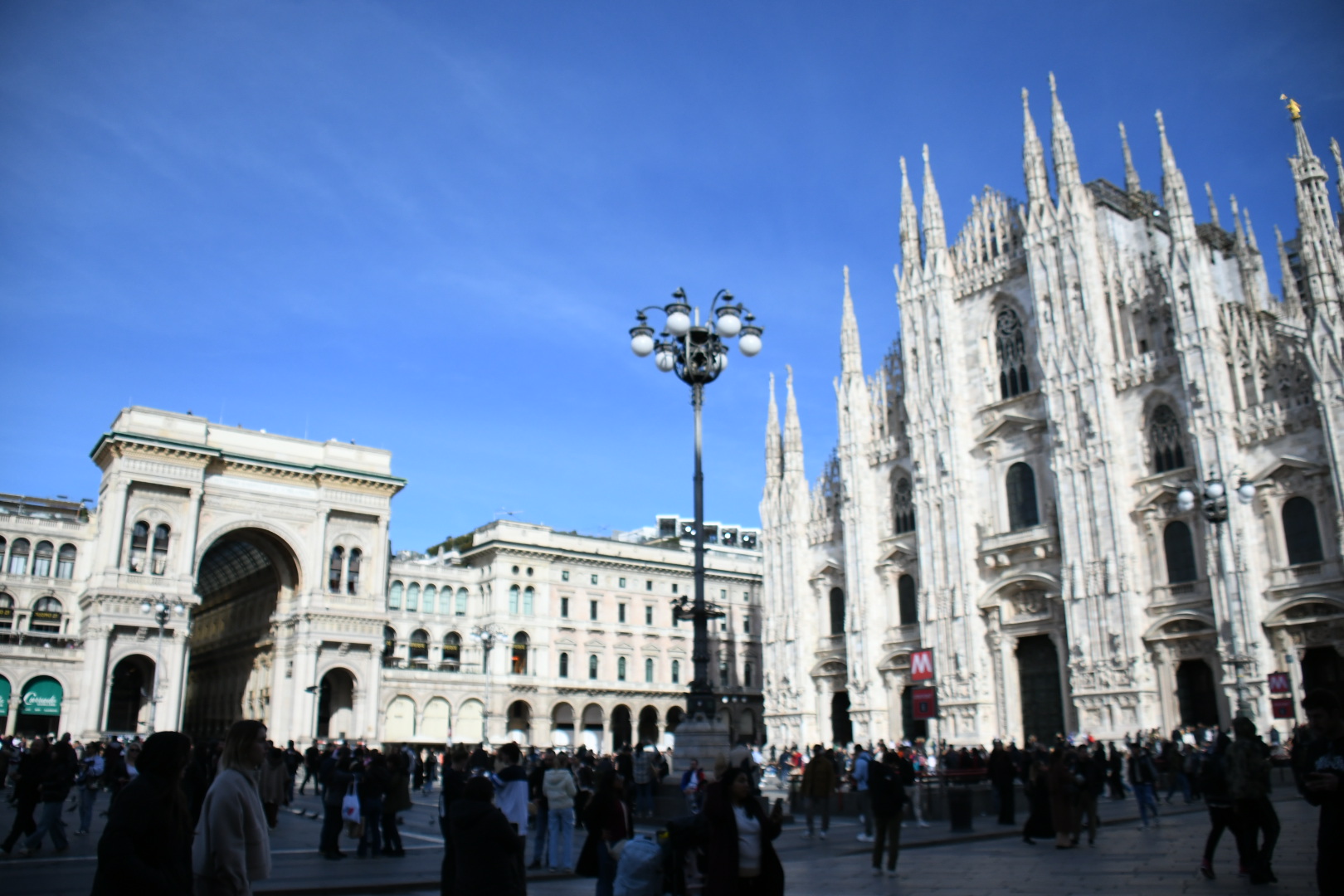
After about 10 days on the ground in Milan and Cortina for the Olympic Winter Games, SportsTravel Publisher Jason Gewirtz saw a number of interesting things around both locations and experienced some odd moments as well. Here are some of the most notable behind-the-scenes sights and experiences that filled his notebook — and camera lens — in Italy.
Secret Duomo Sports Sculpture
The Duomo cathedral in central Milan is the world’s third-largest Catholic cathedral and was the backdrop for many national television broadcasts around the world, with NBC given the most prime position on the main square in front of the hulking structure. (Other country’s broadcasts had to settle for rooftops along the cathedral’s side). On a tour I took organized by the Milan CVB, our guide showed us just some of the 3,400 statues and smaller sculptures along the inside and outside of the structure.
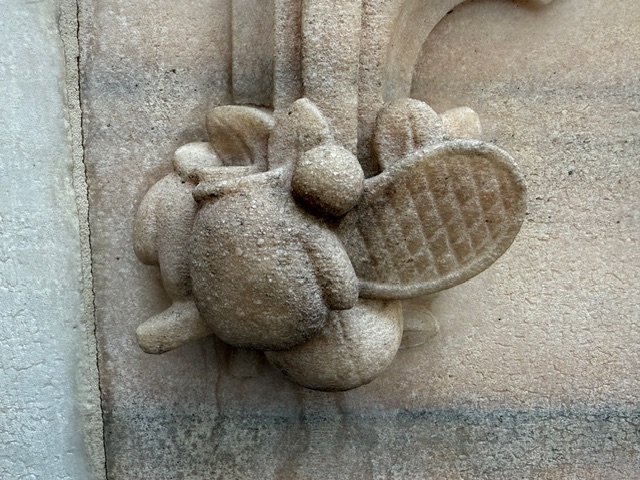
The church, which began construction in 1386 and finished in 1965, was filled with so many statues and sculptures you didn’t know where to begin. At one point, though, our guide stopped us on the roof to point out a sport-themed sculpture that was installed in the 1930s, featuring a tennis racket, boxing gloves and other sports equipment. It was so tucked into a cranny of the roof that you’d never have known it was there unless someone pointed it out. Its hidden nature was a shame because it seemed to me it could have been the symbol for the entire Olympics.
Is Nothing Sacred?
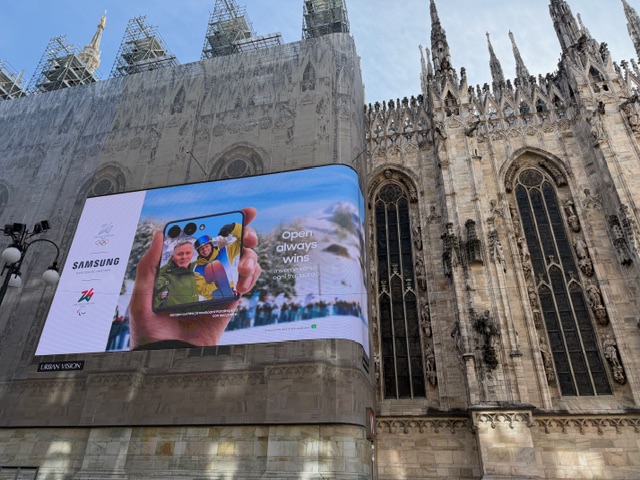
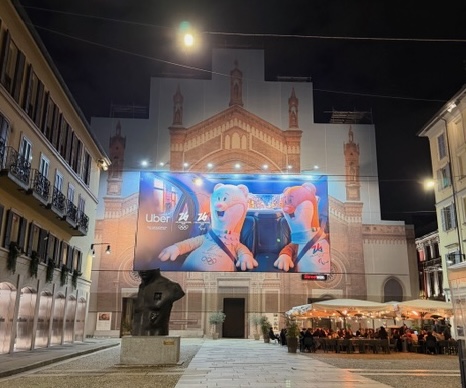
While we’re talking about the city’s most iconic structure, if you are an Olympics sponsor, you can pretty much advertise anywhere you want. But this was the first time I had ever seen an advertisement at the Olympic Games on the side of a famous cathedral, as Samsung managed to achieve at the Duomo.
Is Nothing Sacred, Part 2?
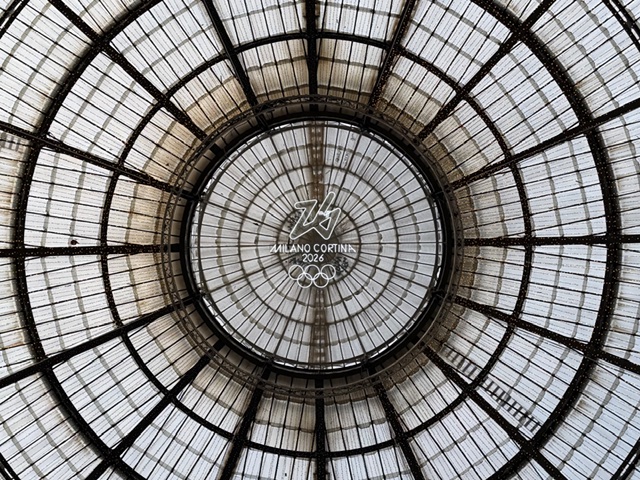
And next door at the city’s iconic Galleria Vittorio Emanuele II, Italy’s oldest shopping arcade, you couldn’t look up at its spectacular central roof without being reminded that the Olympics were in town.
The Man in the White Suit
At the figure skating competition, the skaters of course get the ice to themselves. Except the second their routine ends, when a man on figure skates wearing a white tuxedo comes on to ice with a video camera mounted in a frame to record their close-up reactions. Out he skates at the conclusion of the song, circling the skaters, dressed in his own finery. He was an NBC-specific cameraman, and not part of the OBS system that otherwise records every minute of Olympic action. And he was so mysterious.

Squirrels in Cortina
I’m not a huge fan of squirrels. We’re in a years-long war at our house over their unauthorized use of our bird feeder. It’s a thing.
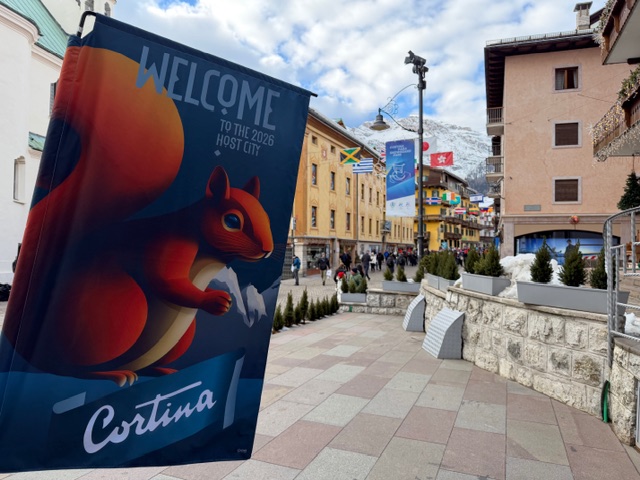
So when I saw regular squirrel imagery throughout Cortina, I was taken aback. But after some research, it appeared to be justified. The “Scoiattoli di Cortina” (Squirrels of Cortina) are a group of mountaineers and climbers that are based in Cortina d’Ampezzo. They are apparently a celebrated Italian mountaineering association, with one member in 1954 conquering the peak of K2.
Throughout Cortina, there were squirrels on several Olympic signs, and squirrel-related figures to purchase in stores. I took a pass, though. If I came home with a squirrel figure on this trip, it would have been seen as a sign of defeat out at my bird feeder. I’m all for the concept of the Olympic Games Truce, where nations agree to cool it during the Games, but the squirrels can stay in Cortina, thank you very much.
Old Trams Still Work
While Milan has a modern underground metro system that could get you where you wanted to go, the city’s system of buses, light rail and old trams also did the trick. The historic trams were a pleasant delight. More than 150 trams dating to the 1930s still criss-cross the city.
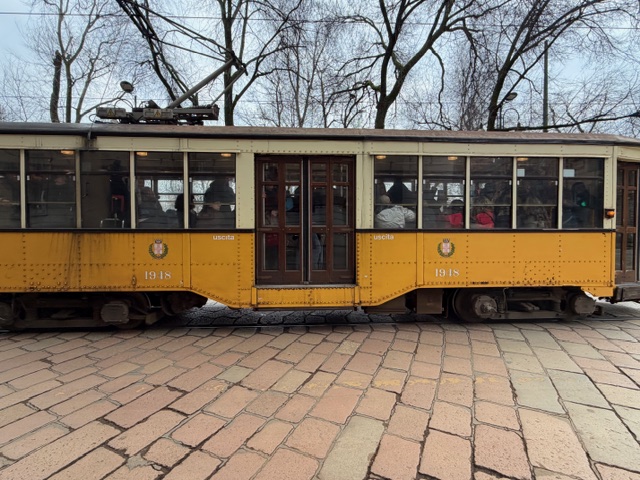
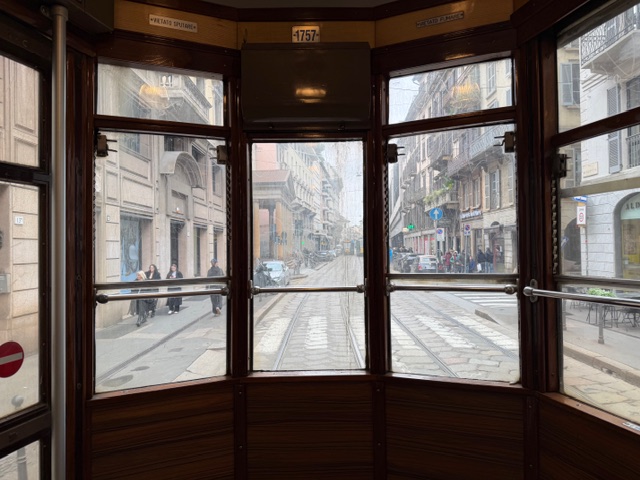
Not only were their routes advantageous in many cases, their wood doors also made a most-satisfying sound that definitely met the vibe. And the view out the back was like looking into another time entirely.
Act Like You Belong
One of the truisms of the Olympic Games: If you have a credential, act like you belong in an area and you can probably get into that area, even if you’re not supposed to be there. I was looking for the media seating area at the Cortina Curling Stadium, which in many venues can be very tricky to find. The media stands you might see in the background of television coverage are assembled in a maze of scaffolds and temporary ramps. Outside the venue there will usually be a sign to send you in the general direction of that seating. But that can often be the last sign you see, which causes you to ask a lot of people for help. One volunteer will swear you need to go left, and you’re oftentimes met there with a volunteer who swears you need to go right.
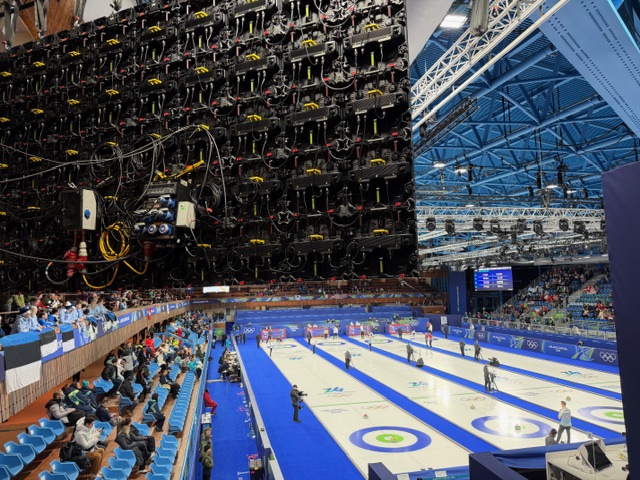
At the curling venue, l walked to where I thought I was supposed to be only to find myself in a private athlete area. I then saw a sign that appeared to send me up a set of stairs outside the arena to my seating area. But when I went there, I ended up in the arena’s upper deck behind a scoreboard in an area that was supposed to be for athletes with credentials for when they weren’t competing. No one stopped me so I sat for a while until I eventually figured out where I was supposed to be.
But later that night at the semi-final session when there were no more seats on the media row, I knew exactly where I could find an empty seat. I marched back up to my secret spot behind the scoreboard to watch from there. I passed a few security people, but kept my credential out and my head down and got where I wanted to go.
No Apples, Please
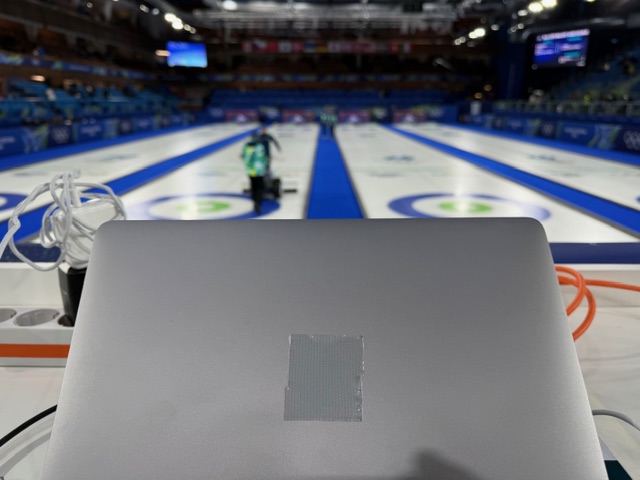
That said, at the gold medal match for mixed doubles curling the next night, I got to the venue early to secure a seat in the actual media row. The media seating was so close to the action that a volunteer approached me before the match began with a strip of duct tape and applied the tape over the Apple logo on my computer. I was so close to the action that my very computer threatened to provide ambush marketing on the television broadcast, and the IOC (which does not have Apple as a sponsor) was having none of that.
Visit Detroit … in Verona?
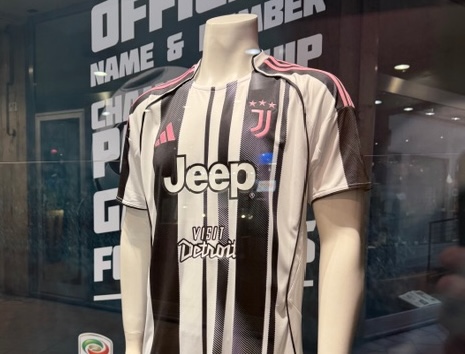
On my drive from Milan to Cortina, I stopped in Verona and walked around. At one store selling soccer kits, it was hammered home why U.S. destinations are investing in sponsorships for clubs overseas. I was not expecting to see Visit Detroit’s logo in a store window, but as a sponsor of Juventus FC in the Italian Serie A, there it was.
Inside the Merch Store
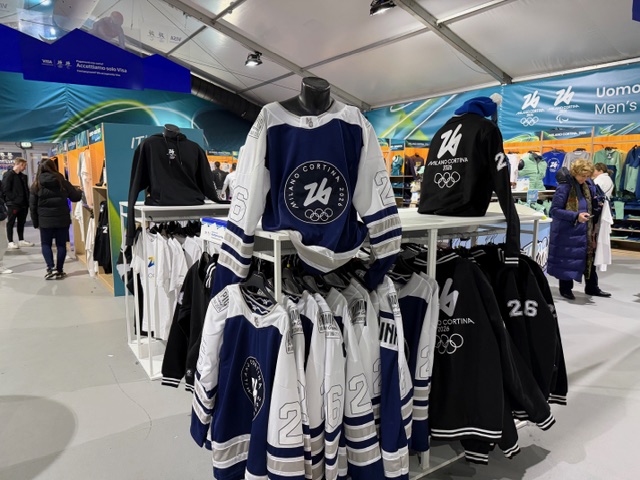
There were several megastores to buy Olympic merchandise, which didn’t come cheap; Team Italy’s wardrobe was sponsored by Armani, so you can imagine what a jacket would set you back. But there were a wide variety of goods available, from shirts and hats to snow globes and figurines. Even Italian cookies with the Olympic logo. Lines were long to get into the larger stores, although venues each had a smaller selection for sale as well.
And good luck finding a plush doll of Milo or Tina, the official mascots who appeared to be weasels but were actually stoats (also known as a short-tailed weasel). The best most people could do was to get a plush doll of one of six members of the “Flo,” snowfall-like creatures that were auxiliary mascots and also visible throughout the Games.
Mascot Imagery Everywhere
While Tina and Milo were nearly impossible to find in plush form, their life-sized mascots were everywhere and fans could get a photo with them if nothing else at nearly every venue.
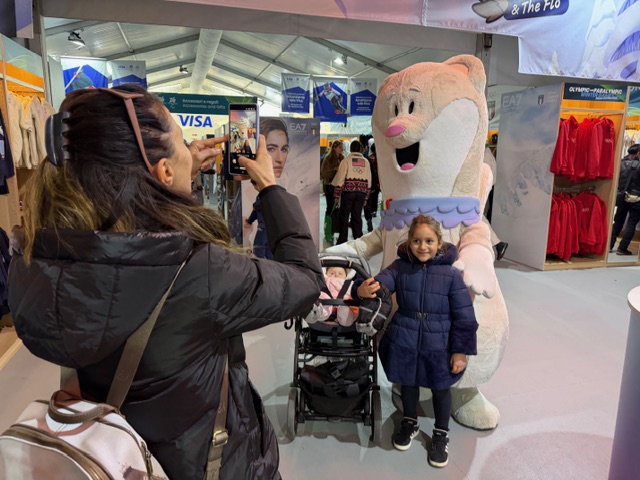
And if you missed out on that, their images were everywhere, in every corner of Milan, on every structure imaginable.
How to Watch Luge
Have you ever wondered how exactly you watch luge, skeleton or bobsled at the track? Well, there are some seats at the finish line that tend to fill up fast. Those only give you a view of the racer slowing down, so they tend not to be the best seats in the house.
The best way is to hike up a bit around one the big final turns, where you can stand and watch with a drink in your hand (or not), or sit in a small amphitheater of open seating around the biggest final turn. Unlike almost any other the Olympic venue that typically have assigned seats, the open nature of the standing ticket leads to a great and collegial atmosphere. And the higher up you’re willing to hike, the fewer crowds you will see.
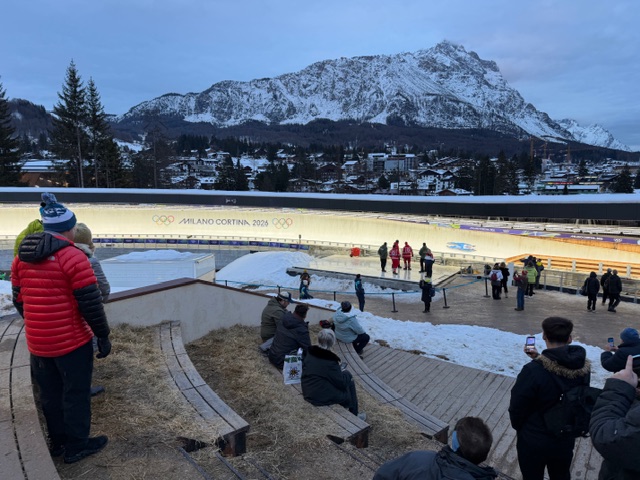
Still, the lugers come by so fast. You hear them rumbling first from the turn before, and then you get less than a second or two to watch them zip by.
Zambonis of All Kinds
Everyone knows ice hockey needs a Zamboni or other ice surfacing machine. But until you see a human Zamboni at curling slowly move a device that looks like a floor polisher, or a young man with a large squeegee at the speedskating track, you don’t realize how many ice sports need their own custom resurfacing devices.

Mona Lisa and Batman
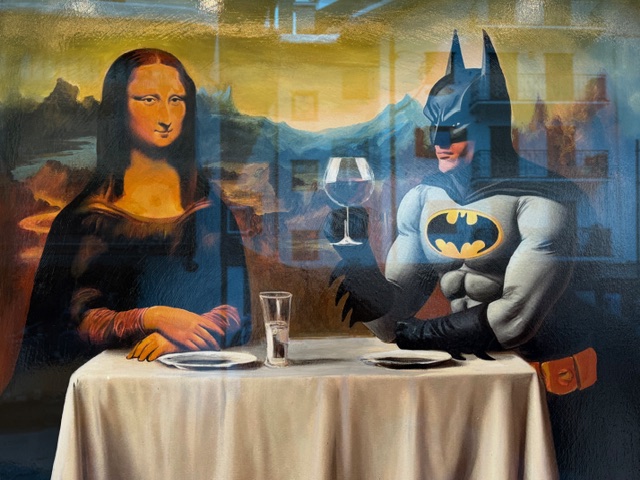
Walking around Cortina, I went by an art gallery that had one of the oddest things I’d ever seen: A painting of Mona Lisa sharing dinner and a drink with Batman. For years, we’ve been looking for the right piece of art over the couch in our living room. Could this have been the one? It was tempting, but no.
It’s Your Vibe
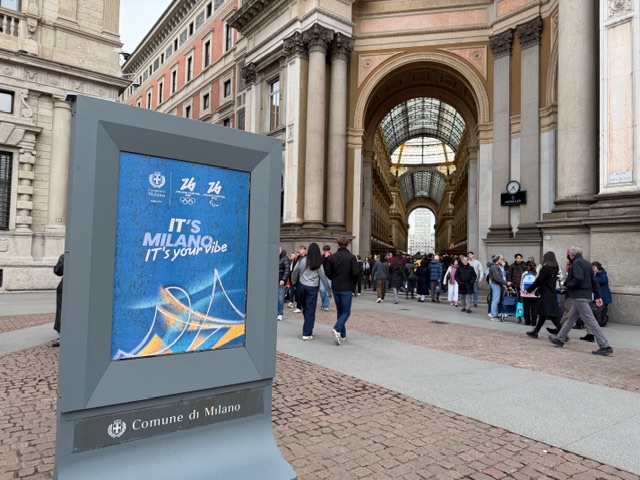
The slogan of the 2026 Games in Milan was “It’s Milano, It’s Your Vibe.” The phrase could be seen across town on ads and billboards, and sometimes written on the street. I have to say the vibe of the city was getting to me by the time was trip was done. But was it really my vibe? I’m still not sure.
Something Borrowed
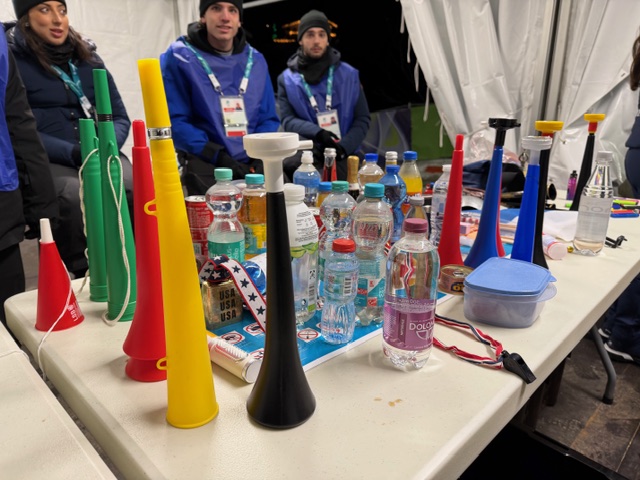
Walking out of the sliding center in Cortina, which required exiting through the security clearance you had passed to enter the venue hours earlier, I couldn’t help but notice a table of items that were removed from fans. Most of them were drinks, but it was interesting to see how many people tried to bring in noise makers of some kind — and to see that those items weren’t allowed in a sport where the participants can’t possibly hear anything external as they zip down the track. I suppose they were at risk of being thrown onto the track, but it was funny to see them lined up as contraband.
Sweet Caroline
A while back, our exceptional SportsTravel columnist Bob Latham wrote a piece about Neil Diamond’s “Sweet Caroline” somehow becoming the official stadium anthem at venues around the world. What started with the Boston Red Sox is now just everywhere. And that was the case at Olympic venues. I heard it several times, and I have to say, I’m not sure why we’ve accepted it as the worldwide anthem of the fan. Nothing against Neil, but it’s amazing to see that song accepted as the one we must now hear, forever and always, at a sporting event.
Almost Finished
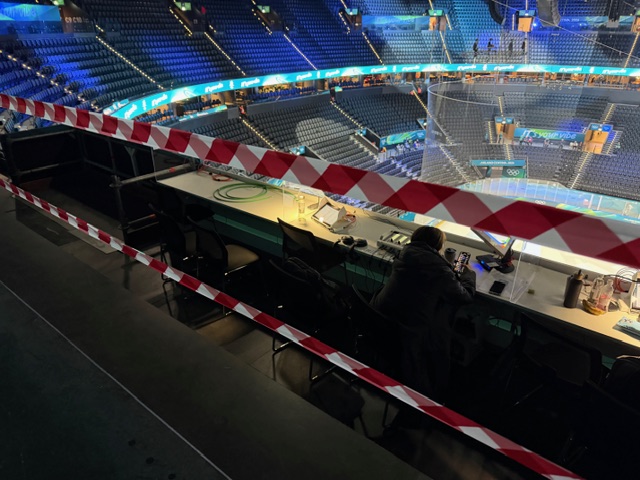
There was a lot written before the Games about the Milan Santagiulia arena being used for ice hockey. Would it be finished on time? For the most part, yes. But on site, there were signs not everything got done in time, including the red and white tape in the media seating that was all that prevented you from falling to the level below.
Finished, but Still…
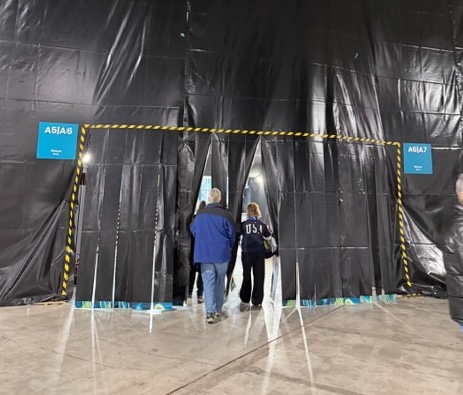
The long track speedskating events and some hockey matches were played in temporary venues in the city’s enormous Fiera Milano Rho convention center complex. To get there, you had to walk about a mile from the nearest metro stop, past several active fashion expos that were happening in the other halls. The halls where they built the Olympic venues were all the way at the end of the line. And once you got there, the venues themselves inside were just fine as far as the competition goes. (In fact, the speedskating track saw several Olympic records.)
But behind the scenes it was no frills, a series of intricate scaffolding and temporary seating, and entry ways of black tarp that left a bit to be desired.
An Exceptional Volunteer
In Cortina, the women’s events at Tofane Alpine Skiing Center were scenic and spectacular. To get from the parking area or drop off site to the competition site on the hill, you had to take a gondola or a provided shuttle about 10 minutes up a winding road. Once you were back down the mountain after the event, you had a few options to get back into town. You could walk the tight road (as some did) for about 30 minutes. But you were better served in a shuttle or car given the space and the snow. I was waiting at a bus stop for an assigned shuttle after the women’s combined event when a Milan Cortina 2026 volunteer drove by in her car, rolled down her window and asked if I wanted a ride to town, which I did.
Her name was Fandia and she was from nearby Treviso. As she drove me into town, I asked why she chose to be a volunteer. “The Olympics are in my country so I had to,” she said. “I didn’t want to miss my one shot.” Like nearly all volunteers I encountered, she was there just to be part of the event, not for any particular glory. And she more than made my day by offering me that wonderful ride in her warm and inviting car.
Always Remember the CVB
I had a wonderful meeting with the Milan CVB on my final day to hear about the impact the Games are having and the long-term hope of future events. When our meeting was over, Elena Balestriero, the head of the convention bureau, offered to give me a tour of the city’s oldest museum, the Pinacoteca Ambrosiana. Among its collections, the famous “School of Athens” by Raphael, and original sketches of Leonardo Da Vinci that rotate in one of the most stunning libraries I’ve ever been in.
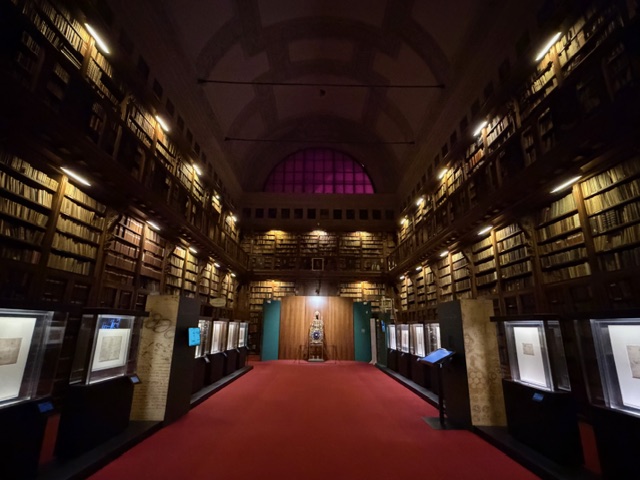
I’m not sure this museum would have been on my radar in a city full of wonderful treasurers (including Da Vinci’s “The Last Supper,” which has its own museum). But it was a magical experience to be there, as well as to go below in a crypt area that was the site of the city’s first church.
Our audience knows the power of convention and visitor bureaus to make things happen and to know the best places to go. Elena was the embodiment of that spirit and as I look back at my time at the Games, it was an hour I will never forget.
And Finally …
Everything in Milan was spread out. The three main venue clusters for hockey, speedskating and figure skating were at opposite sides of the city. So was the hotel the IOC assigned to SportsTravel, meaning the end of the day finished with an hour-plus commute on the city’s metro and eventually the local light rail.
One night, very late, I was on my way back to the hotel to discover I was the only one left on the train. In a city teeming with Olympics visitors and commutes that often had me in packed metro cars, it was a lovely moment to pause and reflect on what it took to get there and what it took to get around. Even if I was left wondering how — even for a moment — I could be left alone at the Olympic Games.


Jason Gewirtz is vice president and managing director of the Northstar Meetings Group Sports Division and the publisher of SportsTravel.










 Copyright © 2026 by Northstar Travel Media LLC. All Rights Reserved. 301 Route 17 N, Suite 1150, Rutherford, NJ 07070 USA | Telephone: (201) 902-2000