
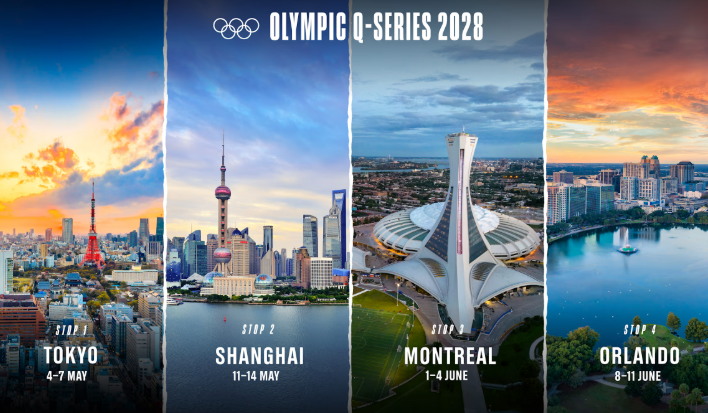
The opening ceremony for the 2028 Olympic Summer Games are two years away, but the Olympic experience will not be confined just to Los Angeles. Oklahoma City will be hosting multiple events during the Games themselves, cities (including Louisville for USA Gymnastics) across the U.S. will host Olympic Trials in the run-up to the Games and Orlando will be the only U.S. city to host the Q Series, an initiative that builds on the inaugural edition from 2024 by allowing cities to host multiple qualification events. In Orlando’s case, that means serving as host for flag football, beach volleyball, climbing and skateboarding park from June 8-11, an announcement that was made official last week.
This is not the first time Orlando has been on the Olympic stage. The city hosted the marathon trials in 2024 and played host to some of the soccer matches during the 1996 Atlanta Olympics. But it is yet another important step for a city with global sports ambitions.
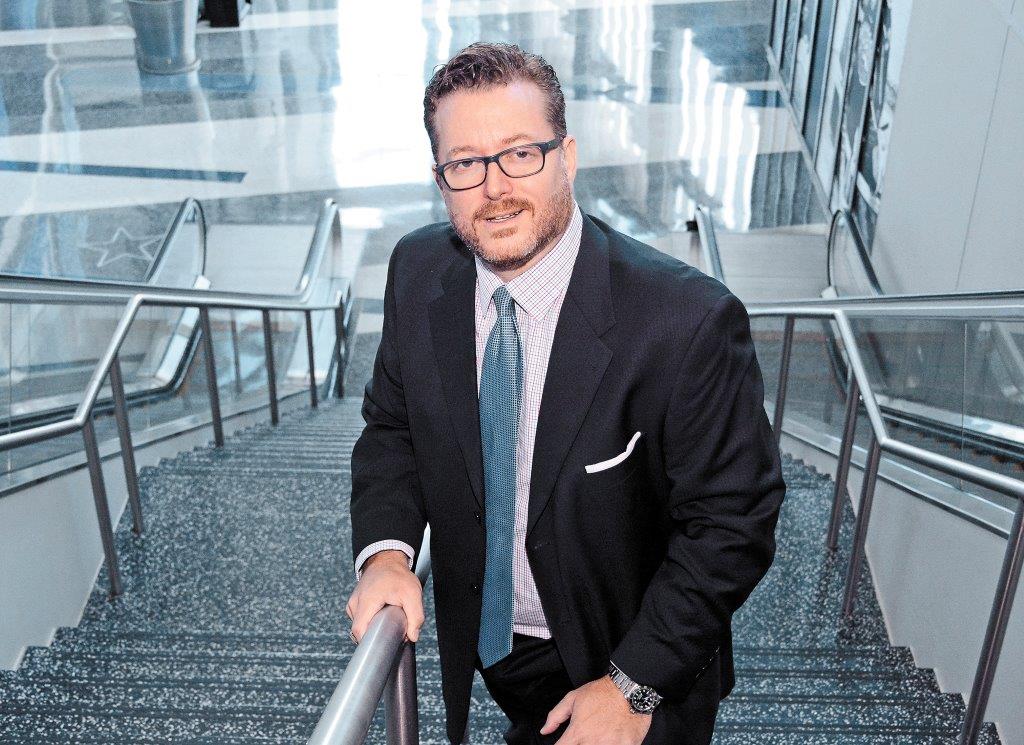
This month also marks an important milestone for the man in charge of leading the city’s efforts to realize those ambitions. Jason Siegel became CEO of the Greater Orlando Sports Commission in July 2016, and in the 10 years since has helped bring numerous marquee events to the city, from the 2019 MLS All-Star Game and multiple rounds of March Madness to the Monster Jam World Finals and WrestleMania. In 2020 it served as the site of the NBA “bubble,” as that league returned to action during the pandemic to finish its season. This summer it hosted World Cup friendlies in advance of that event. In all the Greater Orlando Sports Commission (GO Sports!) has hosted more than 500 events during his tenure that have driven more than $2.8 billion in economic impact.
SportsTravel recently caught up with Siegel about Orlando’s road to the Olympics, and how having relationships with 67 counties, 40 sports commissions and more than 80 venues can help make those dreams a reality.
ST: How did this opportunity for the Q Series come about?
Siegel: With the amount of opportunity and attention that our collective domestic communities are receiving I had a meeting with the USOPC in 2018 about how do we become more intentional about U.S. Olympic governing body opportunities sport by sport. Basically, anything without snow: kayak, taekwondo, swimming and diving, fencing. We felt we could provide an ecosystem and a collaborative community that would not only service these great events but be a destination where we could expect fantastic outcomes.
Our community started to invest significantly as we drive our TBT (Tourism Bed Tax). We were fortunate in that our elected leadership trusted us to start to bring significant marquee events, both U.S.-based and global, to Orlando. All of a sudden you would see a lot of international soccer.
There was a lot of momentum, and that carried through the pandemic. We had the NBA bubble, and the Lakers won a title here. MLS carried on with their season at ESPN Wide World of Sports. Coming out of the pandemic our community started to accelerate funding into venues and operating dollars so we could go out and be hypercompetitive on the world stage.
ST: How important were the Olympic marathon trials in 2024?
Siegel: That was overwhelmingly successful; we had 100,000 spectators, and a great partnership with USA Track & Field led to an invite to Paris, we set up meetings with the IOC and 5 or 6 different International Federations. That led into conversations with FIVB for women’s volleyball world cup that we’ll have next August, and that led to quiet conversations about the Q series, which comes to fruition.
ST: What other sports events are on your radar?
Siegel: In any given year we bid on 2-3 major marquee events, and right now it’s 9 or 10 that we’re in the process of doing that for. We’ve got an opportunity with WWE, we’re in constant conversations with Rugby folks [Orlando is one of 27 candidates to host matches in the 2031 men’s Rugby World Cup], FIFA with Women’s World Cup in 2031, we’re deep into the process with the NBA about bringing their All-Star Game here in 2030. NCAA opens portal for spring of 2028 through the fall of 2031 championships and we’ll bid on another 50 of those; no city hosted more in the last cycle from 202-22-26 than we did.
We pride ourselves on our youth and amateur business, but we do have an opportunity now for marquee events because of the number of venues we can offer — we call it terrain for every game, with an asterisk: as long as there’s no snow involved. We have 140,000 hotel rooms, an international airport with direct route coverage, very collaborative tourism community with tremendous support from our theme park partners. And we have a really aggressive leadership from our city’s mayor, Buddy Dyer, who is very supportive.
ST: What do you hope to get out of the Q Series?
Siegel: We will overdeliver on what we have promised to the IOC, to have 600-700 athletes in our community and to have 150 of those continuing on as part of LA28 is a feather in our cap. We take that responsibility very seriously. It also gives us the ability to build more relationships with the entire gov body and building with FIVB will open up doors to many more opportunities in the future; we want everyone to understand there’s training, competing, tournament play, Olympic qualifiers. So there’s lots of opportunity.
ST: What are some of the pain points in the effort to bring events to Orlando?
Siegel: Most obvious conversation we have is that the cost of doing business is rising. Our rightsholders that are out in the community are not only shopping them here domestically but we’re also competing across the globe. Those rightsholders in general are more educated, they’re more sophisticated, and with all of us being able to collect more and better data we’re able to justify or eliminate and stop pursuing opportunities that might not have the ROI that we have hoped for and that’s a two-way street. We have to be great stewards of the tax dollars we have.
We find ourselves bidding against not cities but countries internationally. It’s not just Paris, it’s France. It’s not just London, it’s England. Where we’re hoping to see some outcomes and influence some outcomes, we’ll elevate the dialogue because it would ultimately be great to involve U.S. Tourism or an organization that would have a deep interest in opportunities that could be brought here to U.S. soil to partner or at least have collaborate with the federal government. Hopefully that’s more on the horizon.
ST: What is the ultimate goal for Orlando?
Siegel: We were formed for one reason only and that was to bring the World Cup here in 1994. We were established in 1992 and we were one of nine U.S. cities to host the World Cup in 1994. If you had been a betting person you would have never thought Orlando wold be rewarded as a host city and we’re really fortunate to have had Olympic soccer in 1996 and then a couple thousand other events.
We’ve really been pleased with the amount of effort and the return on that effort. We haven’t changed.
I don’t think it’s out of the question that we see the 2040 or 2044 Summer Olympics out there and that could be a really interesting opportunity for the state of Florida as we look ahead to what’s next.
The state of Florida on its own ranks top 20 in the world in GDP, No. 15. It’s very reasonable that that the state of Florida could come together and compete for that opportunity.







 Copyright © 2026 by Northstar Travel Media LLC. All Rights Reserved. 301 Route 17 N, Suite 1150, Rutherford, NJ 07070 USA | Telephone: (201) 902-2000