How IFA7 and Daniel Balcorta Helped A Different Kind of Soccer Go Global
The seven-a-side version of the sport is growing rapidly, thanks in part to different rules and social media influence
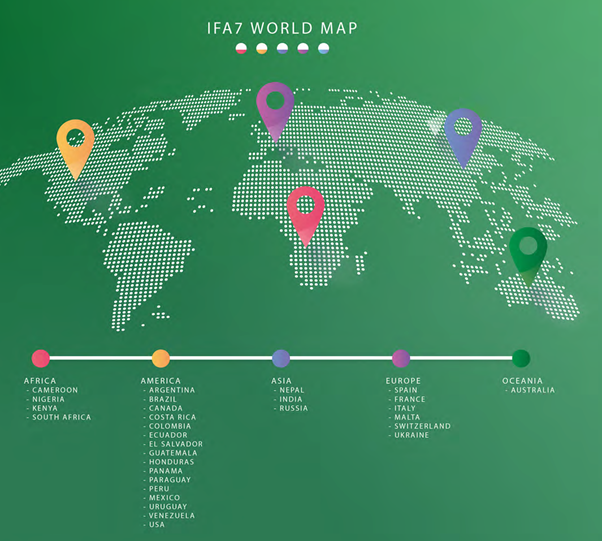
Posted On: February 12, 2026 By :International Football Association 7, also known as IFA7, is the world’s governing body for seven-on-seven soccer, a dynamic and fast-paced variation of traditional soccer. Founded in 2015 by Daniel Balcorta, a former head coach of Canada’s Seven-a-Side National Team and now the organization’s president, IFA7 has 24 federations and affiliates worldwide and a presence in 29 countries — from the United States and Brazil to Guatemala and Equatorial Guinea — as well as a global headquarters in Calgary.
Aside from offering opportunities for players, coaches and referees, IFA7 lays out a clear mission plan: to organize, standardize, manage, promote, and advance seven-a-side soccer on a global scale. Its emphasis is on fostering the growth of players and coaches by nurturing their mental, emotional and social well-being within a positive environment and a clear, effective structure with comprehensive guidelines.
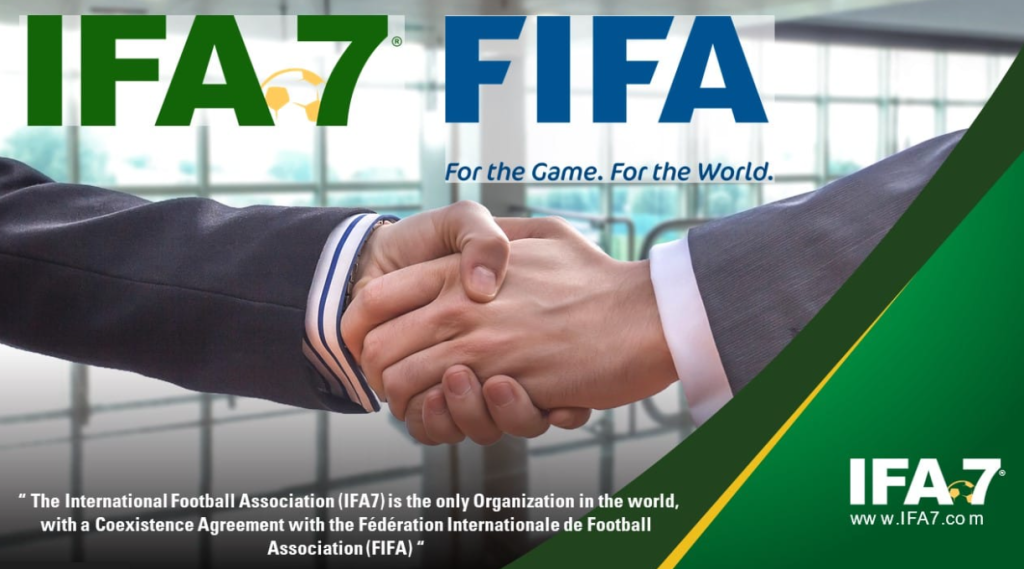
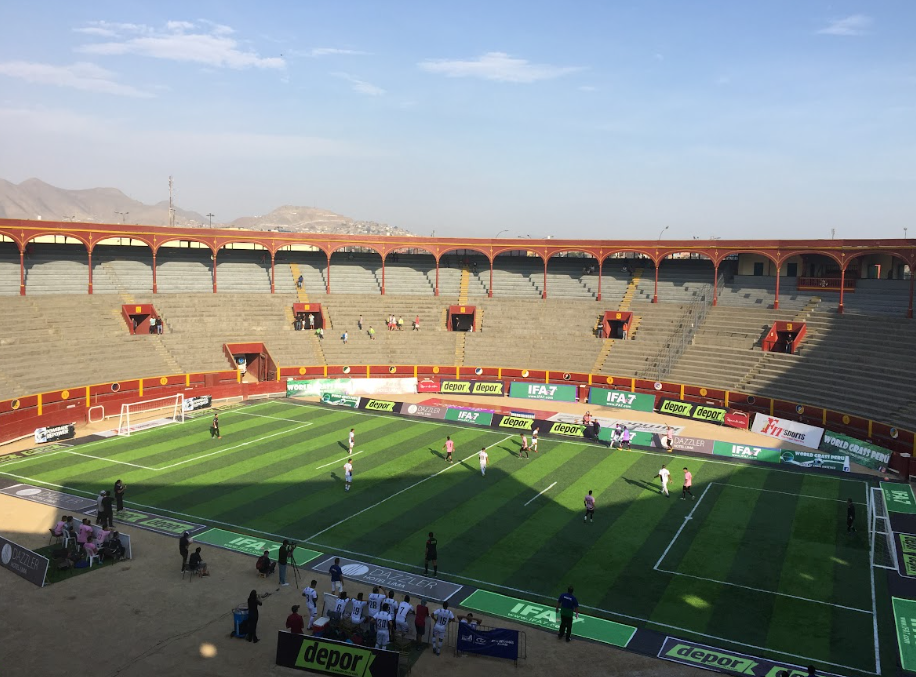
With its own regulations — such as unlimited substitutions during play; a field around half the size of a traditional 11-a-side pitch; and 20-minute halves — competition standards and a structured pathways from local participation to international championships, IFA7 has been recognized officially by FIFA since 2018. IFA7, as the international governing body for Football 7, signed a coexistence agreement with the association in 2018 recognizing the discipline as a distinct format operating alongside traditional 11-a-side soccer.
Now, IFA7 is poised to enter a new phase of international expansion as it opens hosting opportunities for 2027—2029 international competitions. Cities and federations are increasingly seeking formats that are dynamic, infrastructure-flexible and commercially sustainable, and more host city partnerships are on the horizon (it has events in Egypt, Honduras and France in 2026). The key challenge will be to manage logistical demands for major world-class events each year (such as the Legends Cup or Euro Cup) that require significant investment, venue preparation and international coordination.
Birth of IFA7
In 2014, Brazil hosted the first Men’s FIFA World Cup on South American soil in 36 years. That nation has long been the revered home of street soccer, a version often played with seven players per side that traces back to the early history of the game and generally relies on superior strength and stronger technical ability than the 11-on-11 game. Balcorta saw an opportunity to launch what became IFA7.
His passion for soccer had started much earlier. He grew up in Mexico City, where he balanced his studies at MiraCosta College with competitive 11-a-side soccer, including earning coaching licenses and referee certifications in both the United States and Mexico. This immersed him deeply in the sport from every angle — as a player, coach and official.
The initial idea for IFA7 sparked from one day in 1997 while coaching in California and organizing competitive matches outside of structured college play, when two teams arrived short of players. Rather than cancel the match, they reduced the pitch and played seven-a-side — a concept that Balcorta grew to admire. “The pace, technical intensity and constant decision-making required were remarkable,” he said. “It was fast, strategic and highly engaging — a format that felt modern and commercially adaptable.”
Despite his focus remaining on pursuing a professional career in 11-a-side with spells at lower-division club San Diego Flash in the United States and Liga MX’s Cruz Azul in Mexico, as well as a stint in technology and marketing ventures when he moved to Calgary, the idea of elevating the game that he fell in love with that day in California never left him.
Now, as more professional seven-a-side leagues and tournaments such as Kings / Queens League and World Sevens Football have come to fruition, there is now a wider understanding of the lack of continuity between the youth and professional games — a gap that Balcorta aimed to bridge.
The vast majority of young soccer players inevitably fail to make the grade in professional 11-a-side soccer, yet IFA7 sets out to keep those dreams alive. By developing professional standards between youth and elite soccer young players get the freedom to have fun in a competitive environment while honing their technical and physical skills while still being on a pathway that might lead them to professional 11-a-side soccer.
As IFA7 is still privately funded by commercial affiliates and sponsors, some young players have to pay their own expenses, while their age dictates that there is a lot of family travel between competitions. Balcorta says this gives IFA7 more “penetration” than FIFA because it “directly reaches the end player and provides the platform to progress to the professional game.”
By 2015, IFA7 had started broadcasting international competitions, particularly in the Americas before expanding into Europe and Africa in 2018 and 2025. Since then, it has delivered more tournaments dispersed across the globe (lasting up to six days), allowing host cities to generate hotel stays, gain international exposure and leverage fan engagement in a compact timeframe. It currently hosts at least one event every year — The World Clubs Championship — where top-division clubs from around the world compete.
Calling on his own personal experience, Balcorta decided he wanted to give the seven-a-side game something it had not truly had before — a structured international governing body with clear pathways to professional leagues, as well as a long-term vision, rather than isolated or one-off events.
“Soccer has always been central to my life,” said Balcorta. “Growing up, I was deeply influenced not only by traditional 11-a-side soccer, but also by informal, small-sided formats — street soccer, short tournaments, fast-paced matches — environments where creativity, accessibility, and intensity were amplified.
“The vision behind IFA7 was conceived many years before the organization officially launched, but in 2015 the project became formalized. That was the moment we decided Soccer 7 deserved its own international structure, long-term governance, and global development pathway.”
Differentiating from Other Seven-a-Side Tournaments
Rather than serving as an event promoter, Balcorta is keen to emphasize that IFA7 operates as an international governing organization.
A major milestone for the organization came in December 2018, when IFA7 signed an agreement with FIFA that formally recognized Football 7 as a distinct discipline that can coexist alongside traditional 11-a-side soccer.
“That agreement was a turning point,” said Balcorta. “It confirmed that IFA7 was building a complementary global ecosystem rather than competing with existing structures.”
It also means that IFA7 competitions follow standardized international regulations and sit within an institutional framework reinforced by the FIFA Coexistence Agreement, providing credibility and continuity for players, partners and host destinations.
“From a sporting perspective, Football 7 is faster, more technical, and highly engaging — more touches, more goals, and shorter, broadcast-friendly matches,” said Balcorta. “From a destination perspective, the format is scalable and efficient, allowing cities to host international events with strong tourism impact but without the logistical burden of large-scale mega-events.”
Expanding Careers for Professional Players
A key differentiator so far for Football 7 is its ambition to expand the careers for current and former professional 11-a-side players. Although the format is considered to still be technically demanding, it is also less physically taxing, enabling experienced players to remain competitive and visible at an international level.
Over the years, IFA7 events have featured former international and professional players such as Álvaro “Chino” Recoba (Uruguay and Internazionale), Cristian “Kily” González (Argentina and Valencia), Pepe Basualdo (Argentina) and Iván Hurtado (Ecuador and Tigres) among others — “reborn” players who had retired from the 11-a-side game. Their involvement not only elevates the sporting level of Football 7 but it also increases media interest and fan engagement.
As well as expanding the careers of 11-a-side players, IFA7 also hires experienced officials, including international referees, and has launched training programs to develop new referees.
Comparisons with Alternative Soccer Formats
In recent years, alternative soccer formats such as Kings League (a seven-a-side league founded in Spain in 2022 which just raised $63 million from Alignment Growth), The Icon League (a five-a-side league founded in Germany in 2023) and Baller League (a six-a-side league founded in Germany in 2023) have emerged. They have gained traction across social media with Gen Z audiences that have responded to the quick pace of play and appearances from celebrity influencers (such as rappers KSI and Luciano) and former professional soccer players, including Germany’s Toni Kroos and Spain’s Gerard Pique.

That said, Balcorta believes IFA7 is distinct enough from those counterparts as cities and partners look for repeatability, legacy and long-term strategic value.
“Those competitions have shown the appetite for alternative soccer formats,” he said. “IFA7’s approach differs in that we are building institutional continuity and long-term governance, rather than a single entertainment product.”
On the subject of social media, the seven-a-side game lends itself to modern consumption habits: shorter matches, constant action and close interaction between players and fans. This makes the game ideal for social media, streaming platforms and highlight-driven coverage in an age when attention spans are decreasing.
From a destination perspective, IFA7 wants to give host cities a platform for international visibility through sport-driven media exposure, including placing an even stronger emphasis on digital storytelling, player narratives and destination-focused content. The governing body is actively seeking host cities for upcoming events across its portfolio in the Americas, Europe and Africa especially.
The commercial and promotional value of the format for destinations is clear: IFA7 events including the World Clubs Championship have reached audiences exceeding 10 million viewers across digital and broadcast platforms since the launch 11 years ago.
Future Expansion: Tournaments, Cities and Leagues
The next phase of IFA7’s growth is centered on global expansion through strategic host city partnerships, including potential options such as Liverpool, Barcelona or Madrid.
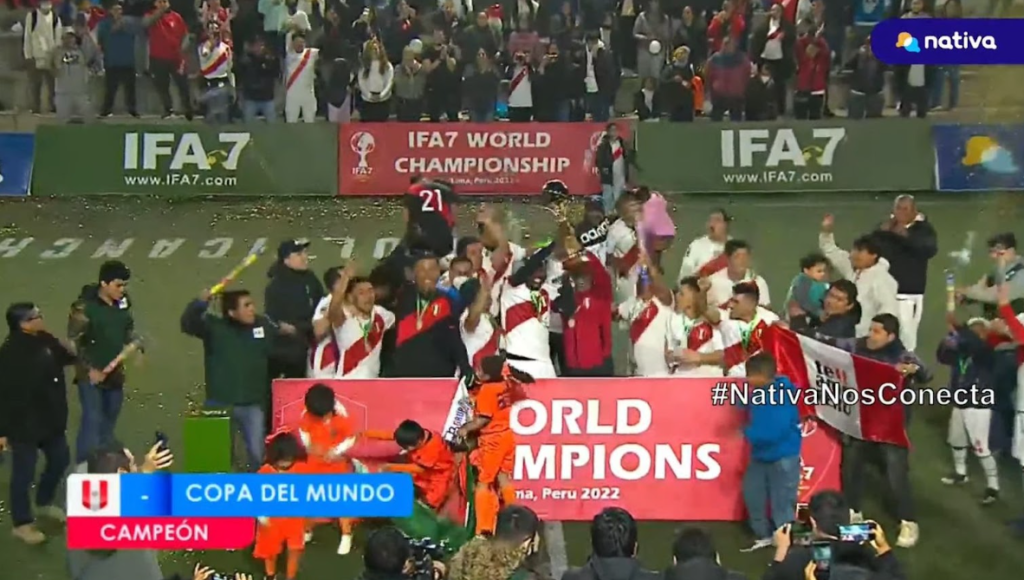
While its biggest footprint is in Latin America (e.g. Copa America), it has an increasing pipeline of global competitions including: IFA7 EuroCup 2027, IFA7 Copa América 2027, IFA7 Africa Cup 2027, IFA7 Super Clubs Championship Cup (a professional global club competition in a Champions-style format, featuring elite clubs and former professional players) and IFA7 Nations Cup 2028, with host nations to be confirmed.
In parallel, the association also intends to launch Professional Football 7 Leagues worldwide in 2027 , in order to connect domestic competition with international championships and reinforce the overall ecosystem. More details on host nations and cities, teams, broadcast partners, stadiums and sponsorships are expected soon.
Opportunities and Challenges
To broaden its global presence, IFA7 has established itself as a governing body that focuses on professionalizing seven-a-side soccer and prioritizing high-level competitions, strategic partnerships with host cities and structural development between the youth and the professional games. Despite this, it faces challenges to broaden its global presence.
As more leagues, tournaments and competitions are announced, the key test for IFA7 will be how it can continue to scale and maintain its guiding principles across the world. In a competitive media and sponsorship environment, the governing body will have to show that its competitions can co-exist alongside other alternative formats to attract top talent and sponsors, secure long-term broadcasting / streaming deals (like with GOLTV, ESPN and Albavision) and leverage new or existing venues, helping it to reach a wider global audience.
Equally, the growing popularity of youth and women’s soccer across the globe could be a lucrative opportunity to expand the player base and develop talent for international competitions in the Football 7 movement.
Ultimately, soccer is a sport that is characterized by excitement. Make games a live show with music, emotions and plenty of scoring and the fans will come.
A vision that began nearly three decades ago is now scaling globally as IFA7 looks to build the next layer of international soccer partnerships.
Posted in: Feature Story, Hosts & Suppliers, Latest News, Soccer, Sports Organizations