Copenhagen Returns to Mass-Participation Roots for Festival of Running
In the 12 years since the Danish capital last held a major mass-participation event, the sport and the city have grown tremendously
Posted On: September 21, 2026 By :COPENHAGEN, Denmark — The 2026 World Athletics World Road Running Championships and coinciding Global Running Conference, held in Copenhagen last weekend, served as both a nod to the past and a look toward the future of mass participation events. It also highlighted just how far the movement has progressed in the last five decades.
A lunch meeting at the Punch Bowl Inn in Crosthwaite, Cumbria, in the UK, is widely celebrated as the birthplace of the modern mass-participation running boom, as that very meeting inspired the creation of both the London Marathon (by Chris Brasher in 1981) and the Great North Run (by Sir Brendan Foster, also in 1981). But Copenhagen, the capital of Denmark, also played its own pivotal role in shaping the mass participation landscape we see today.
From hosting its first Copenhagen Marathon in 1980 — its first annual city-wide mass athletics events — to staging the 2014 IAAF World Half Marathon Championships, the Danish capital has prompted a significant structural shift in how athletics events are organized for all abilities.
While that inaugural marathon in 1980 established a legacy for routing races directly through the historic inner city of Copenhagen, the 2014 Championships marked the first time that world athletics organizers had allowed more than 30,000 recreational runners to take to the same streets and participate in the same course as the world’s elite male and female athletes during a global championship.
Such was the perceived success of that event, World Athletics adopted those road racing logistics as a core structural pillar. Now, a dozen years later, the number of participants competing in the first World Athletics World Road Running Championships in Copenhagen was more than double its previous major mass participation event.
Copenhagen could hardly have been a more ideal host city to showcase the surging popularity of the mass participation movement.
2026 Race Weekend
Copenhagen 26 marked the second edition of the World Road Running Championships, three years after the inaugural competition was held in Riga, Latvia. It was also the second time that the Championships had been run alongside an in-person World Athletics Global Running Conference, which delivered its fifth edition this year; previous events had been held in Valencia, Spain in 2018, a virtual staging in 2020 during the Covid-19 pandemic, Bangkok, Thailand in 2022, and then Riga in 2023.
Just like in Riga, the 2026 race weekend included races for the half marathon, 5k and one-mile distances, featuring both elite and mass-participation events, bringing together world champions, Olympic medalists and world record-holders, as well as first-time runners.
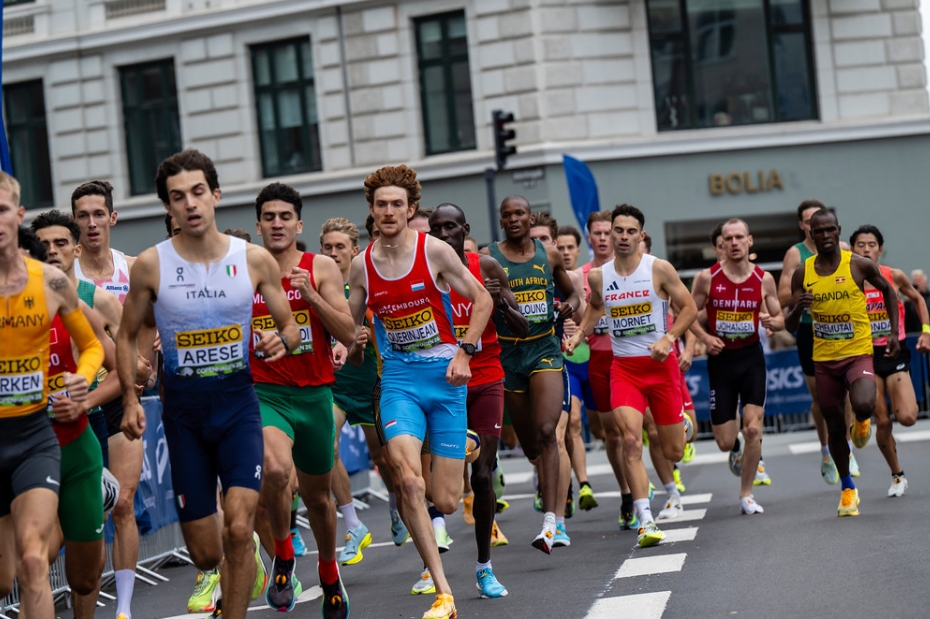
But in comparison to Riga, the participant numbers were stark. Three years ago, 349 elite athletes from 57 teams (56 nations and the Athlete Refugee Team) and around 35,000 mass-participation runners pounded the streets of the Latvian capital. In Copenhagen, those statistics swelled to 496 elite athletes from 85 countries and 60,000 mass-participation runners across the three distances (with 45,000 registered runners for the half marathon). Overwhelming demand also now requires participation in the half-marathon distance to be sold via a lottery system.
Staged on behalf of World Athletics by Danish Athletics and Sparta Athletics & Running in collaboration with the City of Copenhagen, Sport Event Denmark and Wonderful Copenhagen, it was reported to be the largest international championship ever staged in Denmark, as Copenhagen’s Mayor for Culture, Leisure and Citizen Services, Christopher Røhl, asserted at the pre-Championships press conference.
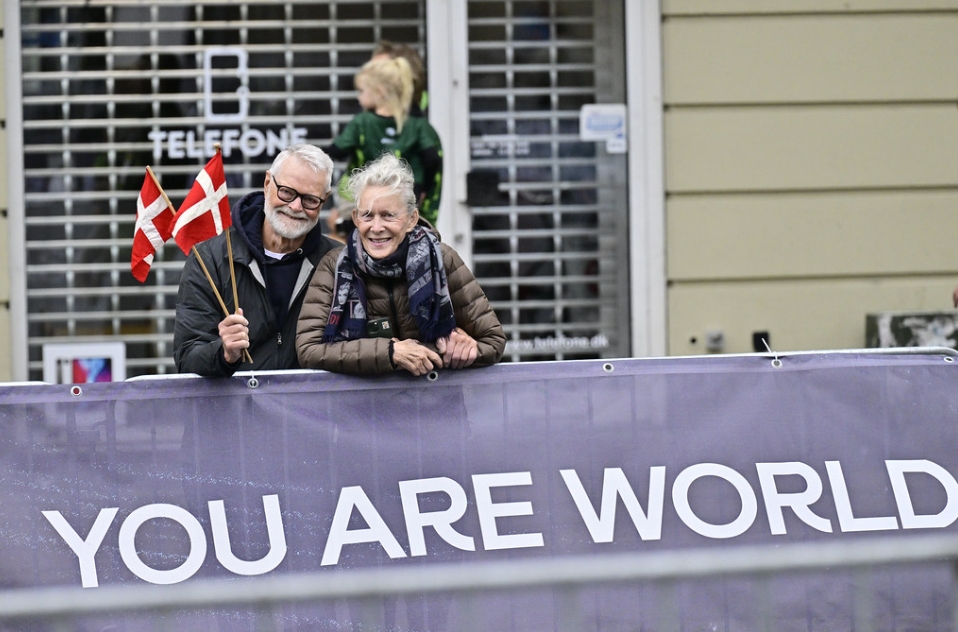
One of the defining elements of the Championships was the diversity of the participants. According to World Athletics, 53 percent of participants this year were international and the largest age group for the one-mile event was ages five to nine, while thousands of fans on the streets cheered on the runners against the backdrop of energetic music and colorful dance entertainment.
The 2026 Championships were a culmination of more than three years of work by organizers, from pre-planning to delivery, with an intent focus on creating a celebration of running across the weekend, bringing the city into the experience, and inviting Copenhageners and visitors to share in it. In the country from which the term hygge (pronounced “hoo-gah”) originated to describe the cozy feeling of contentment, this was an opportunity for fans and athletes from around the world to revel in a convivial atmosphere, appreciate each other’s presence, and take in the moment.
Results
Across a bumper weekend of action, six world titles were decided: women’s and men’s titles across all three distances (mile, 5k and half marathon).
Norwegian superstar Jakob Ingebrigtsen was one of the headliners competing at the 2026 World Athletics World Road Running Championships, but he was pipped to the gold medal in the men’s 5km race by Eritrean and African 5,000m champion Dawit Seare. In the women’s event, Ethiopia’s Likina Amebaw won the gold medal in 14:41, just six days on from winning the 5,000m event at the inaugural Ultimate Championship in Budapest.
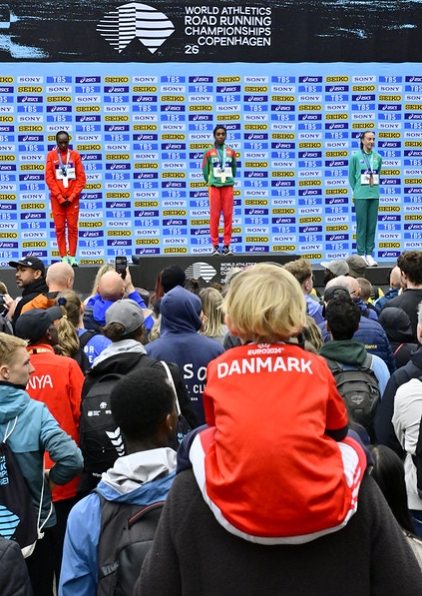
In the mile distance, France’s Agathe Guillemot and Germany’s Robert Farken were the winners of the women’s and men’s events, respectively.
Meanwhile, for the half-marathon distance, Kenya’s Agnes Ngetich stole the show by claiming gold and a world record for a women-only half marathon, crossing the line in just one hour, five minutes and 15 seconds. Sweden’s Andreas Almgren was the winner of the men’s half marathon, breaking his own existing European record by 35 seconds in 58:06.
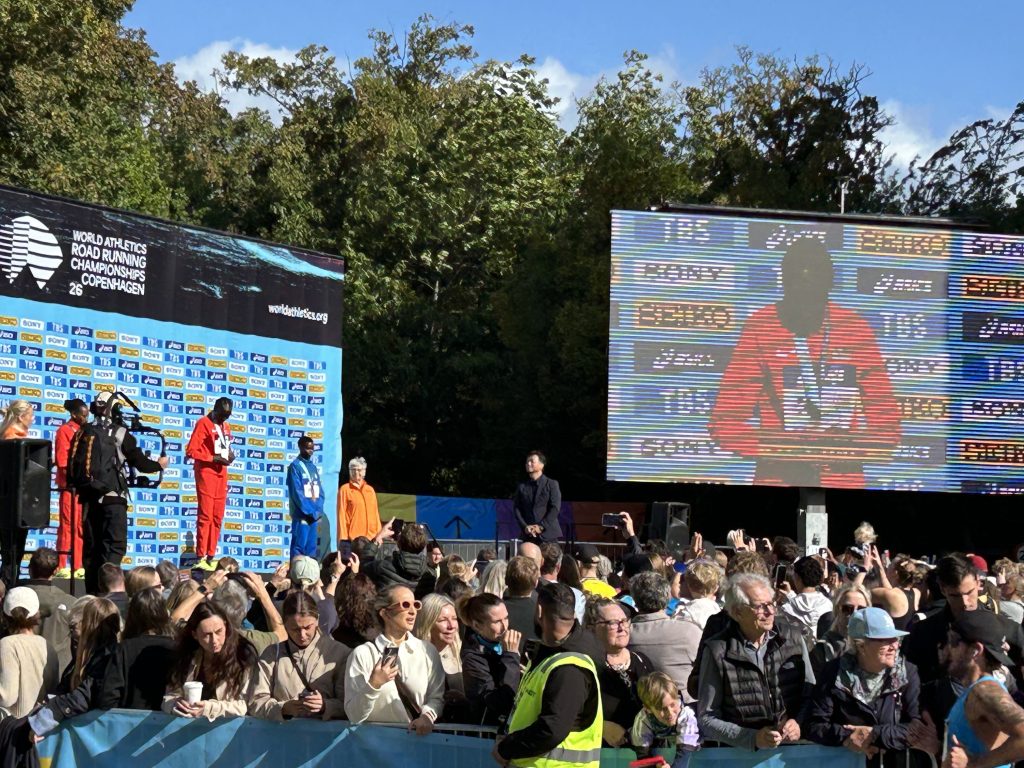
And with more than 100,000 spectators across the two days, records were being broken both on and off the roads in Copenhagen.
History and Legacy
Running culture is ingrained throughout Danish society, so much so that members of the Royal Family have participated in the Royal Run — an annual sports event that takes place in Copenhagen and other Danish cities — and includes One Mile, Family Mile and 10km events across different generations. The current King Frederik X of Denmark (formerly Crown Prince Frederik, who acceded to the throne in January 2024) was himself a former member of the International Olympic Committee from 2009 to 2021, and even participated in the Royal Mile eight years ago to mark his 50th birthday.
The uptick in running in Denmark can be traced back to the World Half Marathon Championships in Copenhagen 12 years ago. It enabled elite and mass-participation runners to run the same routes on the same day and spotlighted running as a gateway to active lifestyles, community and volunteering.
Speaking at the Global Running Conference, Sports Development Development Consultant Henrik Nygaard and Sparta and Danish Athletics Running Project Manager Sofie Andersen discussed the activations and legacy initiatives around this year’s Championships, including a one-year-to-go relay for 200 school children in 2025, partnerships with the Copenhagen Municipality and activations with sports/athletics clubs like Sparta, school races and student runs, and social inclusion initiatives to create running groups for people living with mild dementia (including eight who ran across this year’s race weekend).
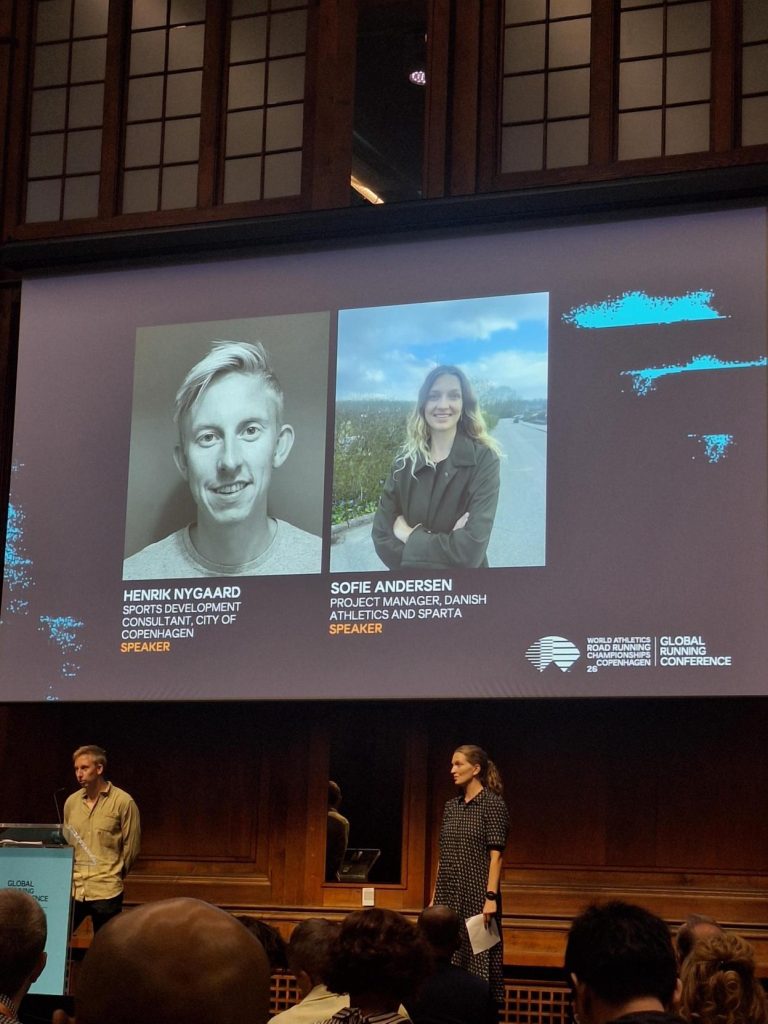
The results are significant. According to Nygaard and Andersen, at least 25 percent of Danes now claim to run recreationally, 39.4 percent of child runners (aged 3-14) in Copenhagen run at least once a month (significantly higher than the 30.7 percent national average), and 14,000 children and young people have already been activated so far.
There are wide-ranging challenges, too, Only 0.7 percent of all Copenhagen residents are members of run clubs or communities and many target the ages 20-40 bracket, while there are questions too about whether organized running is the right format to adopt, the level of infrastructure needed, and how to engage first-time runners to actively participate in events. Encouragingly, though, 70 percent of the runners at the 2026 World Road Running Championships were Gen Z or Gen Alpha (born between 1997 and 2025), compared to the 2014 World Half Marathon Championships when 70 percent of the participants were baby boomers (born between 1946 and 1964).
For now, there is a lot of work going on to ensure that the mass participation movement in Denmark remains on the right track. Jakob Larsen, head of research and development at World Athletics, described how the Danish people increasingly value identity, culture and purpose over status and wealth as the global flagbearer for post-materialism globally, and how running is now central to that culture.
Copenhagen is now also part of the SuperHalfs series, a collection of six iconic European half marathons where runners collect digital stamps in a passport to earn an exclusive SuperMedal and enter the Hall of Fame. It features alongside Lisbon (Portugal), Prague (Czechia), Berlin (Germany), Cardiff (Wales) and Valencia (Spain), positioning Copenhagen for even greater prestige among the global running community.
Attracting International Visitors
Like other cities around the world, Copenhagen is embracing the moment and opportunity to attract new and returning international visitors through so-called ‘race-cations.’ Google Trends suggest that searches for 24-hour itineraries in cities hosting marathons have shot up by 500 percent year-over-year, allowing cities to extend their peak booking seasons as a result.
“For Copenhagen and Denmark, the championships are a powerful platform to attract international visitors, strengthen our global profile, and demonstrate how major sporting events can create value well beyond sport,” said Sports Event Denmark CEO Lars Lundov. “Hosting the World Athletics Road Running Championships is an opportunity to showcase Copenhagen and Denmark to a global audience and reinforce our position as one of the world’s leading nations for international sporting events.
“When 60,000 runners and their supporters come to Copenhagen, they become ambassadors for the city and for Denmark. Major events create lasting impressions that drive tourism, visibility and future visits.”
“The true measure of success is both what happens on race weekend and the legacy we leave behind through stronger communities, increased participation in sport and an enhanced international reputation. Events of this scale demonstrate what Denmark does really well: combining strong partnerships and an outstanding participant experience.”
The next World Athletics Road Running Championships will be held in Yangzhou, China, in March 2027. The international governing body is prioritizing spreading events around the world, including notably the first World Athletics Championships in Africa (Nairobi, Kenya) in 2029.
Copenhagen had its own mission to inspire new generations to get into running in the first place, but its mass-participation ambitions now apply further to other cities across the world. That mission is clear: Create an event that people want to come back to each year, inspire new ideas and collaborations, and keep running relevant, exciting and accessible.
The zenith of mass participation events is still to be realized. They’ve only just left the starting blocks.
Posted in: Feature Story, Hosts & Suppliers, Latest News, Main Feature, Running, Sites & Venues, Sports Organizations