What to Expect at the 2026 Olympic Winter Games
Logistical hurdles, new sports, athletes to watch and a historic approach as the Games begin
Posted On: February 2, 2026 By :Editor’s note: This is the first piece in SportsTravel’s weeklong Olympic preview. Check back each day for coverage of the event, the venues and the opening ceremony as well as a look back at the last time Italy hosted the Winter Games 20 years ago. And stay tuned during the Games, where SportsTravel publisher Jason Gewirtz will be on the ground.
Every Olympic Games comes with its own set of challenges. And as the 2026 Milan Cortina Olympic Winter Games begin February 6, organizers are dealing with their share of last-minute preparations.
But despite those logistical hurdles for what will be the largest geographic footprint ever for a Winter Games, the event will turn quickly to the stars of the show — the 2,800 athletes from 90 nations who will travel to four different areas of Northern Italy for the chance to achieve the highest pinnacle of their sports.
And at the Olympic Winter Games, those sports are among the most daring imaginable. Any person can ski down a mountain, but can they do so at speeds approaching 100 mph like an Alpine downhill skier? (And if they could, would they want to?) Anyone can sled down a hill, but entering a bobsled that will zip more than 90 mph may not be everyone’s idea of a joy ride. And yes, you can take part in the free skate at your local rink, but can you execute a quad jump — again and again?
It’s all part of the allure of the Winter Games. And this year will help unleash some pent-up demand from spectators as the last version of the Winter Games in Beijing four years ago was held under extreme limits for fans in the post-COVID era.
Here’s a preview of what spectators in Italy and viewers from home can look forward to from the moment the cauldrons (yes, two of them) are lit on February 6 to the Closing Ceremony on February 22.
The Largest Winter Games Footprint
Winter Games by their nature force athletes and spectators to arrange complex logistics to get to some often-remote competition venues. While ice hockey, curling and figure skating can be held in city venues, skiing, snowboarding and sliding events by their nature lend themselves to the mountains.
This year, that disparity has never been more acute. While most of the indoor sports will be held in metropolitan Milan, the mountain events will be spread across three clusters that are hours apart. And Cortina d’Ampezzo, which will be home to Alpine skiing, bobsled, skeleton, luge and — interestingly — curling, sits about a five-hour drive from Milan, or closer to eight hours with public transportation.
“The complexity is that it is spread out,” said Christophe Dubi, the Olympic Games executive director for the International Olympic Committee. “There are operations between the clusters and within the clusters. We are putting the Olympics on in very small communities. The main question mark is whether we can still create that feeling that is the uniqueness of the Games. Is it the Milano Cortina Games, wherever you are?”
“The main question mark is whether we can still create that feeling that is the uniqueness of the Games. Is it the Milano Cortina Games, wherever you are?”
—Christophe Dubi, IOC
U.S. Olympic and Paralympic Committee officials have warned U.S. fans making the trip that they need to plan strategically and accordingly.
“If you’re not anticipating or you haven’t focused on those distances, I think it could generate frustration,” said USOPC CEO Sarah Hirshland at the committee’s media event 100 days out from the Games. “So we’re telling everybody, build your plan properly and you’re going to have an amazing experience.”
Four Openings, Two Cauldrons
That distance, however, has forced organizers to think differently. While the main Opening Ceremony will be staged in San Siro Stadium, home to both Inter and AC Milan in soccer, there will be three other simultaneous opening ceremonies in the mountain clusters where athletes will march without fear of having to rush to the mountains for events the next day. On television, viewers will see each country’s athletes march and be recognized simultaneously from whichever venue they are going to be staged.
But cauldrons will be lit both in Milan and Cortina at the end of the ceremony, so fans in both areas can witness the flame wherever they might be. The double cauldron will be a first — and neither will be at a sports venue. In Milan, the cauldron will be on display in Milan’s Arco della Pace. In Cortina d’Ampezzo, Piazza Dibona will be the place to be. Each night, fans will be able to see a light show and display of the cauldrons, which are inspired by a Leonardo da Vinci design.

As for the Milan ceremony, it will be filled with Italian pop culture and music stars, and a few musicians that are global in nature, including Andrea Bocelli and Mariah Carey, who organizers promise will sing in Italian.
Venues Finish at the Last Minute
A total of 15 venues will be used across Northern Italy, including five in Milan, a Closing Ceremony planned for the historic Arena di Verona in Verona, and the rest at the three mountain clusters.
The events are so spread out that for the first time in Olympic history, Alpine skiing will be staged at two different resorts, with the men competing at the Stelvio Ski Center in Bormio and the women racing at Tofane Ski Center in Cortina, some five hours to the east.
Organizers have tried to be as sustainable as possible, including opting for long track speedskating on a temporary oval in a convention center in Milan.
“The choice to have temporary ice for the oval, in a convention center — I got new grey hair, it is complex,” Dubi said. “Until it was proved it could be done at the right level of quality, it was challenging from an engineering standpoint. Some of these choices were brave, but they paid off, and it opens a new way to do business in some sports.”
Curling will be held at the same arena in Cortina d’Ampezzo that the 1956 Olympic Winter Games were staged — Italy’s first Games. Cortina also has the bobsled/luge/skeleton track as well as the mountain that will host the women’s Alpine skiing events.
How The U.S. Almost Became a Host
The sliding track was an ongoing source of controversy for Games organizers. Another legacy venue from 1956, it required millions of dollars of investment and was so far behind schedule, Olympic organizers opened the venue to other bidders. Lake Placid, New York, was improbably in the final mix to host, with a bid that called for potential medal ceremonies at New York City’s Rockefeller Center. In the end, the track was renovated and done in time for test events to prove it could be operated to modern standards.
Andrea Varnier, CEO of Milano Cortina 2026, said that in the end, the efforts to look outside of Italy proved even more complex than renovating the existing track.
“There’s also an important historical meaning of that track in Cortina,” he said. “Anywhere else it would not have made sense, because the locals love the sport and that started many decades ago.
“It was quite an adventure, time was limited. But as our Games are widespread, I’m very open to having venues outside of the host country, but this should be discussed at the beginning of the journey. In the middle (of the journey), to go and do one sport in another country is extremely complex.”
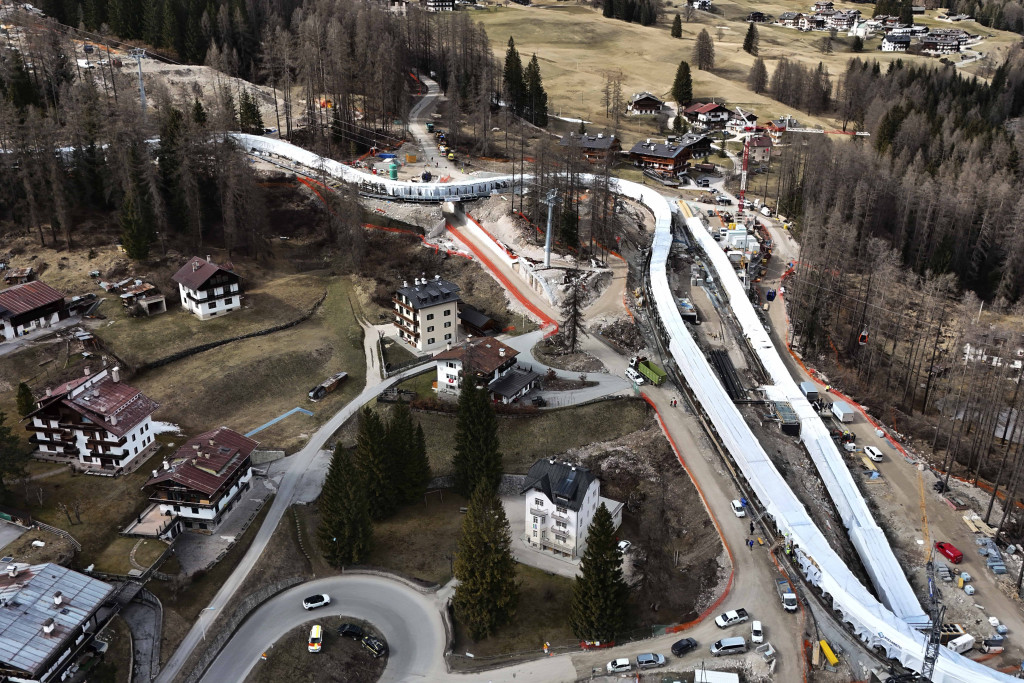
And then there is the new venue that will stage the high-profile ice hockey events — Milano Santagiulia Ice Hockey Arena. Construction delays were the cause of great concern, especially among executives at the National Hockey League, which will send athletes to the Games for the first time since the 2014 Games in Sochi, Russia. In the end, the arena looks like it will be ready, although with fewer seats than anticipated and with an ice surface that is several feet shorter than international standards.
Kirsty Coventry, the IOC’s recently appointed president who will oversee the first Games of her tenure, said last week that the venue will be in good shape.
“There are a few little pieces they need to finish and wrap up, but from where we were to where we are today, we’ve made huge strides,” she said. “The team has been working really, really well. The Organizing Committee is working well. The central government and everyone have really been on board. And so everyone is in the right direction, and it will be a beautiful venue.”
New Sports on the Program
As for the sports themselves, 116 medal events will be held across 16 disciplines — an increase over the previous games in Beijing.
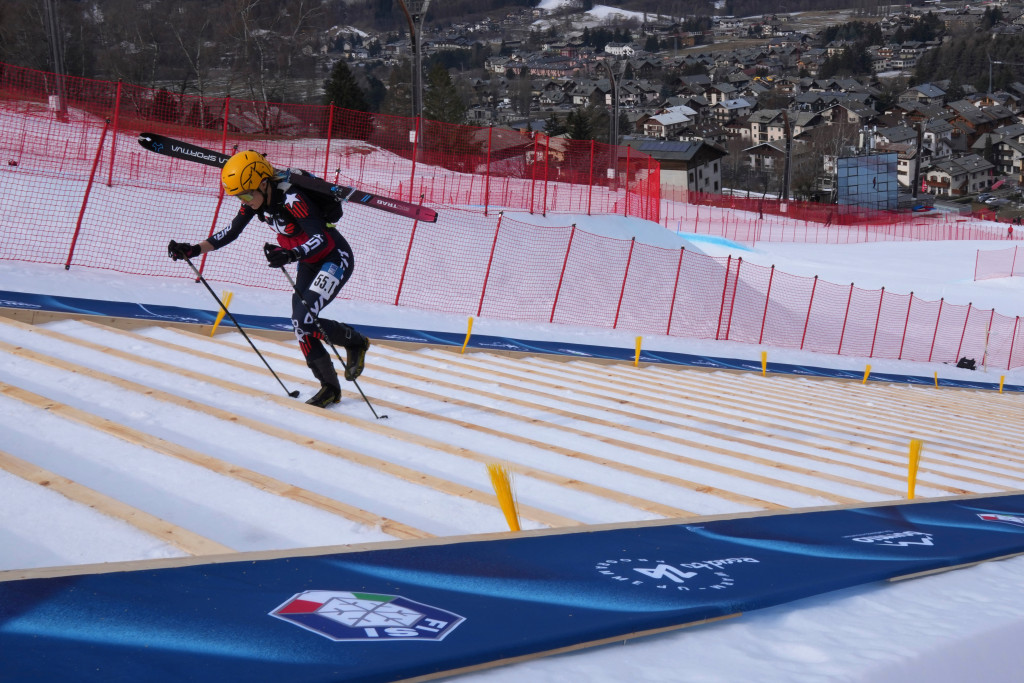
One new sport will be ski mountaineering, which will make its Olympic Games debut and be staged at the Stelvio Ski Center. In a sport that is a mix of cross-country, climbing and downhill, ski mountaineering athletes make the painstaking effort to traverse up the mountain on special skis and complete a hiking portion off skis before descending down below similar to downhill.
Many of the other new disciplines are team events, or events that mix or attempt to even the playing field between genders.
In Alpine skiing, a team combined event will make its Olympic debut, with a downhill and slalom run with two teammates assigned to each. The pair that makes it down the hill the fastest will win.
In cross-country skiing, the distances for men and women will be the same for the first time.
Dual moguls in freestyle skiing, a mixed team relay in skeleton, women’s doubles in luge and the first competition for women on the large hill in ski jumping will round out the other new additions.
Athletes to Watch
Every Olympic Games produces its own stars — some who enter the competition as household names and other who emerge for the first time.
Team USA is loaded with generational talent, and its record 232 athletes includes 98 who are returning Olympians. Seven of those will be making their fifth appearance at the Games: Evan Bates (figure skating), Nick Baumgartner (snowboarding), Faye Thelen (formerly Faye Gulini, snowboarding), Kaillie Humphries (bobsled), Hilary Knight (hockey), Elana Meyers Taylor (bobsled) and Lindsey Vonn (skiing).
At 41 years old, Vonn may be the most intriguing one to watch. She won gold in the downhill in 2010 but last competed in the Games in 2018 before retiring due to injuries. Her comeback attempt suffered a setback when she crashed on one of her final runs leading up to the Games, though she plans to race as scheduled in Italy.
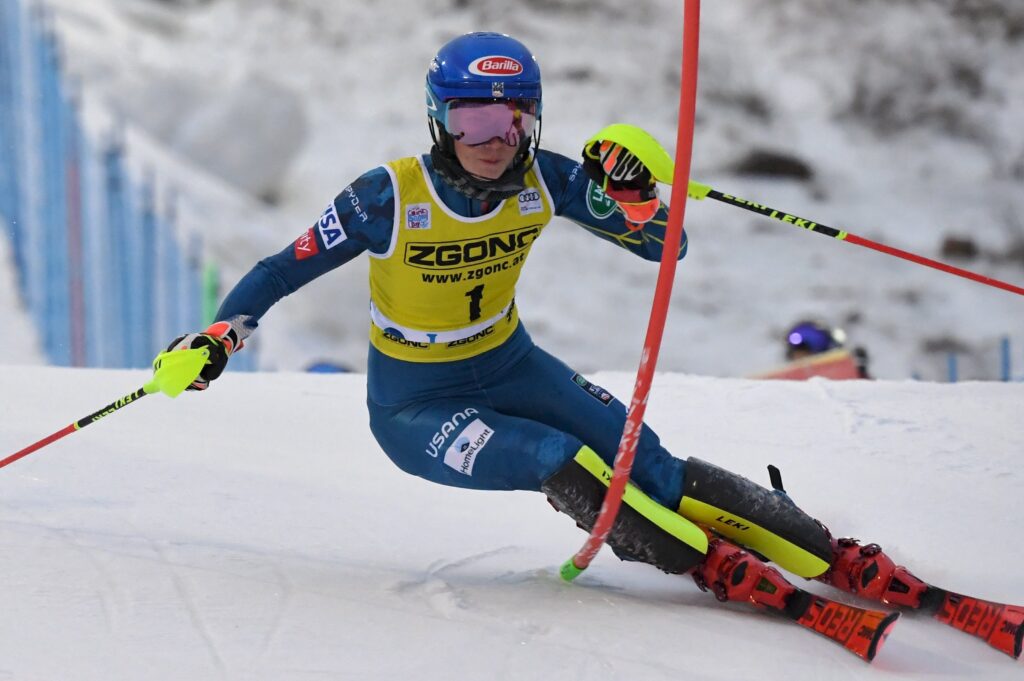
Also on the slopes, the all-time winningest World Cup skier — Mikaela Shiffrin — will return for an attempt at more Olympic gold in her dominant discipline of slalom, as well as the giant slalom and the team combined.
The United States also fields some its strongest teams in years both in figure skating and long track speedskating, where 21-year-old Jordan Stoltz will chase three gold medals in the 500, 1,000 and 1,500 meters, and the mass start. If he reaches three golds, he will become second American in any sport to win three or more golds at one Winter Games, with the other being fellow speedskater Eric Heiden at his historic Games in 1980 when he won five.
And while the Americas will field a strong team, they and others will largely avoid officially competing with athletes from Russia and Belarus, who are still banned by the IOC after Russia’s invasion of Ukraine. Russia and Belarussian athletes are still technically allowed to compete, but only as “Neutral Athletes” with no flags raised or anthems played in the event of a victory. Those athletes are being vetted to ensure they have not publicly supported the war, and they will not march in the Opening Ceremony.
In the end, the IOC anticipates 13 Russian athletes and seven Belarus athletes to compete under those terms.
France and Utah Up Next
After the Games are done, attention on the winter circuit will turn to France, which will host in 2030 and then Utah, which will host in 2034. France’s bid looks similar to Italy, with proposed events across a vast region from the French Alps to Nice on the coast. In Utah, the footprint will look similar to 2002, when the region last hosted, including events across Salt Lake City and Park City in the mountains.
Representatives of both organizing committees will be in Milan, with a ceremony planned for February 6 to formalize relationships and learning between the two groups.
Posted in: 2026 Olympic Winter Games, Figure Skating, Latest News, Main Feature, National Governing Body, NHL, Olympic Sports, Sports Organizations, Winter Sports