

Editor’s Note: This story is part of SportsTravel’s Olympics preview, which began Monday with Jason Gewirtz’s overview of the top storylines to watch for this month at the Games in Italy.
The 2026 Olympic and Paralympic Winter Games in Milan Cortina are fast approaching (February 6–22 and March 6–15) and final preparations for the events are well underway.
This year’s Olympic Winter Games will feature 116 medal events in 16 disciplines — an increase of seven events and one discipline from Beijing 2022. Meanwhile, the Paralympic Winter Games will feature 79 medal events across six main sports.
In all, 15 different venues across Northern Italy will be used to host competitions.
Cortina d’Ampezzo previously hosted the Olympic Winter Games in 1956 (the first time that Italy had hosted the Games), while the Games were last held in Italy 20 years ago in Turin.
Below, we take a look at the 15 venues for the Games, from their history to the sports that they will welcome:
Anterselva Biathlon Arena

Rasen-Antholz, South Tyrol, Bolzano
Events: Biathlon
Opened: 1971
At an altitude of 1,600 meters above sea level near the Austrian border, the Anterselva Biathlon Arena has previously hosted prestigious international events such as World Cup stages and six World Championships, as well as cross-country skiing and rifle shooting events. This, however, will be the first time it hosts the Olympic Games.
The arena has been renovated to add a new track section that passes over the shooting range. Designed to accommodate up to 19,000 fans, it will have the highest spectator capacity of any competition venue at the Winter Games.
Cortina Curling Olympic Stadium

Cortina d’Ampezzo, Belluno, Veneto
Events: Curling
Opened: 1955
In the heart of the Dolomites, the Cortina Curling Olympic Stadium was originally built in time for the Cortina d’Ampezzo 1956 Olympic Winter Games. At that time, it served as the venue for the Opening Ceremony and figure skating events, but in 2026, it will host curling and wheelchair curling at the Olympic and Paralympic Winter Games, as well as the Closing Ceremony for the Paralympic Winter Games.
The stadium, which has a capacity of 3,500 spectators for competitions and 3,700 for the Closing Ceremony, has been renovated to feature additional spaces for athletes, staff and fans.
Cortina Sliding Centre

Cortina d’Ampezzo, Belluno, Veneto
Events: Bobsleigh, Luge, Skeleton
Reopened: 2025
The new Eugenio Monti Sliding Centre, named after the two-time Olympic bobsleigh champion, has been redeveloped on the grounds of the track that was the setting for the 1956 Winter Games. The project included a complete reconstruction of the sliding track and the addition of extra facilities for athletes, staff and spectators, and will host bobsleigh, luge and skeleton events in 2026.
Reconstructed for this year’s Games, the new $139-million, 1,730-meter track will be used for international competitions post-Games, including the Dolomiti Valtellina 2028 Winter Youth Olympic Games. The venue completed initial testing events in March 2025.
Livigno Aerials & Moguls Park
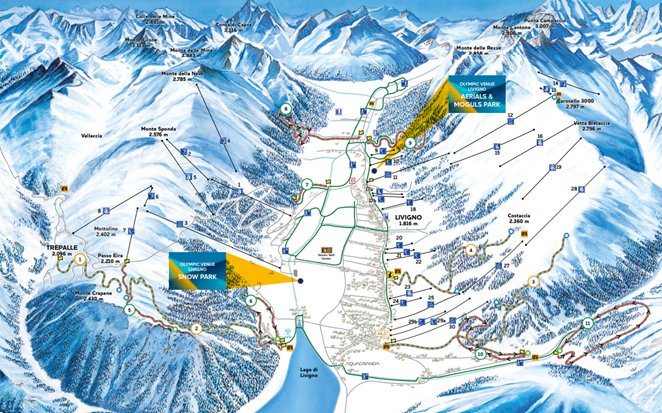
Livigno, Sondrio, Lombardy
Events: Freestyle Skiing
Opened: 2024
Situated in the Livigno Valley, the Aerials & Moguls Park has already hosted the FIS Freestyle Skiing World Cup finals and the Aerials & Moguls Olympic Test Event, and the ski area that spans 120km of slopes will welcome the best freestyle skiers in 2026.
The park includes two courses, approximately 150m and 235m in length for aerials and moguls respectively, are positioned near the base of the Southwestern slope in the Livigno Valley. The complex includes a terrace that can accommodate up to 3,000 spectators, and it was the first venue to be completed in preparation for the 2026 Olympic Winter Games.
Livigno Snow Park
Livigno, Sondrio, Lombardy
Events: Freestyle Skiing, Snowboard
Opened: 1994
The Livigno Sports Park has previously hosted the Burton European Open, River Jumpa and World Rookie Fest, and at the Winter Games it will be home to snowboard and four freestyle skiing events – ski cross, halfpipe, slopestyle and big air.
The design and layout of the park will enable spectators to watch multiple events at the same time, given that each of the five competitions will end in the same finish zone. All five events include impressive structures – notably a ski cross track that is 1,100 meters long, the halfpipe with walls that are more than seven meters high, and the big air jump stands at over 50 meters tall which can be used during the day and at night.
Milano Ice Skating Arena

Milano, Lombardy
Events: Figure Skating, Short Track Speed Skating
Opened: 1990 (renovated in 2014 and 2017)
Known otherwise as the Unipol Forum, the Milano Ice Skating Arena will be the venue for figure skating and short track speed skating competitions at the Winter Games. After a series of renovations, the venue now has a permanent rink and is located close to the city center, which should make it easily accessible for fans.
The arena, which has a seating capacity of 11,500, will remain a key venue for ice sports after the Games have concluded.
Milano San Siro Olympic Stadium
Milano, Lombardy
Events: Opening Ceremony
Opened: 1926 (to be demolished around 2031–2032)
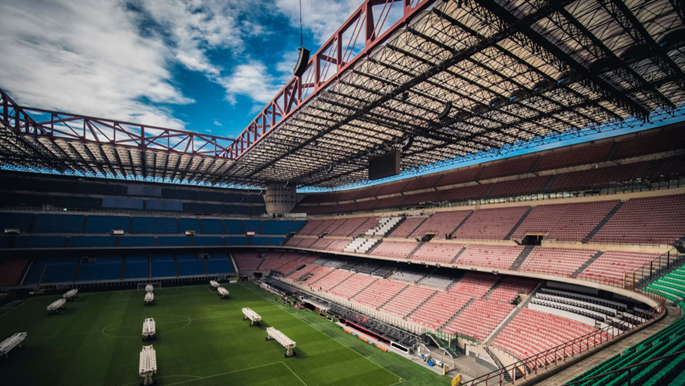
The Milano San Siro Olympic Stadium, more often known as San Siro or the Giuseppe Meazza Stadium, will mark its 100th anniversary this year by hosting the Opening Ceremony on February 6.
Inaugurated in 1926, the stadium is the home to Milanese rivals Inter and AC Milan, and it has also hosted FIFA World Cup matches in 1990, four UEFA Champions League finals and international rugby matches for the Italian National Team.
The Opening Ceremony is expected to draw 77,000 spectators and will feature music and performances from artists and prominent figures, as well as the parade of athletes.
Milano Santagiulia Ice Hockey Arena

Milano, Lombardy
Events: Ice Hockey
Opened: 2026
The development of the Milano Santagiulia Ice Hockey Arena has been well-documented, as it has been beset by numerous delays and concerns over the condition of the ice and concourse areas for spectators. Located in the Santa Giulia district, the multi-purpose venue has been built with the help of a private investor for these Olympic and Paralympic Winter Games, hosting ice hockey and para ice hockey.
The venue was originally expected to accommodate around 16,000 people before seating capacity was lowered to 14,000, although reports suggest that that capacity could be reduced further to below 12,000 because of the late arena completion and test events.
After the Games, the arena will become a multi-functional center that can host sports events and live entertainment in the city.
Milano Speed Skating Stadium
Milano, Lombardy
Events: Speed Skating
Opened: 2025
Located within the Milano Ice Park, the pavilions of the Fiera Milano Rho exhibition center — near the former Expo 2015 site — have been converted into a sports venue that will see the world’s top speed skaters go head-to-head in races featuring sprints and tactical pursuits.
After the Games, the pavilions will return to their original function. The Milano Rho Ice Hockey Centre is also located on the same complex.
Milano Rho Ice Hockey Arena

Milano, Lombardy
Events: Ice Hockey
Opened: 2005 (renovated in 2025)
Located in Milano Ice Park, the 4,000-capacity Milano Ice Hockey Arena will be the home of the in-demand ice hockey and para ice hockey tournaments at the 2026 Olympic and Paralympic Winter Games.
The area has been renovated as part of a wider transformation project of the Fiera Milano Rho exhibition center, near the former Expo 2015 Milano site, which includes repurposing four pavilions within the larger exhibition district. Unlike the Milano Santagiulia Ice Hockey Arena, the venue is designed for temporary use during the 2026 Games, meaning that it can be redeveloped or dismantled for urban sustainability purposes.
Predazzo Ski Jumping Stadium

Predazzo, Trentino-Alto Adige / South Tyrol
Events: Nordic Combined, Ski Jumping
Opened: 1989
The Predazzo Ski Jumping Stadium hosted its first World Cup competition in 1990, one year after the venue debuted. This year, it will be the site of ski jumping events and the jumping segment of the Nordic combined events, as well as serving as the training base for the Italian national teams.
The 3,000-square meter site features two main ski jumping hills and three smaller training jumps of varying sizes, while facilities have been upgraded for athletes, media and spectators. Further renovations include a new judges’ tower, an upgraded snowmaking system and enhanced lighting system in the competition area.
Post-Games, the stadium will remain a public sports venue that can support the development of emerging athletes.
Stelvio Ski Centre

Bormio, Sondrio, Lombardy
Events: Alpine Skiing, Ski Mountaineering
Opened: 1982
At the heart of Bormio, the Stelvio Ski Centre will make Olympic history by hosting the debut of ski mountaineering at the Winter Games. It will also be home to the Alpine skiing competitions, accommodating 7,000 spectators for skiing and 4,000 for ski mountaineering.
On one hand, the Alpine skiing course is 3,442 meters in length, including a 1,023-meter vertical drop and a maximum gradient of 63 percent.
On the other, two race formats will make their Olympic debut in ski mountaineering. One is a 610-meter sprint race with a 70-meter vertical gain and the other is a mixed relay course that is 1,310 meters long and has a 135-meter vertical gain.
Tesero Cross-Country Skiing Stadium

Lago di Tesero, Trento
Events: Cross-Country Skiing, Nordic Combined
Opened: 1991
Found in the heart of the Val di Fiemme, the Tesero Cross-Country Skiing Stadium will witness the cross-country skiing and Nordic combined events at the Olympic Winter Games and the biathlon and cross-country skiing events at the Paralympic Winter Games. In 1991, it hosted the Nordic World Ski Championships for the first time, and is situated 850 meters above sea level to facilitate optimal conditions for winter sports and its artificial snowmaking system.
It is believed that the stadium could accommodate between 15,000 and 50,000 spectators due to the versatility of the center. Its most recent renovations include revisions to the track, new underground changing rooms, technical rooms for ski technicians, testing areas for athletes and an equipment preparation centre.
Tofane Alpine Skiing Centre

Cortina D’Ampezzo, Belluno, Veneto
Events: Alpine Skiing
Opened: 1956
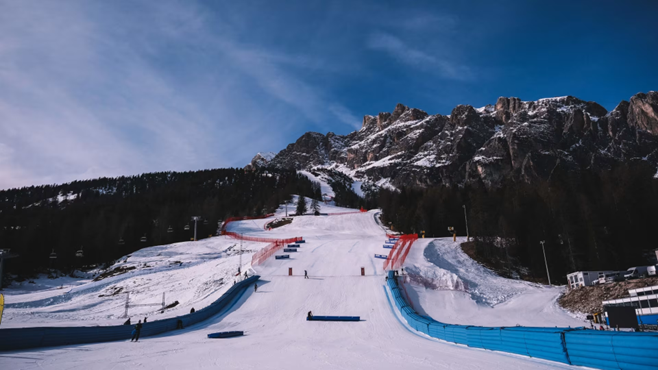
Named after Le Tofane (a significant mountain group in the Eastern Dolomites), the Tofane Alpine Skiing Centre in Cortina d’Ampezzo is ready to welcome the Olympic Women’s Alpine skiing and Paralympic Women’s and Men’s Alpine skiing in 2026. The centre first hosted Alpine skiing events at the 1956 Olympic Winter Games, and it has also welcomed Women’s World Cup competitions and the FIS Alpine World Ski Championship since then.
Also keep an eye out for Olympia delle Tofane – one of the most recognizable ski runs in the world that is 2,560 meters in length and has a vertical drop of 750 meters.
Verona Olympic Arena

Verona, Veneto
Events: Closing Ceremony
Opened: 30 AD
Built almost 2,000 years ago for gladiatorial contests, the third largest Roman amphitheater in Italy is being transformed for the Winter Games by hosting the Olympic Closing Ceremony and the Paralympic Opening Ceremony in Verona.
The 12,000-capacity venue has previously hosted sporting events such as the conclusion to the Giro d’Italia, as well as pop and opera concerts. This time around, the arena has been adapted to enhance safety and accessibility for spectators, staff and athletes alike.










 Copyright © 2026 by Northstar Travel Media LLC. All Rights Reserved. 301 Route 17 N, Suite 1150, Rutherford, NJ 07070 USA | Telephone: (201) 902-2000