
The Premier League is back for another enthralling season, and that inevitably means new managers, signings, kits, and sponsorships. But for the three clubs promoted to the English top tier, it can mean something else: an eye-watering £200 million ($269 million) financial boost, sell-out attendances, and the opportunity to compete with the world’s richest teams — opportunities that fans and owners alike can revel in.
Over 38 matchdays, 20 teams will play each other home and away to push for the league title, a spot in the Champions League, or simply survival in English football’s top table. Since rebranding from the First Division in 1992, the Premier League has become an international marketing juggernaut, securing multibillion-dollar TV rights deals across the globe and driving added exposure abroad with pre-season tours and brand partnerships.
This year, the competition is leading its global counterparts in seeking to capitalize on the popularity and success of the recent FIFA World Cup in North America, which showcased dozens of the league’s stars. Arsenal is looking to retain its Premier League title, while Coventry City, Ipswich Town, and Hull City are the league’s newest members after earning promotion from the second-division Championship. Here, we talk to the promoted clubs’ fans and regional tourism representatives to discover how they are preparing to showcase themselves on the international stage and what football fans can expect from their trips this season.
Coventry City: Still Rising
Home Stadium: Coventry Building Society Arena (33,000-seating capacity)
Opening Match: September 21 vs. Arsenal
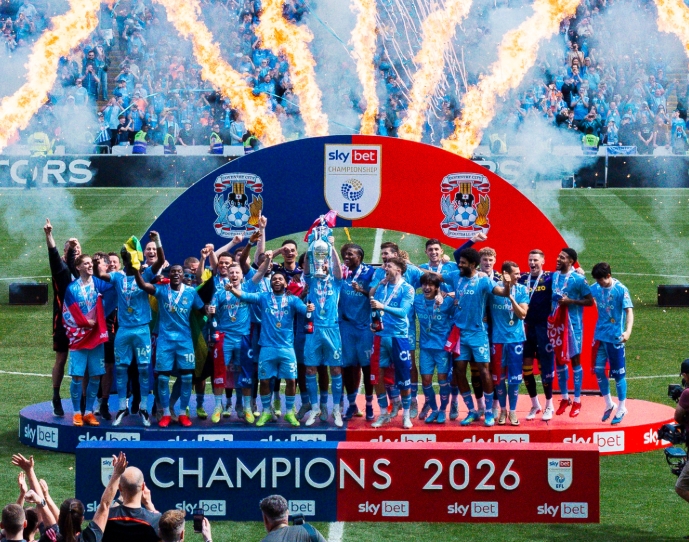
Nine years ago, Coventry City were relegated to the fourth tier of English football (Sky Bet League Two), having suffered a series of financial issues and a legal dispute with previous owners SISU Capital that saw the club relocate to two other stadiums to play “home” matches. Now the club managed by former England midfielder Frank Lampard is back in the top flight after a 26-year absence, having romped to the Championship title last season.
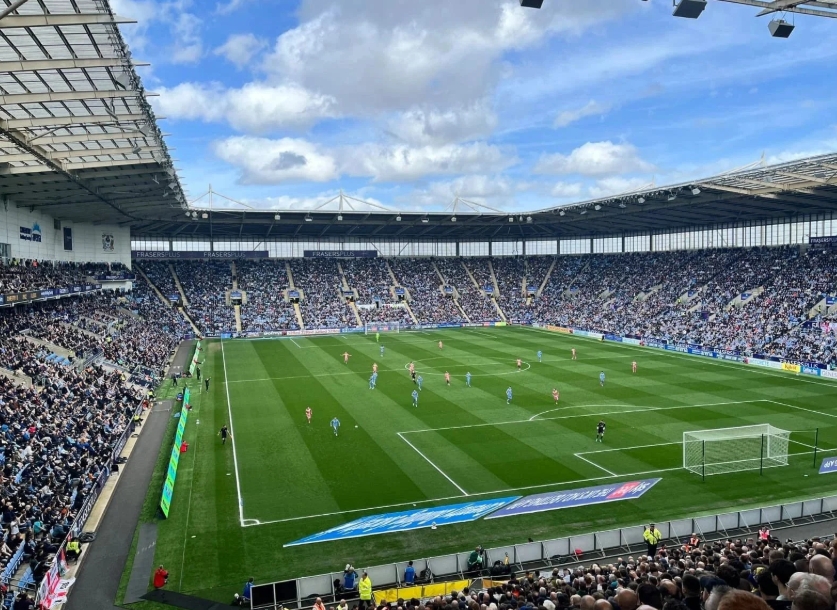
To prepare for the Premier League campaign, the club has developed a 15,000-square-foot retail and fan space inside the CBS Arena, including a refurbished COV Store for merchandise purchases and matchday activities. The space also features an in-store DJ booth, a Sky Blue Archive exhibition called “The Story,” upgraded matchday hospitality options (e.g. Engine Room and Balcony Street Bar), and state-of-the-art racing simulators in partnership with the TGR Haas F1 Team, in a nod to the city’s University’s engineering partnerships with the automotive industry.
The club has also been active in the community. Coventry City charity Sky Blues in the Community partnered with local schools to include children in educational and physical activity events alongside the official Premier League Trophy, and a joint project by Coventry City Council and the Football Foundation used Premier League funding to build and renovate accessible local multi-use sports areas.
“It will put Coventry on a truly global stage overnight, with the Premier League being one of the world’s most powerful marketing platforms,” said Destination Coventry Managing Director Paul McMahon. “Our city will reach millions globally every weekend, which we are confident will result in a boost to visitors, overnight stays, and the wider hospitality sector.”
Dec Connolly is a born-and-bred Coventry City supporter who also works as a sport & physical activity development manager at Coventry City Council. “Coventry is very much a one-club city — it’s a large city with a proud football tradition, and the vast majority of people want Coventry City to do well,” he said. “That’s what makes supporting the club so special, because there’s a real connection between the club and the city that you don’t always get elsewhere.
“We’ve been through bankruptcy, administration, being locked out of our own stadium, groundshares in Northampton and Birmingham, court battles, ownership disputes, and relegations. Nowadays, I go with my five-year-old son, which makes matchdays even more special, though the funny thing is he’s only ever known us on the rise.
“For visiting supporters, they’ll find a welcoming city with passionate football fans who are incredibly proud of their club. The CBS Arena can generate a fantastic atmosphere when it’s full, and home supporters will do everything they can to get behind the team.”
Hull City: Eye of the Tigers
Home Stadium: MKM Stadium (25,000-seating capacity)
Opening Match: September 22 vs. Manchester United
After 10 years away from the Premier League, Hull City is back in the country’s top table. The Tigers defeated Middlesbrough in a Championship playoff final at Wembley Stadium on May 23 that capped a wild turn of events; Hull City had been scheduled to play Southhampton in that match, but that club was removed from the final for spying on Middlesbrough before their semifinal matchup, which Southhampton had gone on to win.
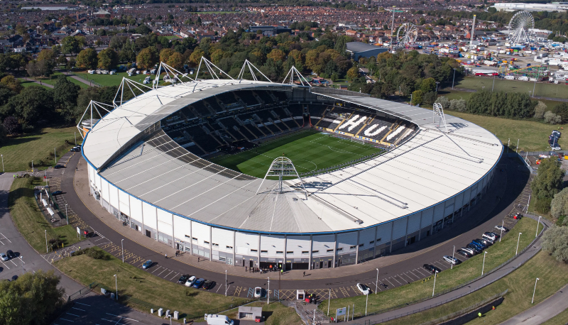
In preparation for its sixth-ever campaign in the Premier League, Hull City has worked closely with Visit Hull & East Yorkshire, the Local Visitor Economy Partnership for the region, to give football fans a warm Yorkshire welcome from the moment they arrive in the city this season. The VHEY is laying on a dedicated program of promotional activity, beginning at the railway station where supporters can access the information they need to get to the MKM Stadium, and including the local hotels, restaurants, and pubs selling local ales and the traditional Hull Pattie and Chip Spice.
The Tigers’ return to the top flight is particularly significant for its cultural and tourism recognition. Hull is looking to build on the recent opening of its Maritime Museum, following a £20 million makeover, and leaning on local partnerships to ensure that the city is highlighted for its sporting culture, traditions, and a growing international reputation.
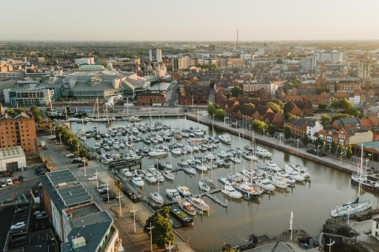
“The global reach of the Premier League is extraordinary and will massively support Hull’s profile as a place to visit, work, study, and invest,” said VHEY Destination Manager Anthony Yates. “Increased visitor numbers benefit local businesses, support jobs, and create a renewed sense of pride and optimism within communities.”
“We are absolutely thrilled to welcome fans from across the country as Hull City kicks off an incredibly exciting return to the Premier League,” said Councillor Mike Ross, leader of Hull City Council. “Whether you’re coming for matchday or making a weekend out of it, our city’s tourism offer is shining brighter than ever — especially with our recent completion and launch of the Hull Maritime offer, including the landmark reopening of the magnificent Maritime Museum.”
Ipswich Town: That Didn’t Take Long
Home Stadium: Portman Road (30,000-seating capacity)
Opening Match: September 22 vs. Sunderland
Meanwhile, Ipswich Town made an immediate return to the Premier League in May, finishing in second place behind Coventry City after suffering demotion from the top tier in the 2024-2025 season. The team will emerge under the new leadership of manager Gary O’Neil, who previously led Wolverhampton Wanderers and AFC Bournemouth in the same division.
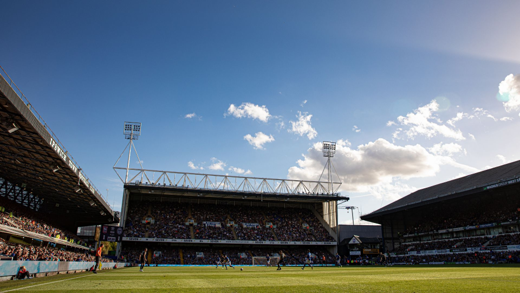
Ipswich Town’s redevelopment plans and work in the community will form the bedrock of the club’s upcoming Premier League campaign and its bid to become more widely recognized on the global stage.
Earlier this summer, the club lodged plans with Ipswich Borough Council to expand the Portman Road West Stand concourse from 864 to 1,759 square meters and redesign the outdoor FanZone into a larger, ticket-free community to welcome more fans. New food and drink kiosks are also set to be introduced to serve supporters both inside the stadium concourse and in the wider community event spaces.
Meanwhile, Ipswich Central, the Business Improvement District for the town, recently launched “Added Time,” a campaign designed to celebrate the impact of the Premier League on local businesses. Football culture photographer Adam Rosenbaum has been commissioned to capture a series of photographs of people working at local businesses, alongside insights from business leaders on how football visitors have impacted the town.
In February 2024, the club signed a three-year partnership with the local University of Suffolk, in a collaboration that aims to showcase the county, provide student work placements at Portman Road, and feature university branding and stand naming rights at the ground. The aim is to attract even more students to attend games this season.
Sarah Evans has been a supporter of the team since her childhood days, and now has her own season ticket with her two boys, Jesse and Theo, who both played for the Ipswich Town Foundation teams.
“It’s brilliant supporting Ipswich Town because we are a one-club county and you see our shirts everywhere, whether you are in Ipswich itself or in the surrounding towns and villages of Suffolk,” she said. “It’s a family club, and they are inclusive to all. They have a huge fanzone open before the game, with activities for children, food vans and stalls, bars and live music.
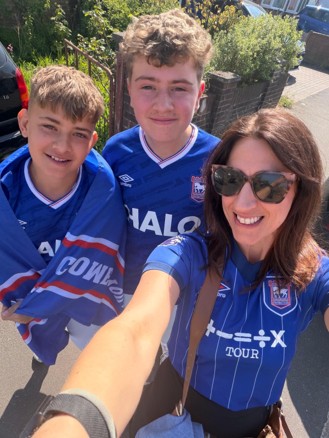
“We take a 15-minute train journey to Ipswich on a very packed carriage, before taking a short walk to the ground and heading straight to the fanzone for a burger and ‘cuppa.’ There is an away supporters pub right by the station called The Station Hotel, and the walk past is always a loud and lively one, but usually friendly banter — apart from when local rivals Norwich City come to town.”

Relegated Teams
With three teams moving up, that means three teams moved down. West Ham United, Burnley and Wolverhampton Wanderers suffered relegation from last season’s Premier League and will now do battle in the Championship in hopes of securing an immediate return to the top flight. While Premier League teams begin competitive action this weekend, Championship teams have already begun their seasons two weeks earlier, starting with League Cup matches in which teams from the top four English divisions compete.
The cost of relegation can be painful, but not terminal. Relegated clubs will immediately see a drop of more than £60 million ($81 million) in broadcasting revenue with lower brand exposure, but they can receive around £140 million ($189 million) in Premier League TV revenue and parachute payments over three years, even after relegation, to cushion the financial hit.
Most clubs will be expected to bounce back at the first time of asking, given the huge financial advantage they will receive over their rivals that have not come out of the Premier League. However, that is not always the case: Luton Town (2025) and Leicester City (2026) have both suffered consecutive relegations from the Premier League and Championship in the last two years.
It is a common belief that the Premier League, as the richest league in the world, is the most valuable shop window for players in world football. That said, the visibility can be just as, if not more, lucrative for the destinations themselves when their clubs are on that behemoth stage.










 Copyright © 2026 by Northstar Travel Media LLC. All Rights Reserved. 301 Route 17 N, Suite 1150, Rutherford, NJ 07070 USA | Telephone: (201) 902-2000