

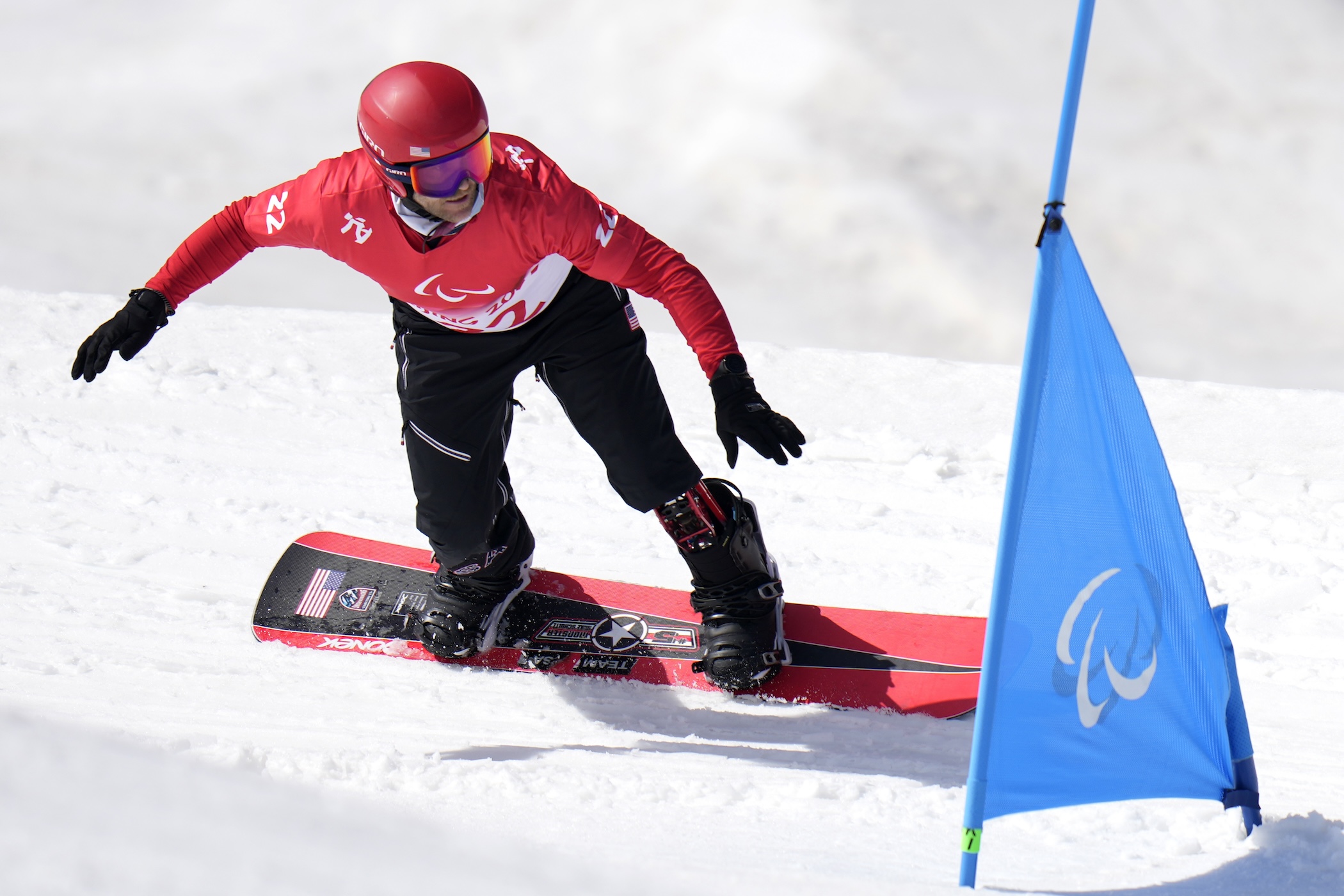
As adaptive sports gain visibility, more accessible venues and destinations are needed to accommodate both the events and their athletes. During a U.S. Olympic & Paralympic SportsLink session at the TEAMS ’25 Conference & Expo, para athlete and journalist Courtney Godfrey, Paralympians Mike Schultz and Matt Stutzman, and Visit Fort Wayne’s sports sales manager, Jazmin Zavala, discussed how to make cities and venues accessible to host adaptive events.
Creating Visibility for Adaptive Sports
Thanks to a record amount of broadcasting of the 2024 Paralympic Games in Paris, both viewership and excitement surrounding the sports increased. Despite this heightened level of interest, there is still a lack of promotion of adaptive events.
A case study of a destination that has excelled at inclusivity is Fort Wayne, Indiana, where the World ParaVolley Sitting Volleyball World Cup was held in October. To build excitement ahead of the event, the destination held a media day — with a twist. Local journalists and media stations were invited to the Turnstone Center for Children and Adults With Disabilities, a U.S. Olympic and Paralympic training site, to experience the sport for themselves and play sitting volleyball.
“What that was able to do is allow those journalists to see a sport that, honestly, they may have never seen before,” Zavala said.

Hosting the WPV Sitting Volleyball World Cup afforded Fort Wayne the opportunity to look at capital improvement and investment.
“This is a world stage, and it needs to be seen across the globe in order to continue the growth for this sport,” she added. “At Turnstone, we were able to secure funding to have top-of-the-line live-streaming, which is paramount to have that visibility.”
Ensuring Accessible Venues
One of the key components to making a city more accessible is transportation.
“We have a lot of archers in wheelchairs, so getting them from the hotel to the venue has always been a struggle,” said Stutzman, a four-time Paralympic medalist.
A solution to getting wheelchair users from point A to point B is getting buses that have a loading ramp and no benches inside. Once the athletes are on the bus, they lock their chairs in place, which are then buckled to the vehicle.
“One of the biggest things I have seen from cities and countries to help is making the transportation of people with disabilities a lot more efficient,” he said.
Fort Wayne saw an influx of wheelchairs for an adaptive basketball competition. In the weeks prior, airport staff underwent training with an ADA coordinator to mitigate damaged equipment.
“Handling those chairs is No. 1 because that is someone’s everyday chair,” said Zavala. “We want to make sure that is not something that an athlete worries about when they’re coming to our destination.”
Whether it’s an airport where the athletes will be arriving, a venue that is hosting an adaptive event or a hotel where travelers with disabilities are staying, training employees is essential.
“It’s not just about making the venue accessible, it’s also about preparing your staff,” Godfrey said.
Training should address the treatment of both equipment and people.
“In order to produce a successful event and welcome athletes, we have to make sure that we are aware of the right language to use,” added Zavala. “There are powerchair users, there are wheelchair users, people that have amputations, people that are visually impaired. That’s not all the same disability.”
Visit Fort Wayne also tapped their local resources, such as an Amazon headquarters near the airport.
“(Amazon) partnered with the (National Wheelchair Basketball Association) and they were able to transport all those wheelchairs that were coming in through the airport to the venue,” she said. “Look at opportunities that could make the experience more memorable.”
For Schultz, a Paralympic snowboarder, parking tends to be an issue.
“When I show up to an event at a ski resort, I rely on having enough handicap spots, which a lot of times there’s not, especially when there’s an adaptive or Paralympic event,” he said.

While he can get around just fine in his prosthetic leg for everyday use, during competitions he’s carrying about 50 pounds of gear and wearing his riding leg, which is great for snowboarding but isn’t very comfortable for walking.
“Throughout my day I’m thinking, ‘OK, how many fewer steps can I take to conserve energy?’” he pointed out. “And there’s a lot of other adaptive athletes in that same position.”
A solution to limited handicapped spots is providing golf carts or shuttles to move both athletes and spectators from the parking lot to the venue.
“If there are 200 people with disabilities coming in, there’s only so much front-row parking, people will still have to eventually park further out,” Stutzman said.
Accessible Destinations are Key
In addition to parking, Schultz named restrooms and stairs as his main concern when traveling.
“Those are some of the biggest challenges that take time away if they’re not convenient,” he said.
Older cities tend to pose problems for para athletes.
“We’ve stayed in many hotels in Europe where there is no elevator,” said Godfrey.
Of course, one of the older cities these athletes visited recently was Paris for the Paralympic Summer Games.
“The athlete village was amazing,” said Stutzman. “You could pretty much go anywhere, do anything. It’s once you got outside of it where the struggle was going to happen.”
Recognizing its own handicap, the Paralympic host city created a virtual-reality experience where users could put on a pair of goggles, say where they wanted to go and what their disability was, and the technology would show them the easiest route.
“There are solutions to working around the infrastructure that’s already in place,” Godfrey added.
Separating the Playing Fields
When hosting multiple competitions for different ability levels — the Olympics and Paralympics, for example — the panelists emphasized the importance of having separate playing fields.
“It’s cheaper for a venue to use the same mountain, the same run to create the course on and not have to rebuild something,” said Schultz, the four-time Paralympic snowboarding medalist. “But because we’re not capable of doing certain things that the able-bodied athletes are, there have been some challenges that created unsafe environments for us.”

Also known as the “Armless Archer,” Stutzman has witnessed the modifications that a host can make.
“Our archery events are usually at the same place as the able-bodied and when they set up those venues, they think about that,” he said. “So there’ll be a lot of concrete that the wheelchair users can go around easier on; or if there’s not a lot of concrete, it’ll be fine gravel so they can roll around easier.”
The Importance of Adaptive Sports
From a CVB standpoint, holding an inclusive event in your city can be incredibly rewarding.
“If your intention is to become a destination that is welcoming to athletes of all abilities, hosting adaptive sports is just one of those ways to elevate what you’re looking to provide,” said Zavala.
For some para athletes, adaptive sports have given them a purpose and a livelihood.
“Sports took me from no job trying to figure this out, to where I am today,” Stutzman said. “It gave me an out, it made me feel special, and there’s so many people in this world that have a disability that need that.”

For others, it allowed them to continue their career in professional sports.
“I lost my leg while I was at the top professional level back in my two-legged days, but sport was the one thing that really drove me to continue to look forward,” said Schultz.
Even for spectators, attending an adaptive sporting event can open the door to new opportunities.
“If you show someone what’s possible — and you can do that by hosting events, you can do that by giving them the exposure — it is so powerful for so many people who are trying to find that one thing to motivate them, to look forward to, to see the best that they can be, and also share that with as many people as possible,” he added. “And sport is one of those things.”








 Copyright © 2026 by Northstar Travel Media LLC. All Rights Reserved. 301 Route 17 N, Suite 1150, Rutherford, NJ 07070 USA | Telephone: (201) 902-2000