

Was the World Cup worth it?
When a panel of CVB leaders gathered last week at Destinations International’s annual convention in Portland, Oregon, to discuss the matter, the general consensus was yes.
But would they do things different?
In many cases, the general consensus was yes as well.
The panel, held at the Oregon Convention Center, gathered tourism leaders from New York, Boston, Toronto, Kansas City and Seattle to talk about how they approached their moment in the spotlight leading up to and during the 2026 FIFA World Cup. And each approached the issue from a very different perspective.
Here’s an overview of how each city tackled its hosting opportunity and what leaders had to offer about the experience:
Toronto
“You put a lot of faith in the broadcast that billions are watching every game. If we had relied on the broadcast to carry our message, we would have come up short.”
— Andrew Weir, Destination Toronto
In Toronto, nearly 18,000 temporary seats were built at BMO Field to bring capacity for the World Cup to 45,736. But the city leaned into everything else that was temporary about the event, including the opportunity to showcase the destination. That meant being strategic about activating across the city.
Television broadcasts for the games themselves were largely confined to tight shots of the pitch, with a passing digital sign that told viewers where the game was being played. So to make sure the city shined, Destination Toronto was deliberate about offering journalists chances to get out into the city. At the media center, for example, journalists could report in front of a live backdrop of the city, which was a key strategy, said Andrew Weir, president and CEO of Destination Toronto.
Toronto also invited journalists in during April and May before the matches to make sure they had time to learn about the city and craft stories that would live beyond game day.
Weir also noted how unusual the structure of the event overall was, with 16 host cities helping to organize the event essentially on their own. “There was no connector at the top,” he said. “We had to be the connectors. We had to be the ones talking to each other. We knew media would compare one city to another. We were not competing at all with each other. There was nothing Seattle or Boston could do positive or negative to us, we had to learn from each other.”
Message to other cities: “Be clear about what success looks like so you’re not measured by one metric,” Weir said.

New York
“We wanted to make sure people were going to come and go to all five boroughs and not just stay in the Times Square area.”
—Natalie Koepff, New York Meetings + Conventions
For New York tourism leaders, the goal of the World Cup was to get fans out to as much of the city as possible. Games themselves — including the final — took place in New Jersey at MetLife Stadium, but fan fests throughout the city’s five boroughs were key, said Natalie Koepff, COO and general counsel of New York Meetings + Conventions. In fact, grants were made available to each borough to help activate watch parties and festivals.
The local organizing committee found creative ways to market to fans across the region, including specialized cups that could be collected in each borough.
Activations went down to local bars as well, where organizers made sure the schedule of public events were front and center to allow a wide diversity of fans the opportunity to do as much as they could.
Message to other cities: “Make sure everyone knows what the purpose is and work to the same goal and unified message,” Koepff said.
Kansas City
“People would say, ‘Oh, we’re in the city of Kansas.’”
—Kathy Nelson, Visit Kansas City and the Kansas City Sports Commission
One tricky aspect to navigate for Kansas City, the smallest market to host, was how the destination is referred to in the first place. While Americans may understand that the metropolitan area of Kansas City is largely in Missouri, that wasn’t the case internationally, meaning city leaders had to first offer an education on how to refer to the destination itself.
In fact, Kansas City appointed someone to the role of international tourism, helping to tell the city’s story in the years leading up to the game since the market is not as well-known as other larger markets, said Kathy Nelson, president and CEO of Visit Kansas City and the Kansas City Sports Commission & Foundation.
From there, the city leaned into the heart behind the destination, in more ways than one. With the help of local design firm Populous, a $3 million heart structure was constructed in its fan festival area, allowing a focal point for the city to rally behind and providing a spot to literally share the love — it served as the site of four wedding proposals and one actual wedding.
Kansas City also leaned into transportation after being told by FIFA that it scored the lowest of the host cities in that category during their pitch to host. The low grade was the result of minimal public transportation to Arrowhead Stadium, even though driving and tail gaiting are part of the city’s culture at Kansas City Chiefs games. To compensate, the city worked with traffic engineers to make sure the driving experience was as smooth as it could be.
Message to other cities: “Funding — get out in front of it,” Nelson said.
Boston
“When the Yankees come to Boston, it ain’t a love fest, sorry. But these (soccer) rivalries become this beautiful merger of cultures. Haitians do this march through city and the Tartan Army joined in with their kilts and bagpipes. It was all a beautiful thing.”
—Martha Sheridan, Meet Boston
Like other markets, Boston had its share of challenges, but other concerns were unique to that city. For example, Boston’s hosting structure was a statewide funding effort that supported the local organizing committee. With Providence, Rhode Island, for example, sitting outside the state, locals grew frustrated when FIFA booked hotel room blocks across state lines and that destination capitalized.
“They rode the coattails,” said Meet Boston President and CEO Martha Sheridan, who previously served as leader of the Providence/Warwick CVB. “They did get a lot of business even though they didn’t invest.”
And sponsorship was a challenge as FIFA placed restrictions on what local organizing committees could raise locally if they competed with exclusive categories at the international level. For Boston, that meant one of its biggest corporate citizens — Dunkin’ — was unapproachable. Why? Because McDonald’s is a FIFA sponsor and owns a part of Costa Coffee in Europe, making the coffee category off limits.
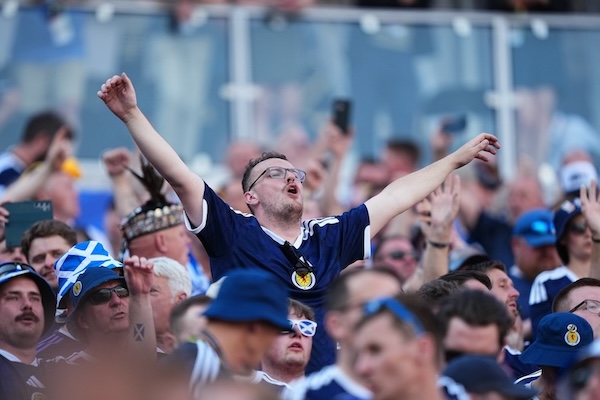
But in the end, Sheridan said the challenges were worth the effort.
“For us, Massachusetts is not a big state and New England is not a big region,” she said. “We were able to bring incredible economic impact to our entire region and I wouldn’t change a thing.”
Message to other cities: “Know your strengths and weaknesses,” Sheridan said.
Seattle
“Everywhere you went, our community brand was around the city.”
—Tammy Canavan, Visit Seattle
In Seattle, the city leaned into the World Cup to streamline investment in the community, including new light rail routes, the removal of a waterfront viaduct to make way for public gathering space, enhanced pedestrian walkways and bikeways, and a $400 million modernization of the airport.
But city leaders also made sure to lean into the destination’s “Play SEA” brand, sometimes bypassing the official FIFA logo for the Seattle event with their own local logo and phrasing that appeared on scarves, billboards and anywhere else the local organizing committee could place them.
And when the June 26 match that had already been designated as a Pride match wound up featuring Egypt and Iran, the destination went on with its plans despite the objections of the teams themselves. “Our LOC [local organizing committee] said this is important to our community,” said Tammy Canavan, president and CEO of Visit Seattle. “People were nervous about it but it turned into this really cool, respectful celebration of all kinds of things. There were some minor protests around it, but it turned into something unifying and gratifying.”
Message to other cities: “Be prepared from a media and stakeholder narrative early — and don’t expect it to be the same,” Canavan said.









 Copyright © 2026 by Northstar Travel Media LLC. All Rights Reserved. 301 Route 17 N, Suite 1150, Rutherford, NJ 07070 USA | Telephone: (201) 902-2000