

[Editor’s Note: For Jason Gewirtz’ Oddities and Observations at the 2026 Olympic Winter Games, click here, and for all of SportsTravel’s coverage of the 2026 Olympic Winter Games, click here.]
The Olympic Winter Games is always a spectacular occasion, and any global event in Italy promises to deliver its own style of romance and decadence. This year’s Games in Milan Cortina represented a trio of symbolic moments — the 25th edition of the Winter Olympics, the first in Europe since 2014 in Sochi, and the first in Cortina in 70 years.
It also marked a seismic turning point for the International Olympic Committee, as new President Kirsty Coventry oversaw her first Games after taking over from former President Thomas Bach.
In the lead up to the event, there were major concerns about the readiness of some venues (most notably Milan’s Santagiulia Ice Hockey Arena), a shortage of snow in the mountains that would host alpine skiing and even the potential appearance of U.S. Immigration and Customs Enforcement, or ICE, agents around the Games.
The legacy of the Milan Cortina Games is still to be determined but its memories will live on. To mark its 25th edition, here are our 25 moments that defined these Olympic Winter Games:
Opening Ceremony in San Siro
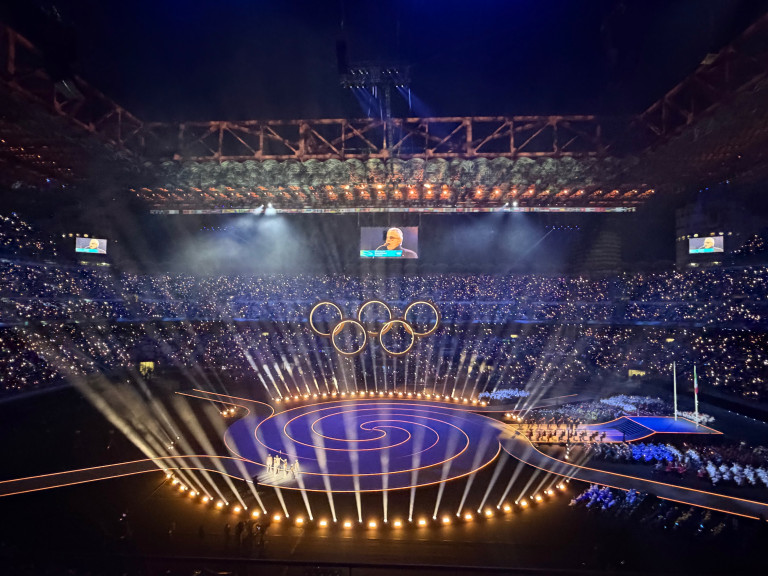
The Games got off to an electric start at Milan’s San Siro Stadium on February 6, complete with headline performances from the likes of singers Andrea Bocelli and Mariah Carey. It was also a landmark moment for new IOC President Kirsty Coventry, a native of Zimbabwe, whose first Opening Ceremony speech focused on unity, humanity and the Olympic spirit, while also referencing the African policy of “ubuntu” (“I am because we are”) to urge athletes to inspire hope and celebrate shared human values.
Lindsey Vonn’s Attempted Comeback
The aptly-named Breezy Johnson won gold in the women’s downhill skiing but it was her U.S. teammate, Olympic champion Lindsey Vonn, who dominated headlines. First, because she was attempting to become the oldest alpine skiing medalist at the age of 41, and because she would compete just one week after she had “completely” ruptured her ACL at a race in Crans-Montana, Switzerland. Vonn’s Olympic return was terrifyingly brief, as she suffered a complex tibial fracture just 13 seconds into her first race.
Ski Jumpers’ “Penisgate”
Reports from German newspaper Bild alleged that male ski jumpers had been injecting their genitals with hyaluronic acid before being measured for their suits to enhance their performances. Although the acid is not a banned substance in sports, the World Anti-Doping Agency set out to investigate if ski jumpers were intentionally injecting themselves to increase the surface area of their suits during competition and therefore their flight in the air.
Flipping Fantastic
Nicknamed the “Quad God” for his trademark quadruple axel, four-time U.S. champion figure skater Ilia Malinin was expected to cement his superstar status at the 2026 Olympic Winter Games. He appeared well on his way when he recorded the first legal backflip in Olympic competition since 1974 in the team event. However, he would go on to finish a disappointing eighth in the free skate final after two falls torpedoed his medal chances, despite being one of the favorites to win gold.
Skating Backwards to Go Forwards
It was a record medal tally for host nation Italy in Milan Cortina, with speed skater Arianna Fontana one of its standout success stories. The team mixed relay final brought about another title for Italy but it was Pietro Seghel’s backwards celebration at the finish line that was most eye-catching. Was it just a piece of fun or unnecessary showboating?
Swiss Bliss for von Allmen
Switzerland’s Franjo von Allmen established himself in the pantheon of Olympic greats by becoming only the third man to win three Olympic alpine races at the same Olympic Winter Games (men’s downhill, men’s super-G, men’s team combined). In doing so, he matched the Olympic accomplishments of Austria’s Toni Sailer (1956 in Cortina) and Jean-Claude Killy (1968 in Grenoble).
South Koreans No Longer Waxing Lyrical
South Korean cross-country skiers Han Dasom and Lee Eui-Jin were both disqualified from the women’s classic sprint qualification after their skis tested positive for fluorinated wax, a chemical that had been prohibited by the International Ski and Snowboard Federation since the 2023-2024 season due to its harmful environmental impact and performance-enhancing properties. In response, the Korean Olympic Committee stated that they had complied with the rules but that the fluorine had been accidentally detected in what they believed to be compliant wax.
Ukrainian Helmet Disqualification

The most controversial moment of the 2026 Olympic Winter Games was the disqualification of Ukrainian skeleton slider Vladyslav Heraskevych after his refusal to take off a “helmet of remembrance” featuring images of more than 20 Ukrainian coaches and athletes killed during Russia’s invasion of his country. The IOC ruled that the helmet violated Rule 50.2 of its Olympic Charter, which prohibits political, religious or racial propaganda in competition, and despite President Coventry’s appeals for alternative displays, the athlete continued to refuse to remove the helmet. In response, he called the disqualification decision “pro-Russian” and Ukraine President Volodymyr Zelensky said it was “morally appalling.”
On The Run No More
There was a bizarre story off the ice when Italian police arrested a Slovakian man who had been on the run for 16 years — after he had decided to attend the Olympic Games to watch his country’s national ice hockey team play Finland in Milan. The fugitive had eluded the authorities after being accused of shopping thefts back in 2010 and was arrested after checking into his hotel before the game.
Brignone Shines Bright
Italy’s Federica Brignone lived up to her high billing by claiming gold in both the women’s super-G and the giant slalom, which she won by the substantial margin of just over six-tenths of a second. It was a stunning comeback for the home hopeful, who last year broke her left knee in four places and tore her ACL, leaving in doubt whether she would even walk normally again.
A First for Brazil — And for South America
Norwegian-Brazilian alpine ski racer Lucas Pinheiro Bratten, representing Brazil, won his country’s and South America’s first-ever medal at an Olympic Winter Games by sliding to gold in the men’s giant slalom. He then celebrated the achievement with an impressive display of samba dancing that was worthy of any highlight reel.
In A Klæbo of His Own
When it comes to the Olympic Winter Games, Norway’s Johannes Høsflot Klæbo can now lay claim to being the undisputed GOAT. In Milan Cortina, he rose to global fame by becoming the first athlete to win six golds at a single Winter Games (men’s 10km interval start; men’s 4×7.5km relay; men’s 50km mass start; men’s skiathlon; men’s sprint; and men’s team sprint) and taking his overall gold medal tally to 11. He is now the most decorated Olympian – winter or summer – behind only U.S. swimmer Michael Phelps, who has 23 medals.
Records Tumble for Team GB
It was the most successful Olympic Winter Games of all time for Team GB, aided by Matt Weston’s double gold in the individual men’s skeleton and the mixed team event with Tabby Stoecker, as well as Huw Nightingale and Charlotte Bankes’ success in the mixed team snowboard cross. It secured a number of other records too for Team GB: its most gold medals at a single Winter Games, its first male double Winter Olympic gold medalist and its first gold medal on snow.
Kok’s Olympic Record
Femke Kok was the toast of the Netherlands after powering to an Olympic record-breaking time of 36.49 to win gold in the women’s 500km speed skating. Following a silver in the 1000m event, Kok won her country’s first Olympic gold in the event and the Netherlands’ first medal in it since 2014.
Oversized Boots Confusion
Austrian ski jumper Daniel Tschofenig said he felt “extremely stupid” after being disqualified from the men’s large hill individual event for wearing oversized boots. The 23-year-old had qualified comfortably for the final but he was eventually excluded after being found to be wearing boots that were four millimeters larger than the rules allowed.
Milestone for Meyers Taylor

On her fifth attempt at the Olympic Winter Games, American bobsleigh veteran Elana Meyers Taylor claimed gold in women’s monobob. In the process, the four-time world champion became the oldest individual Olympic champion at a Winter Games at the age of 41.
A ‘Touch’ of a Cheating Scandal for Team Canada
Cheating incriminations swirled around Canada’s men’s and women’s curling teams as they were accused of “double touching” before releasing the stone, as in making contact with the granite part of the stone after releasing it down the ice. An expletive-filled outburst by male curler Marc Kennedy threatened to overshadow and even challenge the so-called “spirit of curling”, although he defended his team by saying that their Swedish opponents had “premeditated” the accusations. The men won gold anyway while the women took the bronze.
Shiffrin’s Slalom Redemption
There was an incredible redemption story in the women’s slalom as U.S. star Mikaela Shiffrin won the title and her third career Olympic gold medal, this time by the largest margin in the event (1.50 seconds) since 1988. It followed a difficult couple of years for Shiffrin, who had crashed out of both the slalom and giant slalom in Beijing four years prior and has faced high-profile battles with injury, grief and PTSD since.
Frostad Thrills
Norway’s Tormod Frostad won gold in the men’s freestyle skiing big air final with a combined score of 195.50 out of a possible 200. Achieving near perfection, he finished ahead of Team USA’s Mac Forehand and Austria’s Matej Svanser, and it was his first Olympic medal after finishing in last place just four years ago.
Ski Mountaineering’s Olympic Debut
Despite being one of the oldest alpine sports, ski mountaineering finally made its long-awaited Olympic debut in blizzard conditions in the ski resort of Bormio. Swiss star Marianne Fatton won the inaugural gold medal in the women’s sprint event, as well as a silver in the mixed relay.
Alysa Liu Soars to Glory
Twenty-year-old Alysa Liu secured a stunning Olympic figure skating gold, becoming the first American Olympic champion in the sport in 24 years. Liu scored 150.20 in her final free skate, moving her from third place into first and delivering one of the most astonishing moments of the Games, having previously retired from the sport at age 16 due to burnout.
Wolfdog Storms Biathlon
Czechoslovakian wolfdog Nazgul become one of the unlikely stars of the 2026 Olympic Winter Games when he went viral for gate-crashing the women’s team sprint race in the biathlon in Anterselva, on the Italian-Austrian border. Nazgul escaped from the home in Tesero where owners Enrico and Alice Varesco were staying and stormed past the finish line without harming any biathletes, and even appeared in an official photo finish image.
U.S. Beats Canada in Ice Hockey Double
Two historic ice hockey final grudge matches ended with the same result: 2-1 wins for Team USA over Team Canada in overtime. For the men, it was their first Winter Olympic gold medal triumph since 1980 and came 46 years to the day after the “Miracle on Ice” in Lake Placid. It was the third gold overall in the sport for the U.S. men, and marked a victory for the NHL, which allowed players to compete at the Games again for the first time since 2014. The U.S. women, meanwhile, also won their third gold, and have now medaled in each of the eight Games at which women’s hockey has taken place.
Record U.S. Gold Medal Haul

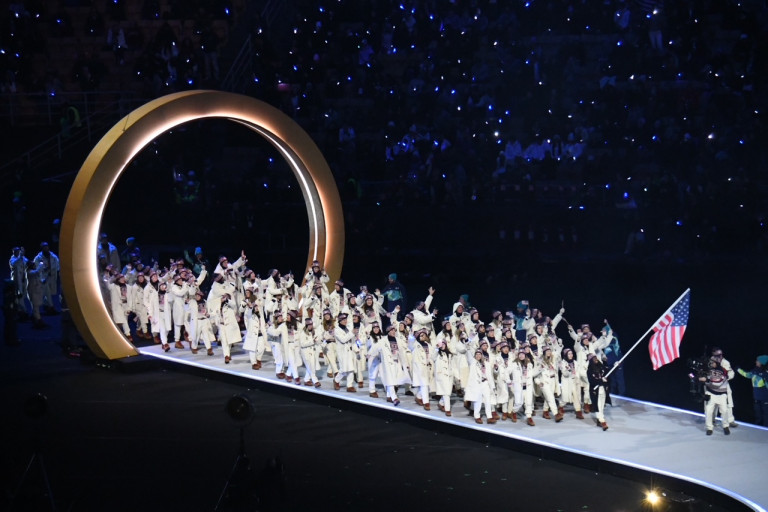
Despite questions around the athletes’ participation and ICE protests, it turned out to be an Olympic Winter Games for the record books for Team USA in Milan Cortina. They clinched 12 gold medals and 33 in all — their best tally at a Winter Games — in 11 different disciplines, from bobsled to figure skating and speed skating to alpine skiing, from their largest roster of 232 athletes. Colorado was the most successful state with its athletes winning five medals (including three golds), ahead of Vermont and Wyoming, as the U.S. finished second only to Norway and were the only non-European nation to end up in the top five of the medal count. It was also a big improvement from Beijing 2022, when the U.S. accrued 25 medals overall, including nine golds.










 Copyright © 2026 by Northstar Travel Media LLC. All Rights Reserved. 301 Route 17 N, Suite 1150, Rutherford, NJ 07070 USA | Telephone: (201) 902-2000