
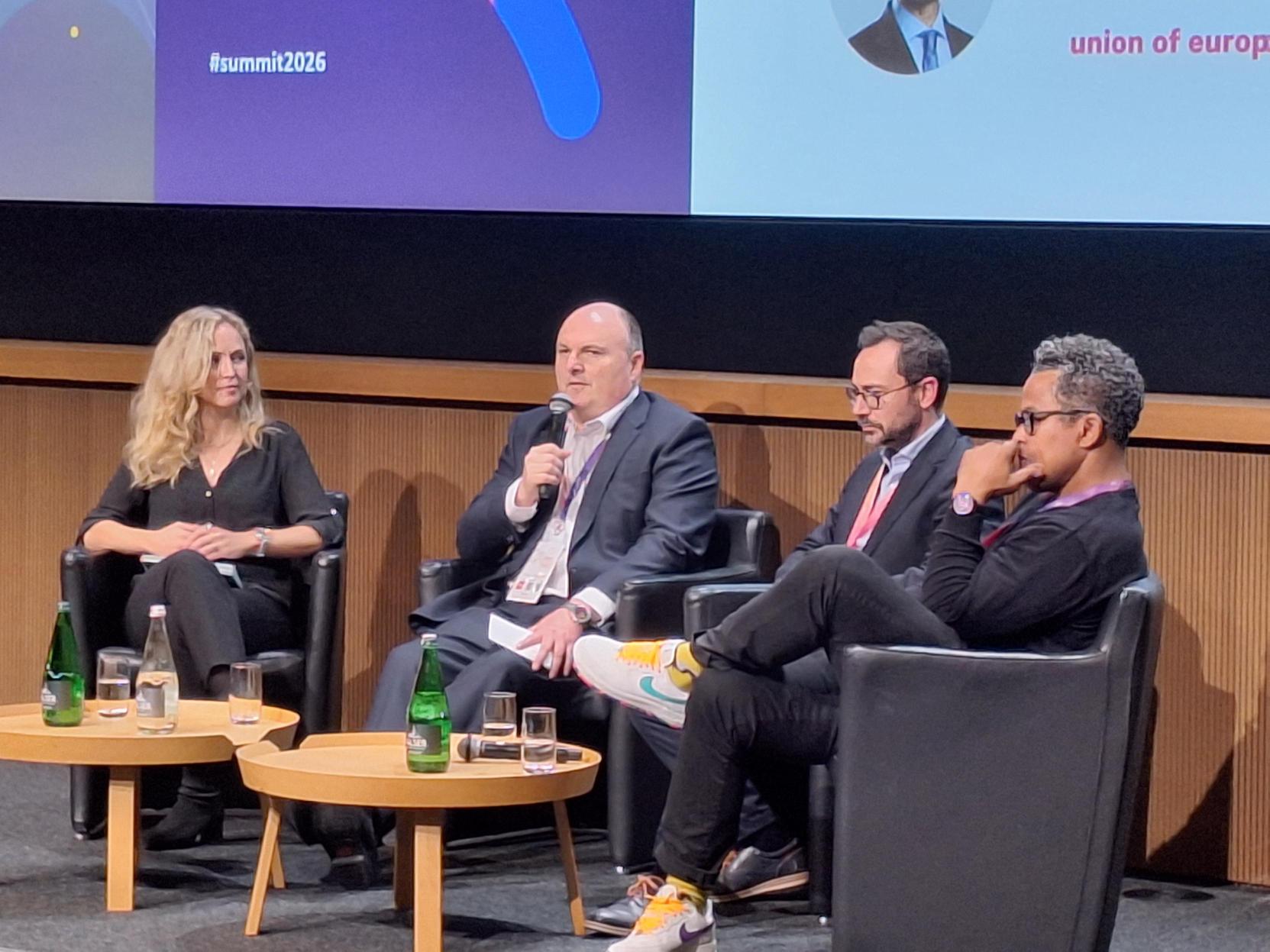
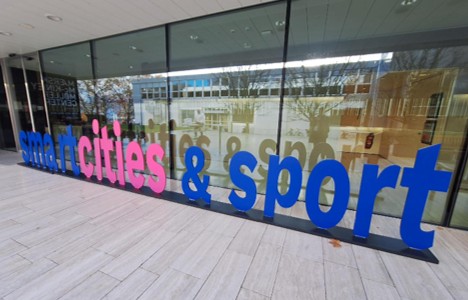
The 13th edition of the Smart Cities & Sport Summit headed to the Olympic capital of Lausanne, Switzerland, as sports event organizers, international federations and city leaders from around the world came together to discuss opportunities to unlock the social power of sport.
Organized by the World Union of Olympic Cities and launched in 2014, the summit convenes representatives of cities, regions and countries that seek to develop smart strategies to connect sports events and cities.
The 2026 conference led with the motto of “Move to Impact,” inviting attendees to discuss, measure and share the social value of sport in cities, for cities, and for citizens. From everyday action targeting specific communities to sporting events that create momentum, the summit explored how each approach can unlock the transformative power of sport to change society.
Mature Market for Investment
Emmanuel Rivat, co-founder at non-profit organization Res Sportiva, discussed how social impact has become central to the sports movement and other sectors.
From a recent case study of sports event organizers conducted by Res Sportiva, he observed how sport can be a tool for complementary social benefits. Of those surveyed, 90 percent said they use sport to address social, health and environmental issues, 64 percent aim to provide access to sports participation, and 32 percent claim to provide access to sports competition.
As a result, the sports sector has transformed into a mature investment segment because of opportunities for events, the growth or stability of budgets, and the emergence of social impact as a prerequisite in sports event bidding processes. The case study revealed that 36 percent of respondents were self-funding their events or competitions, while 46 percent were scaling through private funding to benefit cities and rural communities.
At the same time, however, the levers for self-funding can vary greatly according to the regions where event organizers operate. Of the sample organizations in the case study, 71 percent cooperated with sports clubs, 70 percent collaborated with schools, and only 56 percent worked with health actors/ public health organizations.
Removing Barriers Delivers Real Social Impact
The second session spotlighted initiatives and programs that deliver social impact through sport, while removing barriers for those who need them most, such as young people, women, people with disabilities and marginalized communities.
Oleksiy Soldatenko and Iryna Soldatenko are managing directors of Phoenix FC, a team for kids in Kharkiv, Ukraine, who had been told they were not good enough at a young age. The pair explained how the project which began in 2015, served as a daily structure to help children who were feeling rejected. And when Russia formally invaded Ukraine in 2022, the project was adapted to show that the social power of sport is not a given, and to demonstrate how anyone — even a rejected child — can be a “hero.”
After conducting a case study of children ages 7 through 14 years old, they determined that children needed five key mechanisms to succeed in sports: open entry; effort-based evaluation; recognition; parents as partners (trusting coaches on playing time and selection, caring about each child’s success equally); and media as a mirror (photos, videos and match reports so that every child appears as a “hero”).
Cities also have a responsibility to fund what happens inside clubs, from creating access to measuring effort and progress, and working with parents, volunteers and universities to study clubs over many years. Within this, Joris Wils, director of sports in Antwerp, Belgium, outlined his vision to make his city 100 percent active, by targeting potential participants and the inactive population and offering accessible physical activity programs in disadvantaged neighborhoods.
Everyday Places Having an Everyday Impact
In addition, placemaking and placeshaping can be powerful drivers of inclusion, health and community life, as everyday places (e.g. parks, street corners, public squares, sports facilities) can have a sizeable impact on these.
Rhyl Jones McCoy, a researcher in urban philosophy at Queensland University of Technology (QUT) in Australia, spoke about how natural blue and green spaces (blue spaces would be oceans, rivers, lakes, canals, etc.) can enhance urban well-being and support sustainable cities. Swimmable urban or immersive blue spaces can, moreover, serve as restorative places — in fact, cities like London, Paris and New York are demonstrating this by opening lakes, rivers and canals for public swimming.
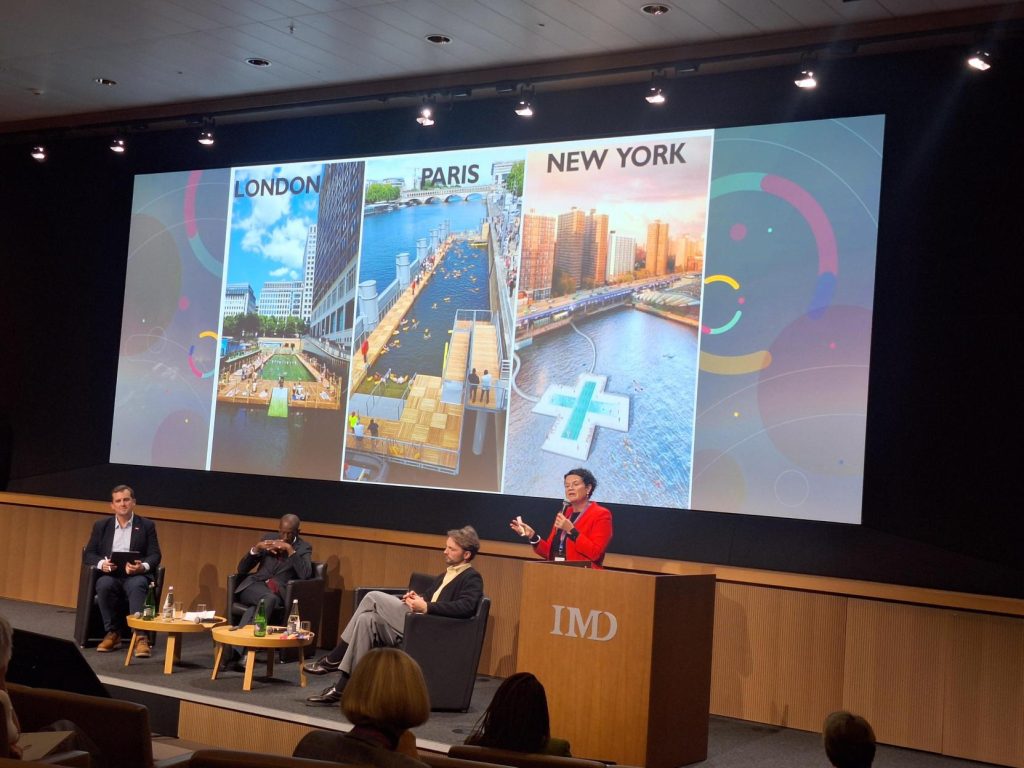
The concept is likely to come even more into focus ahead of the 2032 Olympic and Paralympic Games in Brisbane, Australia, where organizers are seeking to create a catalyst for swimmable urban blue space legacies. One example will be the whitewater rafting venue at the Birkdale Community Precinct in Redlands Coast, Brisbane, which will become “a place for everyone” after the Games.
Capturing the Social Value of Sport
The social value of sport is real, but it is often unmeasured and underfunded. Instead, cities and federations are studying how to embed social impact into sporting governance, event contracts, procurement processes and urban planning, while also delivering on those aspirations.
As such, panelists on a “Writing It In” session discussed how sports events should be seen as social contracts. Instead of financial value alone, we should examine event legacy through the lens of “Social Return on Investment,” or SROI — a framework for measuring and accounting for the social, environmental and economic value a project or organization creates relative to the resources invested.
In a time of growing socioeconomic disparity and geopolitical division, Manchester Metropolitan University Professor Larissa Davies analyzed how sport can impact on numerous public health agendas, from reducing antisocial behavior to improving safeguarding and inclusivity. However, she argued that there was still work to do in articulating an effective value proposition about the positive values of sports participation when it comes to securing federal/government funding.
Iva Figueiredo-Ackroyd, head of program at Go! London, and Stuart McReynolds, chief operating officer of Canadian Tire Jumpstart Charities, shared the importance of increasing sports infrastructure provisions and prioritizing storytelling to explain the objectives of sports investment. Doing so, they suggested, would ensure that all children experience the true benefits of sports, especially those from low-income families.
Meanwhile, Joe Hewitt, senior consultant at love.fútbol and a consultant to U.S. Soccer, went further. “We need to connect the dots between leagues, teams, transportation, venues and infrastructure,” he said. “We must ensure this is a community-based initiative and we do not get siloed to ensure we get the best SROI.”
“Looking at legacy needs to happen way before Games or World Cups,” added McReynolds. “You have to be intentional about which barriers your event can remove.”
Turning Local Success into Global Shifts
Sometimes, a social impact model proven in one city can become a national or global resource, or on the other hand, an approach designed by a federation or an international organization can take root in cities and regions. Speakers from the Mayors Migration Council and the cities of Toronto, Canada, and Innsbruck, Austria, investigated how frameworks and models could help social impact practices be transferred, adapted or scaled into global phenomena.
One such program that has worked well at a local level is PLAY Mobile, which brings recreation and sports opportunities to underserved communities in the Northwest Quadrant of Toronto. The program offers a sustainable fleet of rental vehicles that can safely transport families and young people to sports centers, while boosting annual sports participation in the area from 15,000 to 21,000 people. In addition, the PLAY Mobile family has expanded to include a soccer coaching and officiating program called Soccer for All (building on Toronto’s FIFA World Cup legacy) and a Skate Lending Library for skating equipment.
Like in Toronto, the city of Innsbruck is prioritising inclusive engagement and easy access to sports facilities for vulnerable communities. City of Innsbruck Sports Department Head Tassilo Kaiser explained how the city’s Sports Development Plan (SEP) prioritized sports infrastructure, school sports, sports clubs, nature-based recreation, cooperation and knowledge exchange as urgent action fields to establish clear guidelines for safe cities.
Meanwhile, Helen Yu, city practice lead at Mayors Migration Council, cited her work in the UK, Ukraine, Canada, Chile and Mauritania as examples of how people with “irregular status” (e.g. immigrants/migrants) can play sports safely and how people with disabilities can also be integrated into programs like PLAY Mobile.
IFs Embedding Social Impact in Strategies
International federations are also building social impact frameworks from the outset of the planning process, when they partner with host cities.
Darren Hall, director of games and assurance at Commonwealth Sport, looked back at the 2026 Commonwealth Games in Glasgow, Scotland, as an example of how event organizers and cities need to share both the responsibilities and the opportunities of hosting such a prestigious event. The multisport event was condensed for its 2026 edition — reduced to four venues and 10 sports — after Victoria, Australia, withdrew from hosting duties three years ago due to surging costs. However, Hall said that the Games were delivered successfully because of “how flexibly we engaged with the city and our investment in the city and its cultural programs,” including the Rising Stars program.
UEFA is another organization with a large-scale sports (soccer) competition on the horizon, with UEFA Euro 2028. Senior Event & Infrastructure Sustainability Manager Hugo Viseu said that UEFA would continue to maximize its social impact and ESG strategy by incorporating initiatives in all phases of bid planning, including publishing a sustainability strategy that will facilitate more structured dialogue in the lead-up to the tournament.
As “Move to Impact” was the recurring theme of the conference, it reinforced the message that everyone must feel a sense of belonging in sports, and it is a choice that cities, teams and event organizers can make from the very beginning of their journey.
It was confirmed that next year’s summit will take place in Los Angeles, marking its first time in California. The event typically alternates annually between Lausanne and an international host city — last year’s edition was staged in Seoul, South Korea.








 Copyright © 2026 by Northstar Travel Media LLC. All Rights Reserved. 301 Route 17 N, Suite 1150, Rutherford, NJ 07070 USA | Telephone: (201) 902-2000