

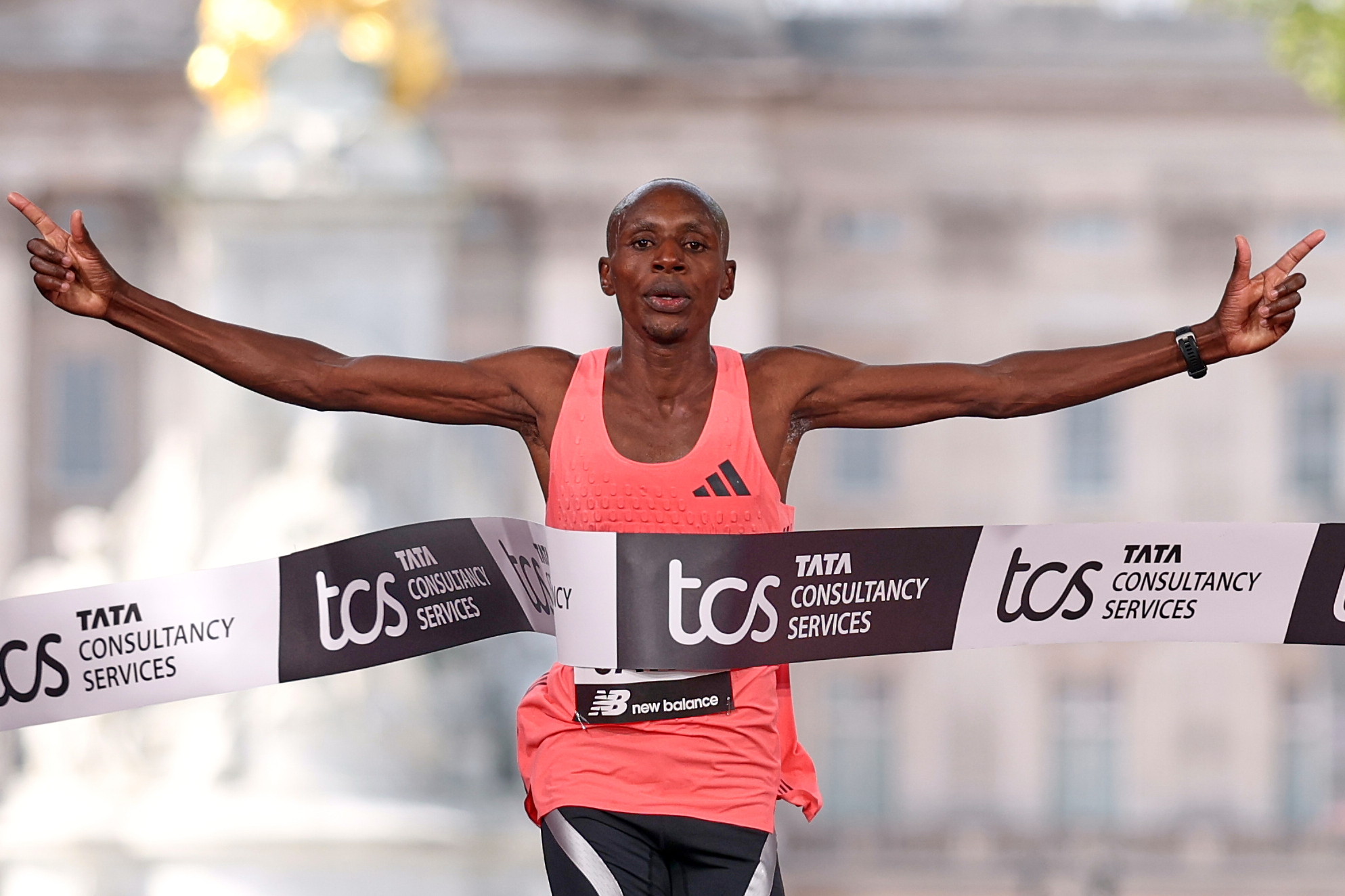
Fourteen years ago when London hosted the 2012 Olympic and Paralympic Summer Games, its official motto was “Inspire a Generation.”
One month ago, Kenya’s Sabastian Sawe and Ethiopia’s Tigst Assefa did just that when they crossed the finish line at the TCS London Marathon in respective record time — Sawe became the first person to run a sub-two-hour marathon in a competitive race and Assefa set a women’s race standard of 2:15:41.
But it is not just the elite runners who proved to be inspirational. Every one of the roughly 60,000 participants who ran the 26.2-mile course, whether it was their first time or their 21st time, paved the way for their families and friends to also take up running and contribute to a healthier society.
That was the message from speakers in a recent webinar organized by Mass Participation World (MPW) and the European Running Business Conference, which will take place in Porto-Gaia, Portugal, November 6–8, 2026.
The webinar gathered leaders to share insights on the current mass participation landscape in Europe and where it is heading. Two of the speakers were associated with this year’s London Marathon: former Olympian and course record holder Paula Radcliffe (also an ambassador of ERBC 2026 and EDP Porto Marathon) and London Marathon Events CEO Hugh Brasher. Representatives from World Sports Group, World Athletes and marathons in Serbia and Austria also lent their voices to the discussion.
Here is what was learned from the industry experts:
Defining Milestones
The London Marathon could already have been considered a huge success, given the record number of participants (59,830) across the elite and mass participation races and the milestone of male and female elite runners breaking world records for the first time at the same London Marathon.
However, Brasher was also quick to mention the fact that over 19,000 children had run in the Mini London Marathon (a youth running event that began in 1986) and that charity fundraising for the race was also set to reach a new record by surpassing £90 million.
While it may be up for debate whether or not it was the most memorable marathon of all time, it will certainly live long in the memory. Radcliffe was especially ebullient about the impact of this year’s London Marathon, saying that “this is the only sport where you can have 60,000 people running together with no conflict,” and that its significance had “reverberated around the world.”
One of the reasons why she had felt the camaraderie so tangibly during the race, she added, was the accessibility and attainability of the event, referring to the ease with which people could enter the ballot, the increasing proportion of female participation, and how elite runners could run even faster due to the advancements in shoe technology.
A New Era For Mass Participation
At a time when social media and artificial intelligence can drive humans apart, Brasher said marathons can serve as a unifying force to bring people together. Citing the community spirit of the London Marathon, he said that mass participation events can succeed by spreading a central message of unity and community, reinforcing the significance of human interaction between runners and crowds.
In a similar vein, Radcliffe suggested that marathons can play a key role in helping girls and young women by giving them role models to look up to, such as Sifan Hassan (the Dutch-Ethiopian, three-time Olympic gold medalist), who can make such events feel accessible no matter where they are from in the world.

Initiatives in more underprivileged communities can also help to make marathons more accessible to different demographics, according to Radcliffe. As initiatives are introduced like Shoe4Africa (a non-profit organization offering meals, education and fitness opportunities to children and families in Africa) and more races open up in areas across the Middle East (e.g. Doha, Qatar, Ras-al-Khaimah, UAE, and Oman), the mass participation community will continue to grow and show respect to different cultures worldwide.
Benefits and Opportunities
One of the major opportunities that has been facilitated by marathons in the last two decades has been the growth of female participation.
In 2004, the year after Radcliffe broke the women’s marathon world record in London (two hours, 15 minutes and 25 seconds), female participation in the London Marathon went from 18 percent to 24 percent in just 12 months. In 2026, the majority of participants in all age groups were female.
According to Brasher, the possibility to bridge the gender gap in participation remains a hugely untouched market. Whereas some other races, including in Germany, are still recording a ratio of 70:30 in terms of male participation over female, he said that it would take conscious action to encourage more gender balance at marathons, including bringing in more gender-neutral toilets or promoting female athletes more prominently on advertising.
Radcliffe pointed out another notable benefit of marathon racing: sustainability.
This year marked the first time that air quality statistics had been reported on the day of the London Marathon, as event organizers partnered with Air Aware Labs to provide AirTrack App data. As the data showed, traffic near the marathon route dropped by 40 percent, resulting in a 35 percent drop in nitrogen dioxide (NO2) levels and much lower levels of fine particulate matter compared to a typical Sunday.
This is significant because marathon runners typically breathe 10-20-times more air than when they are resting. Reductions in exposure to air pollution can make meaningful differences to health, energy and endurance, leading to more people completing races, achieving better times and being more likely to enter again.
Future Role of Marathons in Communities
Looking ahead, the pair were both asked to predict what role marathons would play in communities in 10 years’ time.
Radcliffe reiterated the significance of involving children in events from an earlier age and driving greater social impact back into sport. With more than 1.3 million people entering the London Marathon public ballot for 2026, it underlines the improving accessibility of marathons and virtual marathons, not just in the UK but around the world, which can be seen as an encouraging response to otherwise leading a sedentary lifestyle.
Building on that message of inclusion, Brasher called for greater collective effort, especially with politicians who should be actively reinforcing the message that marathons can bring people closer together and be a force for good. If we are able to spread that message consistently, he believes that it can be a virtuous circle for kids, parents and families to encourage everyone to be as active as possible.
It comes as event organizers are actively considering plans to make the 2027 London Marathon a one-off, two-day event to accommodate the skyrocketing marathon demand. If approved, the unique “Double London Marathon” would take place on April 24 and 25, 2027, and feature a record 100,000 amateur runners across the two days.
At the same time, World Athletics has announced a strategic roadmap to take the marathon out of the World Athletics Championships program and create a standalone World Athletics Marathon Championships from 2030, further catering to this spike in mass participation demand.










 Copyright © 2026 by Northstar Travel Media LLC. All Rights Reserved. 301 Route 17 N, Suite 1150, Rutherford, NJ 07070 USA | Telephone: (201) 902-2000